20 David Niven movies you should see

David Niven x650

By Ray Bennett

David Niven, who was born 115 years ago today and died aged 73 in 1983, gave Ron Base and me the best quote of all time.

The Oscar-winning British actor was on a book tour to promote his first memoir, the brilliant “The Moon’s a Balloon”, in 1972. Ron and I, who worked at The Windsor Star across the river, went to a Detroit hotel ballroom for a lunch – a hospital fundraiser – at which Niven was to speak. We were told we could interview him afterwards. Continue reading

Posted in Books, Comment, Film, Memory Lane, Recalling ... | Tagged , , , | Comments Off on 20 David Niven movies you should see

Director Robert Altman on building sandcastles

Robert Altman x650

By Ray Bennett

I love the movies of Robert Altman, who was born 100 years ago today and died on Nov. 20, 2006, because some are masterpieces and the ones that are not invariably have moments of wonderment and magic that occupy the mind.

A new documentary titled “Altman”, to be released in the UK by Soda Pictures on April 3, illustrates the director’s philosophy that filmmaking is like building sandcastles – you make them and then the tide comes in and washes them away but what you made is in everybody’s memory. Continue reading

Posted in Film, Memory Lane, Recalling ... | Tagged , , , | Comments Off on Director Robert Altman on building sandcastles

The time I asked Robert Wagner about mortality

robert_wagner_2012_07-09

By Ray Bennett

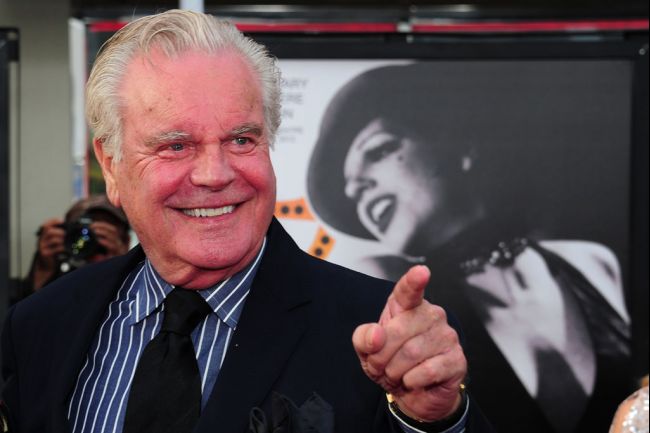
“What the hell kind of question is that?” It’s 1985 and I’m sitting with Robert Wagner, who turns 95 today, in his luxury trailer on the Warner Bros. lot where he was making the shortlived TV series “Lime Street”.

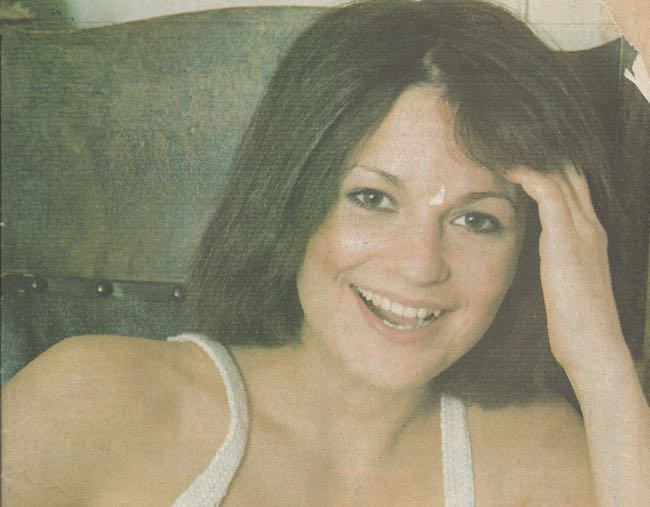
Two years earlier, I’d had lunch with him in that same trailer on the lot in Burbank where “Hart to Hart” was coming to an end. All around are photos of his family with many of his wife Natalie Wood (pictured below), who drowned at sea in November 1981 at the age of 43. Continue reading

Posted in Film, Interviews, Memory Lane, Recalling ..., Television | Tagged , , , , , | Comments Off on The time I asked Robert Wagner about mortality

Stuart Margolin and James Garner: ‘a perfect friendship’

By Ray Bennett

Stuart Margolin, born on this day in 1940, was one of the great screen sidekicks working regularly with James Garner. Traditionally, in film and on TV, there have been two kinds of heroes – loners and those with sidekicks, There also have been two kinds of sidekick. Some sre there only to keep the hero from talking to himself. Others, the great ones, are there to drive the hero to distraction. Continue reading

Posted in Film, Interviews, Memory Lane, Music, News, Recalling ..., Television | Tagged , , , , , | Comments Off on Stuart Margolin and James Garner: ‘a perfect friendship’

The astonishing range of Gene Hackman

By Ray Bennett

With most movie stars it’s not very difficult to sort out a Top 10 of your favourite films but Gene Hackman’s exceptional 40-year career has included so many terrific performances in such a wide range of films that it’s impossible. As the retired actor turns 95 today, here’s an extended list of Hackman films from his 99 acting credits that are even more watchable than most.

Obviously there are his Oscar-winning appearances in “The French Connection” (1971) and “Unforgiven” (1992) and his nominated roles in “Bonnie and Clyde” (1967), “I Never Sang for My Father” (1970) and “Mississippi Burning” (1989) plus the sequel “The French Connection II” (1975) and pleasing turns in “Superman” (1978) and “Superman II” (1980). But there are so very many more.

I met him once at the Long Beach Grand Prix in 1980 when he was the celebrity winner of the Toyota Pro/Celebrity Race with Parnelli Jones the pro winner. Not known for his patience with reporters, I approached him gingerly as he stood quietly by himself but he turned out to be completely relaxed and happy to chat.

Hackman retired in 2004 after “Welcome to Mooseport” and director Alexander Payne said at a Bafta Q&A last year that he had declined repeated attempts to get him to play what became Bruce Dern’s Oscar-nominated role in “Nebraska”.

It was a great disappointment when he retired but a great pleasure to learn from William Friedkin, who directed the actor in the “French Connection” films, at dinner at the Locarno International Film Festival a few years back, that Hackman was hale and hearty and enjoyed his family and his painting in his retirement home in Santa Fe.

Here’s my list of 20 other must-see Gene Hackman films.
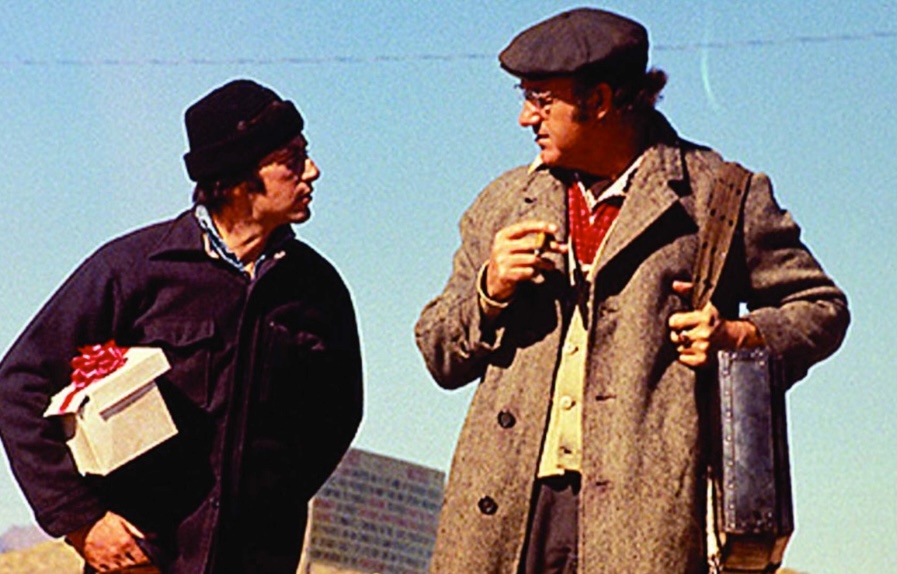
'Scarecrow' Hackman, Pacino x650

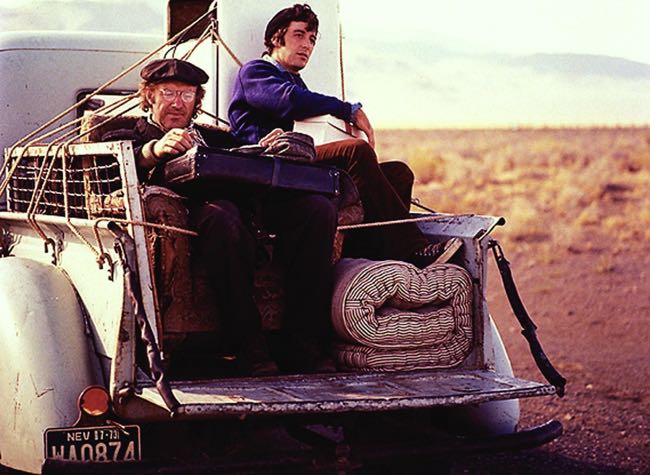
Scarecrow (above, 1973)

My favourite Gene Hackman movie in which he displays his extraordinary ability to be dangerous, sympathetic, vulnerable, and remarkably funny. He plays an ex-convict on his way back east where he aims to open a laundromat but his plans are diverted when he encounters a forlorn ex-sailor (Al Pacino) on the highway and decides to help him find his former sweetheart and their child. Directed by Jerry Schatzberg (“The Panic in Needle Park”), it co-stars Dorothy Tristan, Ann Wedgeworth and Eileen Brennan. Hackman’s striptease in a bar is a joy to see.
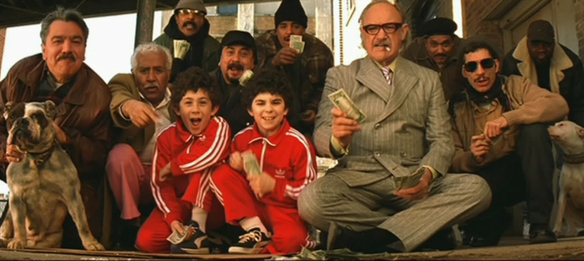
Royal Tenenbaums

The Royal Tenenbaums (above, 2001)

Splendidly enjoyable Wes Anderson saga about the weird and wonderful Tenenbaum family whose estranged patriarch (Hackman) returns to announce that he is soon to die. Anjelica Huston plays his former spouse with Ben Stiller, Gwyneth Paltrow and Luke Wilson as their offspring. The cast includes Owen Wilson, Bill Murray, Danny Glover, Seymour Cassel, Kumar Pallana and Alec Baldwin. Hackman is marvellous and the entire cast raise their game delightfully.

The Conversation (1974)

Superb and highly praised study of a surveillance expert who comes to suspect that the subjects of one of his assignments will become murder victims. Paced deliberately by writer/director Francis Ford Coppola as the tension mounts, it shows Hackman at his quiet and observant best. John Cazale, Allen Garfield, Federic Forrest and Cindy Williams co-star.
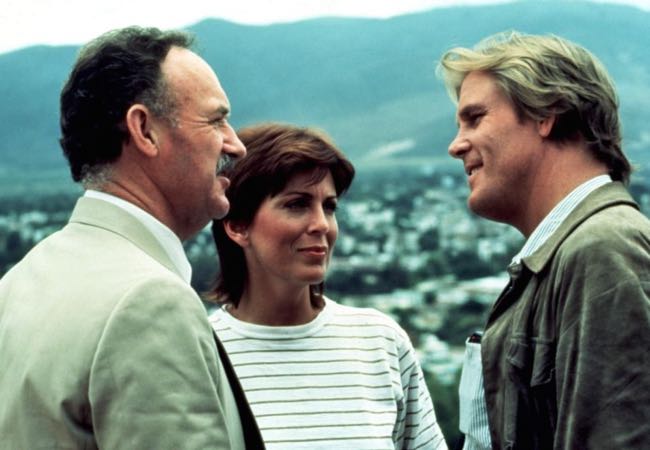
UNDER FIRE, Gene Hackman, Joanna Cassidy, Nick Nolte, 1983

Under Fire (above, 1983)

One of the best films about dirty dealings by the United States in Central America directed by Roger Spottiswoode. Hackman, Joanna Cassidy and Nick Nolte play journalists covering the final days of the corrupt reign of dictator Somoza in Nicaragua in the 1970s. Ed Harris co-stars.
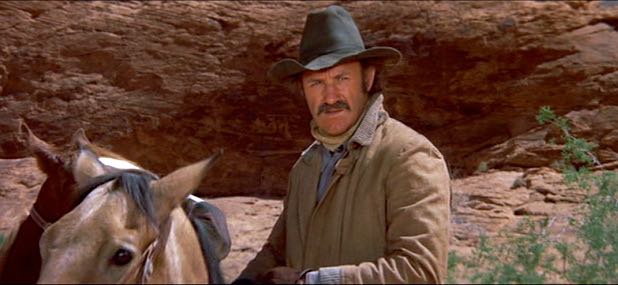
Bite the Bullet x650

Bite the Bullet (above, 1975)

Richard Brooks writes and directs an epic and hugely entertaining western about a grand horserace across plains and deserts with Hackman as an ex-Rough Rider and a fine cast that includes Candice Bergen, James Coburn, Ben Johnson, Ian Bannen, Jan-Michael Vincent and Dabney Coleman.

Hoosiers (1986)

Hackman plays a basketball coach tarnished by scandal who goes to work at a small town highschool and inspires the team to go for the championships despite local whispers and naysaying. Directed by former “Hill Street Blues” producer David Anspaugh, it’s a gentle and emotional film that co-stars Oscar nominated Dennis Hopper with Barbara Hershey and Sheb Wooley. Jerry Goldsmith also had an Oscar nomination for his evocative score.

Cisco Pike (1972)

Sex, drugs and rock’n’roll set in Venice, CA, with Kris Kristofferson as a faded star whose attempt to go straight after a jail term for dealing drugs is threatened by a crooked cop (Hackman) who blackmails him into another drug deal. Karen Black, Harry Dean Stanton, Roscoe Lee Browne co-star with Viva and Joy Bang.
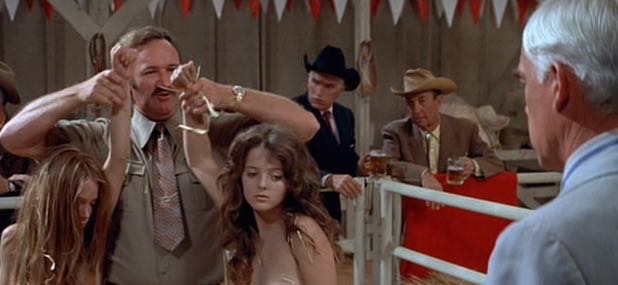
Prime Cut x650

Prime Cut (above, 1972)

Gritty crime story about a tough Chicago hoodlum (Lee Marvin) who is sent to a cattle ranch in Kansas City run by a flamboyant criminal who uses his mincing machine to deal with miscreants and trades in women (including Sissy Spacek in her debut) that he keeps in his cattle pens. Seedy, sordid and hugely entertaining

Heist (2001)

Tense and inventive story with Hackman as a veteran jewel thief mixed up in a job with people he has no reason to trust. Written and directed by David Mamet, it co-stars Danny DeVito, Delroy Lindo, Sam Rockwell, Ricky Jay and Patti LuPone.

Marooned (1969)

Hackman is one of three US astronauts stranded in space in an exciting John Sturges picture that also stars Gregory Peck, Richard Crenna, David Janssen, James Franciscus, Lee Grant and Mariette Hartley. It won the Oscar for best effects that year.

Downhill Racer (1969)

Engaging sports yarn directed by Michael Ritchie about a US ski team led by Robert Redford, who won the Bafta for best actor, with Hackman as the coach.

The Gypsy Moths (1969)

John Frankenheimer’s film of James Drought’s 1955 novel about a July 4 weekend show in a small American town put on by a team of barnstoming skydivers. Burt Lancaster and Deborah Kerr are reunited 16 years after “From Here to Eternity” and the strong cast includes Bonnie Bedelia, Shree North and Scott Wilson.

Twilight (1998)

Hackman, Paul Newman and James Garner star in an elegant and elegiac tale about oldtimers mixed up in a 20-year old murder case directed by Robert Benton, who scripted with Richard Russo. Susan Sarandon co-stars along with Reese Witherspoon, Stockard Channing, Giancarlo Esposito, Liev Schreiber, Margo Martindale and M. Emmet Walsh.

The Firm (1993)

David Rabe, Robert Towne and David Rayfiel make cracking improvements to John Grisham’s thriller about a corrupt Memphis law firm and Sydney Pollack keeps a furious pace. Hackman plays a weak and vulnerable crooked lawyer as newcomer Tom Cruise and his wife Jeane Tripplehorn attempt to bring justice to bear along with David Strathairn and Oscar-nominated Holly Hunter. Hal Holbrook and Wilford Brimley are among the bad guys with Ed Harris as a determined lawman. Terrific Oscar-nominated piano score by Dave Grusin.
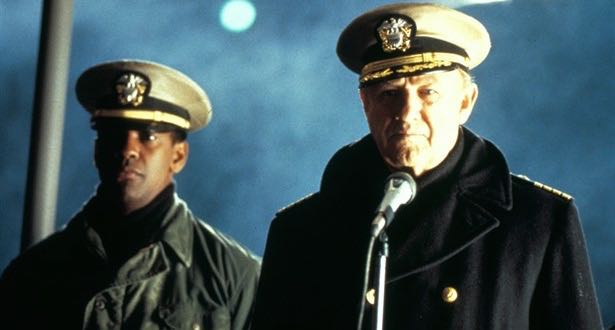
Crimson_Tide x650

Crimson Tide (above, 1995)

Tony Scott directs a version of “Mutiny on the Bounty” underwater in a sturdy and suspenseful drama that pits an old-school taskmaster submarine captain (Hackman) against a formidable younger officer (Denzel Washington) who fears that his boss has lost his judgment. Matt Craven George Dzundza, Viggo Mortensen and James Gandolfini co-star.

Get Shorty (1995)

Savvy Elmore Leonard yarn directed wittily by Barry Sonnefeld about an East-coast hoodlum (John Travolta) who is beguiled by the easy takings on hand in greedy and gullible Hollywood. Hackman plays a not-very-bright producer and the cast includes Danny DeVito, Rene Russo and Dennis Farina. Terrific soundtrack with score by John Lurie.

No Way Out (1987)

Hackman’s on the dark side as a weak politician in Roger Donaldson’s tense little thriller in which a navy officer (Kevin Costner) must beat the clock in the hunt for the real villain after the politico’s mistress is killed. Sean Young co-stars with George Dzundza, Howard Duff and Will Patton in a gripping turn as the politician’s devious but increasingly desperate aide.

The Package (1989)

Andrew Davis, who went on to make “Under Siege” and “The Fugitive”, directs a snappy little thriller in which Hackman plays a veteran Green Beret sergeant whose Airborne Ranger prisoner (Tommy Lee Jones) escapes as he escorts him back to the US. Joanna Cassidy, John Heard, Dannis Franz and Pam Grier co-star.
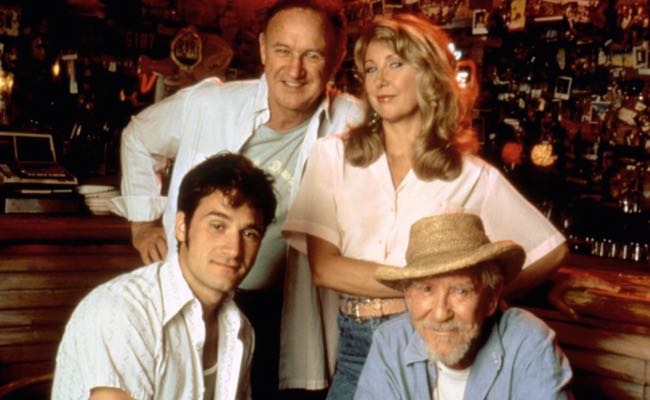
Full Moon in Blue Water

Full Moon in Blue Water (1988)

A sweet and moving story with Hackman as a widower named Floyd who owns a bar in a small Texas town on the Gulf of Mexico and struggles with a failing business, depression from his grief, and an aging father-in-law (Burgess Meredith) who suffers from dementia. Teri Garr and Elias Koteas play sympathetic workers at the bar with Kevin Cooney as a businesman who aims to take advantage of Floyd’s dilemma.

Night Moves (1975)

Hackman plays a former football player turned private detective who is hired to find the wayward teenaged daughter of a faded Hollywood starlet. Directed by Arthur Penn, it co-stars Jennifer Warren, Susan Clark, Edward Binns, Harris Yulin and Kenneth Mars with a provocative debut by the then 18-year-old Melanie Griffith.
Posted in Comment, Film, Memory Lane, Recalling ... | Tagged , , , , , , , | 2 Comments

John Hurt on the importance to acting of imagination

By Ray Bennett

At his elegant home in Chiswick in west London, John Hurt, who was born 85 years ago today, smoked cigarettes contentedly and over a long, relaxed conversation, spoke candidly to me about  many things including the art of acting. 

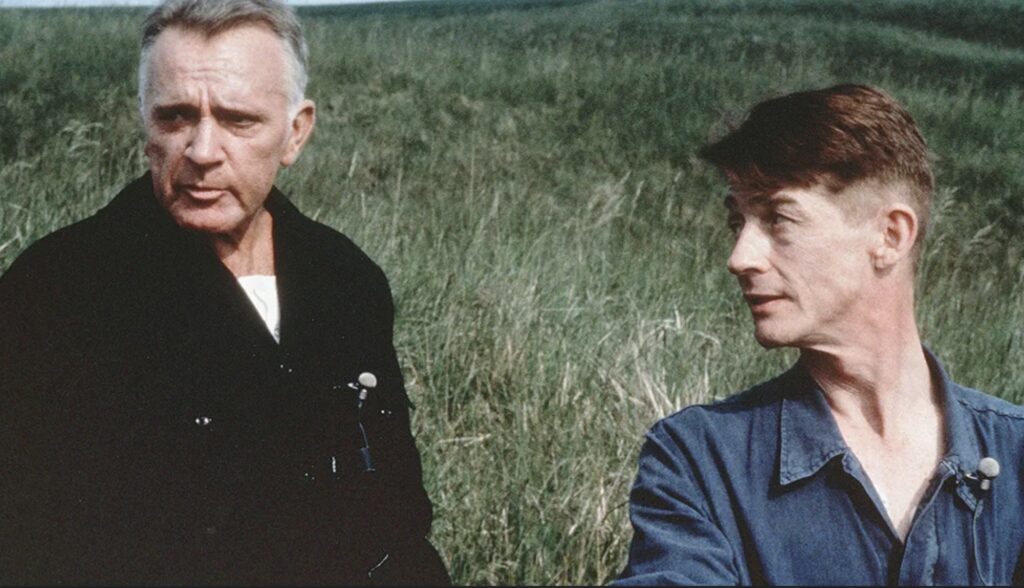
Michael Radford’s screen version of George Orwell’s ‘1984’, in which he stars, was about to be released and Richard Burton, who plays Inner Party member O’Brien in ‘Nineteen Eighty-Four’, had died aged 58 that August, so naturally I asked how they got along.

‘I think Richard found that without alcohol privacy was probably an easier way to pass his time but he was still very good with people,’ Hurt said. ‘He always had his arms outwards even when he wasn’t drinking at all, which he wasn’t. In a sense, it was a bit like a wounded bull but then it wasn’t just that, there was the operation on his neck and things that aggravated him insofar as he didn’t have the power just to be who he is. We got on very well. It was almost as if we were contemporaries. It was a very good feeling.’ 

Hurt said that he and Burton also worked in a very similar way. ‘We switch on and off quite easily,’ he said. ‘Obviously, when you’re doing a very heavy film, you develop a rather unique sense of humour. When you’re not shooting, there are quite a lot of jokes going around, which Richard and I and Michael all enjoyed along with the rest of the cast and crew. I don’t think you’d find that with some of the heavy American stars because they tend to wear it on their sleeve and make you understand that it is damned hard work. I’ve always been of the opinion that it is the imagination that flies. That’s how you take an audience, with your imagination. That, presumably, is what talent is. It’s not endless observation, which of course is page one. Of course you observe, every artist observes whatever they are – painters, writers, musicians. To wear it on your sleeve … I don’t know, it seems to me the justifying something in a kind of way. I don’t quite know what.’

Hurt went on to ruminate about certain Hollywood stars: ‘Robert De Niro makes extraordinary announcements when asked by the press – you never quite know how well it’s reported – but quite clearly when asked about acting he has said, “I want it to be real.” At the time, he was doing “Raging Bull”. This is either a very naive or stupid remark insofar as Jake LaMotta was still walking about. It can’t be real. Jake LaMotta was  the real thing and there was no question about it.  What you can do is imaginatively create a reality that the audience believes. Then you get Al Pacino saying things like “My constant search is to reach that point where you do not have to act.” Acting all the way, I thought, when he said it. To me, that is page one. Of course that is the impression you wish to give so I know what he means. He means to be able to walk straight into it in a way that it has such a point of reality that you cannot distinguish. But that is the art and it is only the imagination that will get you there.’

He said he didn’t mean that therefore actors should be lazy about observation and research but those things, to him, were the technicalities of being a performer on a high level. ‘These are things you take for granted, it seems to me,’ he said. ‘When Stanislavsky basically invented The Method, it was at a time when the Moscow Arts Theatre was pretty well at a low ebb. It was resting on its ancient laurels and along came a particularly good playwright named Chekhov so something had to be done because on the first reading of “The Cherry Orchard”, they all sat around and said, well, there are no parts in it. Stanislavsky was much too serious for Chekhov anyway, as an aid to imagination. But it was an aid. Imagination in any artist must be the quality that is the envy of the human race, is it not? It must be, because otherwise I don’t think we’d be sitting here talking. It’s not my research that anyone’s interested in. The question always comes down to how do you act? And, of course, there is no answer.’

Hurt died aged 77 on January 25, 2017.

Posted in Film, Interviews, Memory Lane, Recalling ... | Tagged , , , , , , , , , | Comments Off on John Hurt on the importance to acting of imagination

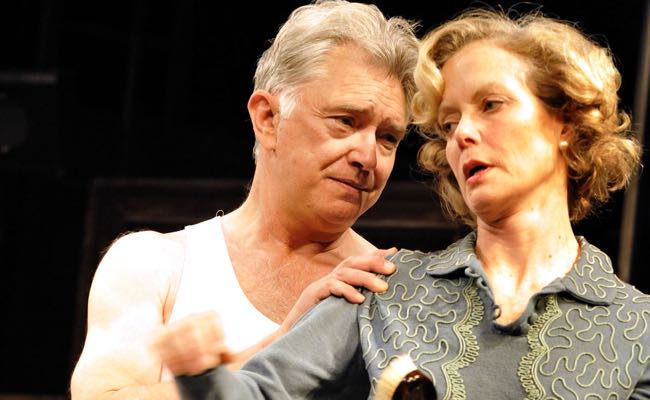
Martin Shaw hasn’t always been a TV copper

Martin Shaw as George Gently x650

By Ray Bennett

Martin Shaw, who turns 80 today, is known best for playing TV coppers in “The Professionals” and “Inspector George Gently” but he also has had a long stage career in roles from Stanley Kowalski to Lord Goring to Elvis Presley, and he loves to fly.

The Birmingham-born actor is regarded as a prickly interview subject but when we chatted in 2011 for a story in Cue Entertainment, we got along fine, possibly because we’re about the same age.

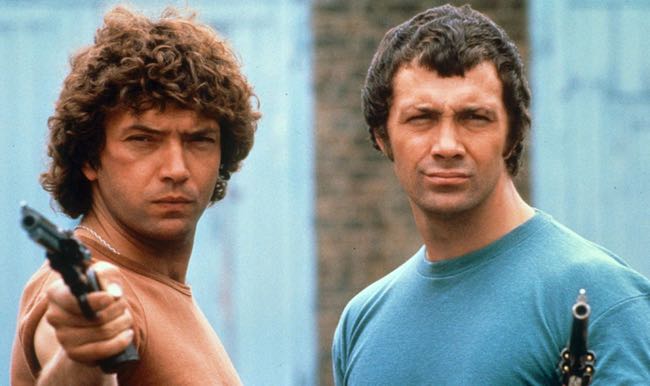
Shaw won international fame as Doyle, a young action hero in tight jeans with his hair in a huge perm alongside Lewis Collins as Bodie in the action series “The Professionals”, which ran from 1977 to 1983. The actor made clear at the time his displeasure with “The Professionals” and he had no desire to talk about it now.

Shaw, left, with the late Lewis Collins in 'The Professionals'

Shaw, left, with the late Lewis Collins in ‘The Professionals’

But when I asked him if Doyle might have grown up to be George Gently, the shrewd senior officer with short steely hair and a manner to match, he said: “Good question. It’s hard to answer because Gently is a real person, a real character, and Ray Doyle wasn’t.”

It couldn’t have happened because “The Professionals” was very much a 1970s show while “George Gently”, which commences its eighth season on BBC One this year, is set in the 1960s. Shaw said he was drawn to the role because of the way he was created by writer Peter Flannery in the pilot script.

Gently is a policeman who has been hardened by war and his wife’s murder: “George is an old-time copper. He fought in World War Two and he’s a very tough, seasoned fighter. He knows about hardship and has seen tough times.”

It was intended to be much darker than the series has become, Shaw said executives saw potential in the relationship between Gently and the younger policeman played by Lee Ingleby so it was “softened” for broader appeal: “The pilot ended with the baddie, a very mad man played by Phil Davis, being hanged. The priest said, ‘‘Do you have any last words?’ And he said, ‘Yeah. Make it fucking slow.’ Blackout. That was how dark the pilot was, but it became a different show.”

Shaw as Elvis onstage

Shaw as Elvis onstage

Shaw said the 1960s setting has allowed the show to delve into social and cultural issues of the time such as police brutality, capital punishment, racism, wife beating and abortion: “In the UK, it seems to me that necessarily everything stopped during World War Two. From 1939 to 1945, everything stopped. Then, from ’45 to ’60, everything was still at a standstill because we were in recovery. And then, suddenly, there was more than 20 years of movement and progress that developed in about 18 months.”

Before “George Gently”, Shaw had the title role in the legal series “Judge John Deed” for six seasons from 2001 and played writer P.D. James’s forensic detective Adam Dalgleish in “Death in Holy Orders” in 2003 and “The Murder Room” in 2005: “Interestingly, I’ve played more homosexuals than I have cops. But we make a lot of cop shows. It’s just what gets noticed. It’s either an observation or an indictment; it depends on your point of view. You’re either gonna be a copper, a lawyer or a doctor. That’s it.”

As a young man, he was at drama school with innovative artists such as French director Michel St. Denis, British director Peter Brook, and playwright Charles Marowitz. His early work was at the Royal Court Theatre, and with leading theatrical directors William Gaskill and Peter Hall and future filmmakers Roman Polanski and Lindsay Anderson (“O Lucky Man”): “My start, long before ‘The Professionals,’ was with all these people and it was such an exciting time to be an actor.”

He credited a 1974 run in London’s West End as Stanley Kowalsky in Tennessee Williams’ “A Streetcar Named Desire” as a major breakthrough and in 1985 he played Elvis Presley in the long-running play “Are You Lonesome Tonight?” by Alan Bleasdale. Shaw was an Elvis fan but he said the show was a challenge: “I used to sit up until 3 in the morning watching the documentaries … stop … freeze frame … play bits back … and then learn my lines … get up at 6 to learn more lines. It was hard bloody work. There were so many expectations but I was constantly reassured both by [writer Alan] Bleasedale and [producer Bill] Kenwright, and the director Robin Lefebvre, who said, ‘We don’t want an impersonation. This is a performance. Get on the inside.’ It sort of evolved by osmosis and I got to be like him anyway. Then we got the Evening Standard Award, so it was obviously well received and well respected.”

Shaw onstage with Jenny Seagrove in 'The Country Girl'

Shaw onstage with Jenny Seagrove in ‘The Country Girl’

Among his greatest stage successes was his appearance as Lord Goring in Oscar Wilde’s “An Ideal Husband,” which was directed by Peter Hall and ran on Broadway for 307 performances from April 1996. Shaw was nominated for a best actor Tony Award and won the Drama Desk Award for outstanding featured actor in a play. I saw him on the West End stage at the Apollo Theatre on Oct. 11 2010 in Clifford Odets 1951 “The Country Girl” and he and co-star Jenny Seagrove were outstanding in roles played in the 1954 movie by Bing Crosby and Grace Kelly, who won an Oscar.

A keen aviator who gained his pilot’s licence more than 20 years ago, Shaw has made several documentaries for the BBC about military exploits involving planes such as “Aviators” (2006), “Dambusters Declassified” (2010), and “Jericho” in 2014.

His interest in flying started with his father as far back as he can recall: “I was born and raised in Birmingham no more than a mile or two from Castle Bromwich, which was where they made and assembled and tested Spitfires and Lancasters. From my earliest memories, the sky was always full of aeroplanes. We went flying in an old biplane from Castle Bromwich for 5 bob each  (5 shillings in old English money). It just started from that.”

A thoughtful man who prefers country solitude to city life, he reflected on the passage of time. For the “Dambusters” documentary, he navigated a plane as it flew at low level toward the dam of the Möhne reservoire, which was the target of the May 1943 raid by RAF personnel from Australia, Canada and New Zealand. When they landed, he did some pieces to camera and interviewed people at the dam: “I found that incredibly moving; far more moving and disturbing than I’d expected because it was such a peaceful and a pretty place. To imagine that I had been born at the end of a conflict with all of these lovely people around – pushing prams, and having picnics in this beautiful place – and I was part of a race that had triumphantly destroyed this area and killed thousands of people … we all talk very glibly about the futility of war but it’s never been more powerfully brought home to me than being underneath the Möhne Dam and surrounded by lovely people on a beautiful spring day. Time just makes it utterly and completely nonsensical.”

He said he is glad, though, to have lived when he did: “We’ve got the vocal memory; we’ve got the word of mouth. I think we’re possibly the last generation to have that because people after us have got these things (points at my digital devices). My grandmother used to tell me about the Wild West Show. She saw the Wild West Show in Birmingham at Bingley Hall. She saw Buffalo Bill and Chief Sitting Bull. She used to tell me when I was a little boy: ‘He rode up on a big white horse and he had a big white hat and a long pointy yellow beard and long yellow hair, and he reared up on the horse and said, ‘Look over there, ladies and gentlemen, and all the Indians came out led by Chief Sitting Bull.’ And I’ve heard that. It’s living.

The “Dambusters Declassified” and “Jericho” documentaries are available on YouTube

https://www.youtube.com/watch?v=HAlaPEfcX2Q and

https://www.youtube.com/watch?v=35qsu9HsYos


Posted in Interviews, Television, Theatre | Tagged , , | 1 Comment

Kevin Costner in praise of ‘Cool Hand Luke’

By Ray Bennett

I’ve been  a fan of Kevin Costner, who turns 70 today, since ‘Silverado’ and I’ve liked most of his movies since then even ‘Waterworld’. I was pleased to find that he’s good company back in 2003. He took time out from shooting Mike Binder’s ‘The Upside of Anger’ in London to pay tribute to Paul Newman and his 1967 film ‘Cool Hand Luke’ (pictured below) at an Indyssey Entertainment’s Grand Classics charity screening.

The monthly movie tributes at the Electric Cinema on Portobello Road in Notting Hill, co-sponsored by Sky Movies, benefitted the British Film Institute and featured filmmakers speaking about films they treasured.

Mike Binder, a friend of my good L.A. pal John De Simio, introduced me to Costner at the event. “It’s very difficult trying to occupy the place that Newman, and people like Gary Cooper, Spencer Tracy and Steve McQueen filled,” Costner told me. “These are the men whose shoulders we stand on.”

He joked that today test-screen audiences would insist that Newman’s character had to live at the end of “Cool Hand Luke” – “Studios used to be run by entrepreneurs. They made movies they loved and they didn’t change endings. They don’t love their movies today the way they used to.”

Speaking of his about-to-be released western ‘Open Range”, Costner said: ‘It’s not in fashion, especially if you’re trying to make a “comeback”. I don’t feel that way but I’ve heard it said. I’ve had very high and very low moments trying to make original movies. Trying to make an original movie is really hard and whenever I watch a classic movie, I realise that I have to do better.’

Posted in Film, Memory Lane, News | Tagged , , , , , , , , , | Comments Off on Kevin Costner in praise of ‘Cool Hand Luke’

Elvis: The man who fell to earth and changed the world

By Ray Bennett

Little more than 10 years after the end of World War II, Great Britain was a cold, grey place in 1956 when Elvis Presley, who was born 90 years ago today, dropped from the sky. He changed everything.

Recorded music was very rare on BBC Radio in those days and we had to rely on the erratic signal of Radio Luxembourg on our tinny transistors. When 45rpm singles were introduced, pocket money was stretched with each Elvis release.

It was a dark day when he went into the US Army in 1958 and his words on the EP “Elvis Sails” signalled more than departure for Germany. For many of us he was never the same afterwards.

Presley’s descent into dizzyingly awful Hollywood movies in the 1960s was overshadowed by the emergence of British rock and only when he made the NBC special (top picture) in 1968 did we think he’d been saved.

Two years later, I was working at The Windsor Star,  in Southwest Ontario across the river from Detroit when it reported that after more than a decade of “splendid isolation”, Elvis Presley was on tour again and would be in Detroit to perform at the Olympia Stadium on Sept. 11: “Even before the show was advertised, the promoters had a two-foot high stack of letters requesting tickets. Although Presley can demand astronomical prices, he has insisted that the top ticket price can be only $10, less than Tom Jones.”

Other tickets were $7:50 and $5. Newspaper colleague (and now the “Sanibel Sunset Detective” crime novelist) Ron Base and another friend snapped up $10 seats and we were among the 17,000 crowd that saw Elvis perform his hits for 45 minutes. At every swivel of his pelvis, a bank of cameras would flash and the screams were relentless. Still, it was an accomplished and exciting show.

On April 6, 1972, Ron and I were back at the Olympia with more friends to join 16,000 even more hysterical fans who went wild with every Presley move. As John Weisman said in his review in the Detroit Free Press, “he didn’t have to sing … all the crowd needed was to see him”.

Still, he looked heavier than he had two years earlier and Las Vegas Elvis was not far off. They played “Thus Sprach Zarathustra” before he entered and when he was done, when the announcer said, “Elvis has left the building”, it sounded foreboding.

Many years later, I visited Graceland with my brother-in-law Charlie Rich Jr. and while it is kitsch, there also is something profound and moving there. As Paul Simon sang, ‘For reasons I cannot explain, there’s some part of me wants to see Graceland’, and I’m glad I went there. I also visited the Sun Records studio in Memphis and stood on the spot where Elvis caught record owner Sam Phillips eye when he recorded a song for his mother.

My ex-wife, Renee Rich, was friends with Knox Phillips, Sam’s son, and they helped me to land an interview with Sam Phillips at his home in Memphis in 1998 for a story for The Hollywood Reporter about Elvis’s belated entry into the Country Music Hall of Fame. Nashville feared that rock ’n’ roll would kill country music in the 1950s and the early fear bred resentment so that for years whenever Presley’s name came up as a candidate for the Hall of Fame, the idea was shot down.” I was always pleased with my headline for that story: “Elvis has entered the building.”

Phillips told me that Elvis always liked country music as he liked rhythm-and-blues and big bands: “He was a person that loved music, period. Elvis, deep down in his heart, wanted to be recognised by country music authorities. He never said to me, ‘Why ain’t I in the Country Music Hall of Fame?’ He didn’t have to ask me that. I knew that it hurt him but he would never tell one person. He did not tell me, and Elvis told me a lot.”

Phillips said they would have “the damnedest conversations” in his office with none of the performer’s “mafia” around: “He just wanted to sit down and talk. Sometimes, we wouldn’t even talk about the damned music business. We’d talk about women, talk about God, talk about what we’d seen and what we felt, and what was going on in the world. Just the greatest conversations. We didn’t pretend to be an authority on any of it. Well, I accused Elvis of being an authority on a woman every now and then, but not too often.”

Posted in Film, Memory Lane, Music | Tagged , , , , , | Comments Off on Elvis: The man who fell to earth and changed the world

Thinking of my Dad on New Year’s Eve

By Ray Bennett

My late older brother Roland phoned from England on New Year’s Eve to tell me that our Dad, Alexander Bennett, had died. I thought it was 35 years ago but another year has slipped by and I see that it’s 36. December 31, 1988. I was living in Franklin, Tennessee, just south of Nashville, alone again, naturally. Ro said Dad had been feeling chipper but that morning he put on jacket and tie as always to walk to the shops but soon returned complaining of chest pains. He had been suffering from a touch of angina. He sat down in his favourite armchair holding his wife’s hand then said “Oh, oh,’ and passed away.

Our family home had been a flat in a converted railway station in Ashford, Kent, until Mum, Winifred, died aged 62 on the same day as Elvis Presley. Sometime after, Dad moved back to his native Devon where, aged 80, he married a sweet and kind widow named Wink and lived with her in a charming bungalow in Budleigh Salterton. We had known her for years as she was the sister of our beloved Aunt Doffy, who was married to Dad’s brother Fred. I spoke to Wink and she said she was okay and grateful that ‘I had seven years with a wonderful man.’ She had two sons from her first marriage who would take care of her.

My younger brother Richard (on the left in the photo next to Ro, Dad and me) joked on the phone that Dad had gone to give god a hard time. We laughed because Dad would have laughed at that as he had no truck with religion. He had a remarkable life’s journey. Son of a farm labourer with nine siblings, he journeyed in his teens during the First World War to faraway Kent to work on British Railways. Labouring as a plate-layer – called a gandy-dancer in the early days of railways in the United States – he went to night-school, won promotions to white-collar positions and ended up as Chief Inspector of the Permanent Way. I never heard the word ‘profit’ growing up. Dad’s only concern was keeping passengers and crew safe as they rode the rails.

Ro said Dad had accepted fate, saying, ‘I had a good innings; I don’t want anyone to be upset.’ It was typical of a hard man with a soft heart, enquiring mind and whimsical sense of humour. An avid reader and skilled gardener, he voted Labour all his life but trusted no-one. When a party member rang our door bell seeking to recruit me, Dad gave him short shrift. He despised Margaret Thatcher, who worked to destroy unions in the Eighties, saying it reminded him of the Twenties when Winston Churchill sent out armed police on horseback to put down protests during the General Strike. ‘We were beetles,’ he said,  ‘ and they wore heavy boots.’

Dad taught me an important life lesson when I was 10. For a primary school assignment, I asked him to tell me how the railway worked. He gave me a broad outline and then some specific details always speaking extemporaneously. He knew the railway inside out from the bottom up.

Dad took me aboard a steam locomotive, which was exciting, and inside a railway signal box. A tall boxy structure sitting at a junction, it had steps leading up to a large room filled with rows of multi-coloured, four-feet tall levers that the signalman used to control sets of points on the tracks. We walked along the line, stepping over the wooden supports called sleepers, to see the points – tapered steel blades, movable rails. Each pair was governed by a lever in the signal box. 

I thought that being on a train was simple: you boarded, enjoyed the ride and when it reached your destination, there you were. Seeing that signal box and its control of the switching points showed me it wasn’t that simple. On a train, with the switch of a lever, you could end up in London, Birmingham, Edinburgh or Paris. Later, I discovered poets who wrote about crossroads in their lives and taking paths less traveled. They made it look as if were always by choice. The signal box gave me my first clue that in life you might move a lever yourself or the points would be switched by others. When that happened, there was no knowing where you might end up. It depended upon who pulled the lever.

I don’t put too much stock in it but Dad never celebrated New Year’s Eve. Neither do I.

Posted in Comment, Memory Lane, Recalling ... | Tagged , , , | Comments Off on Thinking of my Dad on New Year’s Eve