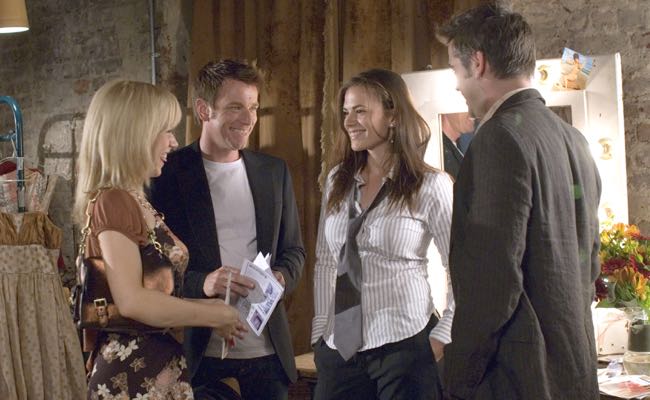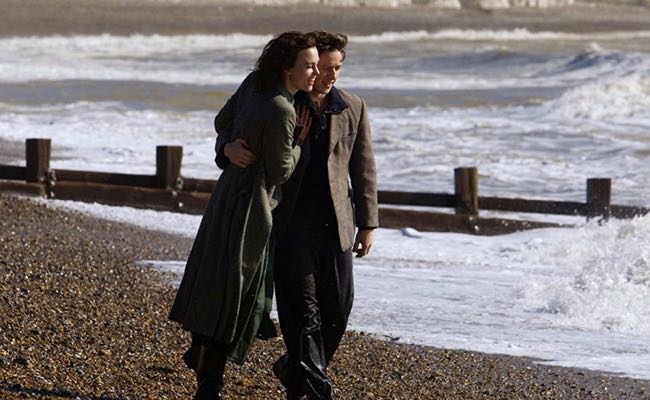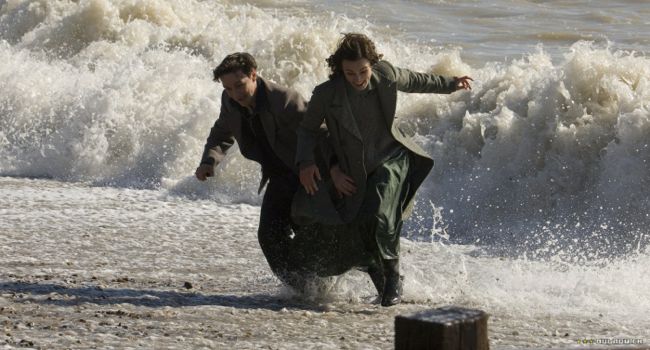
VENICE FILM REVIEW: Brian De Palma’s ‘Redacted’

By Ray Bennett

Filmmaker Brian De Palma turns 67 on Tuesday so being handed the Silver Lion as best director for “Redacted” at the Venice International Film Festival was s timely gift.

The director faces a lot of flack for his searing docudrama about an incident involving U.S. soldiers in Iraq and critical response has been mixed and heated. The director of “Carrie” and “Scarface” explained to the festival press corps the title of his film, which screened today at the Toronto International Film Festival.
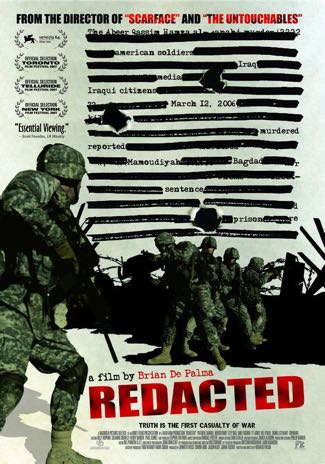
Redacted poster x325He said, “All the images we…have of our war are completely constructed — whitewashed, redacted,” and he revealed that he had found many of the harrowing images in the film, including videos and photos taken by soldiers, on the Internet: “One only hopes that these images will get the public incensed enough to get their congressmen to vote against the war.”

After the Venice screening, De Palma, said, “The movie is an attempt to bring the reality of what is happening in Iraq to the American people. In Vietnam, when we saw the images and the sorrow of the people we were traumatising and killing, we saw the soldiers wounded and brought back in body bags. We see none of that in this war.

“It’s all out there on the Internet, you can find it if you look for it, but it’s not in the major media. The media is now really part of the corporate establishment. When I went out to find the pictures, I said (to the media) give me the pictures you can’t publish…

“Everything that is in the movie is based on something I found that actually happened. But once I had put it in the script I would get a note from a lawyer saying you can’t use that because it’s real and we may get sued.

Magnolia Pictures will release “Redacted’ in the United States in November in plenty of time to qualify for next year’s Academy Awards. No word yet on a U.K. release. Here’s my review from The Hollywood Reporter.

VENICE – Veteran director Brian De Palma’s filmmaking skills have seldom been as razor sharp as they are in his sensational new film about members of a U.S. Army squad who rape and murder a 15-year-old Iraqi girl and slay her family.

Made on HD video and employing images from digital cameras, video recorders, Internet uploads and old-fashioned film, De Palma’s movie is a ferocious argument against the engagement in Iraq for what it is doing to everyone involved.

Made so expertly that it appears to be assembled from genuine footage, the film details the extraordinary psychological pressure suffered by young soldiers on checkpoint duty in occupied areas of Iraq, and then follows one unit as two of its members skew monstrously out of control.

De Palma’s screenplay is outstanding, and he draws wonderfully naturalistic performances from his youthful cast. Sympathetic to the young men who lose their way in horrible circumstances but unflinching in its depiction of the horrors that can result, the film is harrowing, but it should find responsive audiences everywhere.

A fictional story based on real events, “Redacted” distills images from an array of sources to tell its story, beginning with those captured by Angel Salazar (Izzy Diaz), a young soldier who hopes they will buy his way into film school. Clean-cut Lawyer McCoy (Rob Devaney) also wields a video camera, but Salazar goes to extremes making a daily record of almost everything he sees.

That includes conversations with the other guys in the unit: Reno Flake (Patrick Carroll), a doper whose name is apt; B.B. Rush (Daniel Stewart Sherman), a blowhard with a lot of body fat; Gabe Blix (Kel O’Neill), who likes to read John O’Hara; and two sergeants, Sweet (Ty Jones) and Vazques (Mike Figueroa). They goof around for the camera off duty and Salazar even records them on duty so that when one of them is blown to pieces by a bomb left in roadside trash, he gets it all.

By then, footage from a French documentary about the unit has made clear how the monotony and constant fear of maintaining checkpoints grinds the men down. Constantly being told they have to remain on duty for a further tour, they are drained and on edge. The docu reports that over 24 months 2,000 Iraqis were killed at checkpoints with only 60 proven to be insurgents. In one such incident, a pregnant woman and her baby are killed when her brother, taking her to the hospital, races through the unit’s checkpoint thinking he’s been waved on.

Rush and Flake are especially vulnerable to demonizing an enemy that they don’t recognize or understand. Their plan to rape the daughter of a Sunni man recently arrested comes up almost idly but then becomes one of deadly intent.

De Palma uses all his considerable talent to make clear what has happened to these young men and the performances, especially by Carroll as the callously indifferent Flake and Devaney as the conscience stricken McCoy, are first rate.

The director makes great use of Handel’s “Sarabande” in the picture, the somber tones familiar as the main title music in Kubrick’s “Barry Lyndon.” It’s a reminder that nothing depicted in this film is new and that it’s a shame it needs to be told again.

Venice International Film Festival

Cast: Izzy Diaz; Daniel Stewart Sherman; Patrick Carroll; Rob Devaney; Mike Figueroa; Ty Jones; Kel O’Neill; Director, writer: Brian De Palma; Director of photography: Jonathon Cliff; Production designer: Phillip Barker; Costume designer: Jamila Alleddin; Editor: Bill Pankow; Producers: Mark Cuban, Jason Kliot, Simone Urdl, Joana Vicente, Todd Wagner, Jennifer Weiss; Co-executive producer: Gretchen McGowan; Produced by HDNet Films; MPAA rating: R; Running time, 90 minutes.

 

Posted in Film, Reviews, Venice International Film Festival | Tagged , , | Comments Off on VENICE FILM REVIEW: Brian De Palma’s ‘Redacted’

VENICE FILM REVIEW: Ang Lee’s ‘Lust, Caution’

Lust, Caution x650

By Ray Bennett

VENICE – Ang Lee’s lugubrious spy epic “Lust, Caution” (Se jie)  brings to mind what soldiers say about war: that it’s long periods of boredom relieved by moments of extremely heightened excitement.

There’s an extended and nasty murder scene in which several inept resistance fighters make a bloody mess of stabbing a man to death and a series of sex scenes so close to the knuckle and more lubricious joints as to appear real. No wonder the MPAA has slapped an NC-17 rating on the picture, which screened in competition at the Venice International Film Festival.

But getting to those episodes, which are of dubious merit, means enduring 156 tedious minutes watching a group of not very interesting young Chinese people learn how to fight the occupying Japanese during WWII. Needlessly long and filled with albeit beautifully staged and filmed sequences where not very much happens, the film is unlikely to capture the word of mouth buzz required to overcome the handicap of its rating.

The plot is much like “Black Book,” Dutch director Paul Verhoeven’s tale of a young Jewish woman who sleeps with a Nazi on behalf of the resistance, although it has none of the flair of that film. In “Lust, Caution,” it’s an idealistic young Chinese woman named Chih-ying Chu (Tang Wei) who volunteers to become the mistress of Mr. Yee (Tony Yeung), a traitor who runs the brutal secret service on behalf of the hated occupying force.

The idea is that if she intrigues him enough he will breach his supercautious regimen and place himself at risk so the others in Chih-ying’s group can assassinate him. Kuang Yu-Min (Wang Lee-Horn), who heads the group, is handsome and noble, and also attracted to the girl although he reveals that about three years too late.

Starting off as a theatrical troupe producing patriotic plays, they graduate to armed activity as part of a cell run by the organized resistance. They’re just not very good at it. Chih-ying, however, having demonstrated onstage that she’s a superb actress, takes to subterfuge like a natural-born Mata Hari.

With her shy beauty and pleasant manners, she is invited to join the mahjong circle of Mrs. Yee (Joan Chen) among the Chinese elite permitted to enjoy a privileged life by the Japanese. They are ladies who lunch and talk about the luxuries that they miss but are sometimes available from Hong Kong.

Chih-ying soon catches the eye of Mr. Yee and before long becomes his mistress. That’s when she starts really earning her resistance pay. Mr. Yee is a brutal rapist and their sexual encounters become sado-masochistic episodes in which the man shows a glimmer of humanity only at the point of sating his lust.

There’s a fair bit of that and it is well choreographed with lots of flesh on display although entirely devoid of passion. The film looks gorgeous but the plotting is clumsy and the acting is flat. It takes a long time before the idea of killing Mr. Yee gets going and by then it appears that director Lee has lost the plot and his laborious tale appears to have no point at all.

Venice International Film Festival In Competion

Cast: Tony Leung; Joan Chen; Tang Wei; Wang Lee-Horn; Anupam Kher; Director: Ang Lee; Screenwriters: James Schamus, Hui-Ling Wang, from a story by Eileen Chang; Director of photography: Rodrigo Prieto; Production designer: Pan Lei; Music: Alexandre Desplat; Costumes: Lai Pan; Editor: Tim Squyres; Producers: William Kong, Ang Lee; Executive producer: James Schamus; Production: Focus Features, River Road Entertainment in association with Haishang Films; Running time, 156 minutes; MPAA rating: NC-17


Posted in Film, News, Reviews, Venice International Film Festival | Tagged , , , , , , | Comments Off on VENICE FILM REVIEW: Ang Lee’s ‘Lust, Caution’

VENICE FILM REVIEW: Jose Luis Guerin’s ‘In the City of Julia’

sylvia x650By Ray Bennett

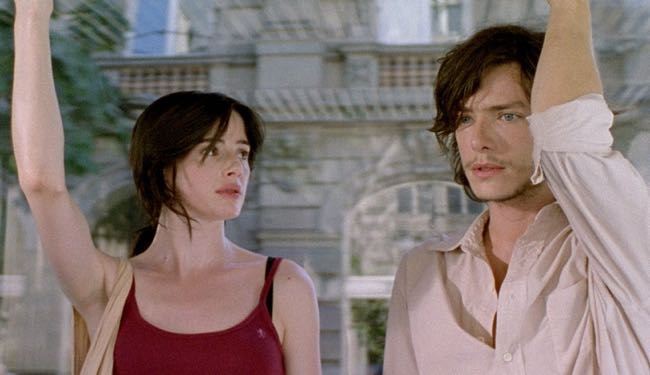
VENICE – Virtually a silent movie apart from the everyday sounds of the French city of Strasbourg, Spanish director Jose Luis Guerin’s lyrical tale of forlorn love, “In the City of Sylvia,” is a treat for romantics and people watchers.

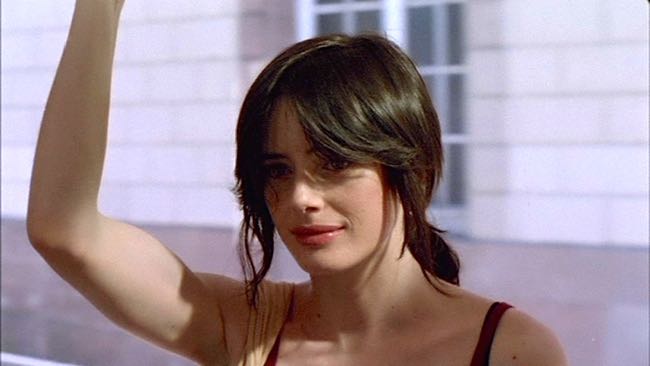
It’s a simple tale of an artistic young man (Xavier Lafitte, below) who returns to Strasbourg in search of a woman named Sylvia with whom he had a brief affair six years earlier. He spends his time at cafes in the vicinity of their first meeting, writing notes and sketching images of the people he sees. In due course he spots someone (Pilar Lopez de Ayala, above)) he thinks is Sylvia and so he follows her.

Slow moving and filled with tiny observed moments, the film is wonderfully crafted by director Guerin and cinematographer Nathasa Braier. Screened in competition at the Venice International Film Festival, it could be in line for awards and with its beautiful players and universal appeal it should do well internationally.

The anonymous young man who sits down one day at the Cafe du TNS-Theatre National de Strasbourg has the looks of Byron and an eye for human expression. The camera goes with him as he unobtrusively gazes at a range of mostly young people talking animatedly or sitting in silence; lovers kissing; couples disagreeing and individuals sitting, thinking, and staring at something or nothing.

in-the-city-of-sylvia x650It’s a full 35 minutes before anyone speaks and that’s when the young man calls out the name Sylvia. But the woman ignores him and follows a wandering course through the city’s Old Town with the man in gentle pursuit. In other circumstances, the young man’s behavior would be odd or threatening, and there comes a time when the object of his attentions makes that point.

But Lafitte is so assured in his portrayal of honest yearning and De Ayala is such a radiantly beautiful mystery that the film is more succulent than piquant. Filled with small eye-pleasing images, it’s a picture that audiences might wish to see more than once in order to relish it all.

Venue: Venice International Film Festival; Cast: Pilar Lopez de Ayala, Xavier Lafitte, Laurence Cordier, Tanja Czichy, Eric Dietrich, Charlotte Dupont; Director, writer: Jose Luis Guerin; Director of photography: Natasha Braier; Production designer: Maite Sanchez; Costume designers: Valerie-Elder Fontaine & Miriam Compte; Editor: Nuria Esquerra; Producers: Luis Minarro, Gaelle Jones; Production: Eddie Saeta S.A., Chateau-Rouge; No MPAA rating; running time, 84 minutes.

This review appeared in The Hollywood Reporter.

Posted in Film, Reviews, Venice International Film Festival | Tagged , , , , | Comments Off on VENICE FILM REVIEW: Jose Luis Guerin’s ‘In the City of Julia’

VENICE FILM REVIEW: Nikita Mikhalkov’s ’12’

'12 x650'

By Ray Bennett

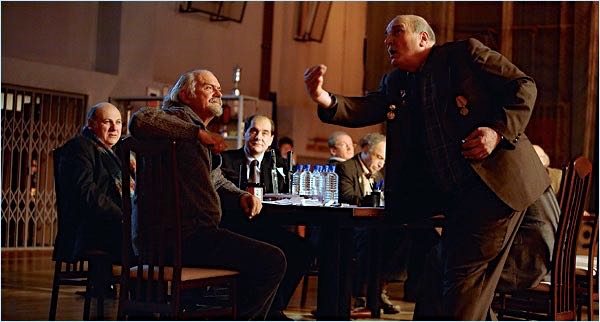
VENICE, Italy — Sidney Lumet turned Reginald Rose’s fine play “12 Angry Men” into a splendid movie in 1957 and it has been revisited on stage and television but never better than in Russian filmmaker Nikita Mikhalkov’s triumphant new film version titled simply “12.” Continue reading →

Posted in Film, Reviews, Venice International Film Festival | Tagged , , | Comments Off on VENICE FILM REVIEW: Nikita Mikhalkov’s ’12’

VENICE FILM REVIEW: Johnny To and Wai Ka-Fai’s ‘Mad Detective’

mad-detective x650By Ray Bennett

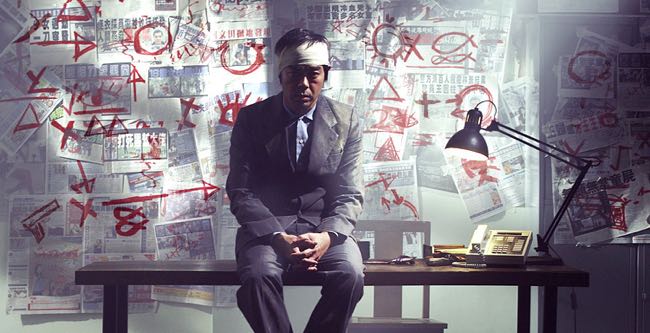
VENICE – Most really smart sleuths in crime fiction pick up on external clues, but Kowloon cop Bun (Lau Ching Wan, pictured) in “Mad Detective” identifies villains by recognising a person’s inner personality or personalities, as the case may be.

It’s a gift with serious complications because while his huge leaps of logic often lead to arrests, he loses grip of his mind and is fired from the police force. In the film’s taut, amusing and exciting story, directed by Johnny To and Wai Ka-Fai, he is brought back to help investigate the disappearance and possible murder of a fellow police officer.

Announced at the last minute as the “surprise movie” in competition at the Venice Film Festival, “Mad Detective” is concise and artful. It will appeal to movie-goers who like cop stories fast and furious but also complex and witty, especially as it mostly eschews the ultraviolence of many Hong Kong crime pictures.

Lau Ching Wan is outstanding as loony copper Bun, who lives up to his extreme reputation by slicing off his right ear as a retirement gift for the departing police chief. He explains later, wearing a false ear, that he did it because the man had no inner personality.

Bun’s technique involves such things as climbing into a suitcase that is pushed downstairs in order to picture a crime and re-creating robberies using his finger as a gun before astonished witnesses. In the middle of a storm, coming across a street with sunshine on one side and rain on the other, he sees it as a sign of being on the right track.

When young officer Ho (Andy On) asks for his help to solve the case of a missing cop named Wong — who chased a suspect into the woods and hasn’t been seen since — Bun immediately suspects that he’s dead. He digs a grave among the trees and climbs in to better identify with the situation, but Ho insists that he must experience it. Ho, however, lacks the instincts for the task and emerges from the dirt considerably shaken.

Not until Bun buries himself does he fully grasp that Wong is dead and that his partner Chi-wai (Lam Ka Tung) killed him. Not only that, but he believes Chi-wai has seven different inner personalities and is guilty of the subsequent crime wave involving Wong’s stolen gun. Trouble is, Bun hasn’t been taking his medication and the wife he’s always talking to isn’t actually there.

Directors To and Wai get first-rate work from cinematographer Cheng Siu Keung and editor Tina Baz as the film starts to reveal all the different personalities that only Bun can see. In a giddily entertaining climax in a hall of mirrors cleverly created by production designer Raymond Chan, two detectives have a gunfight with two villains, or possibly nine.

Orson Welles would applaud.

Venue: Venice International Film Festival; Cast: Lau Ching Wan; Andy On; Lam Ka Tung; Kelly Lin; Directors, producers: Johnny To, Wai Ka-Fai; Screenwriters: Wai Ka-Fai, Au Kin Yee; Director of photography: Cheng Siu Keung; Production designer: Raymond Chan; Music: Xavier Jamaux; Costume designer: Stanley Cheung; Editor: Tina Baz; Executive producer: Charles Heung; Production: Milky Way Image Co.; No MPAA rating; Running time, 89 minutes.

This review appeared in The Hollywood Reporter.

Posted in Film, Reviews, Venice International Film Festival | Tagged , , , , | Comments Off on VENICE FILM REVIEW: Johnny To and Wai Ka-Fai’s ‘Mad Detective’

VENICE FILM REVIEW: Penny Woodcock’s ‘Exodus’

Exodus x650By Ray Bennett

VENICE – Although director and writer Penny Woodcock’s post-apocalyptic fable “Exodus” wears its heart on its sleeve and occasionally staggers under the weight of its earnestness, it’s an engaging piece of work.

Woodcock places the story from the second book of the Old Testament in a future England where Pharoah (Bernard Hill) is a local politician and Moses (Daniel Percival) is his adopted son. It’s a time when anyone not lilywhite has been lumped together — minorities, asylum-seekers, rebels, criminals, deviants — and walled into a place called Dreamland.

It’s a ghetto familiar from films such as “Mad Max Beyond Thunderdome” and “Children of Men,” and Moses ends up there when he causes the death of a guard who is threatening a young woman.

All the key points of the Biblical story are touched upon as Moses stands up to Pharoah and strives to free what have become his people. Well-made and acted with enthusiasm, the film is another Channel 4 production and should do well at the boxoffice on its travels abroad. It screened in the Horizons sidebar of the Venice International Film Festival.

Daniel Percival is Moses, a young man first seen as a baby abandoned for safekeeping on a beach by his Romany mother. He is found by Batya Mann (Ger Ryan) whose husband Pharoah becomes the leading politician 20 years later when the world is in uproar.

Moses is a marine scientist with only academic plans, but when he visits Dreamland he becomes a changed man. Not only does he learn about his real background from activist Aaron (Anthony Johnson) but also he falls in love with the woman he saved from the guard, Zipporah (Clare-Ashitey, from “Children of Men”).

The population of Dreamland is deprived, hungry and constantly threatened by the roaming “pest control” — soldiers with masks and rifles. Moses negotiates with Pharoah for the walls to be pulled down, but it takes measures of Biblical proportions before something happens.

Woodcock invents clever modern variations on the Old Testament plagues involving poisoning the ocean and spreading viruses on the Internet. Production designer Christina Moore created Dreamland in a disused funfair that had the same name in the seaside town of Margate, Kent, that was once a haven for working-class holidaymakers.

Cinematographer Jakob Ihre captures it well. There’s also an impressive bit of business involving a 25-meter tall funeral pyre in the figure of a man made from trash and old furniture created for the film by artist Antony Gormley. Such images help the film overcome its occasional awkwardness and tendency to preach.

Cast: Bernard Hill; Daniel Percival; Ger Ryan; Clare-Hope Ashitey; Anthony Johnson; Delroy Moore; Michael Tulloch; Justin Smithers; Matthew Smith; Director, writer: Penny Woodcock; Director of photography: Jakob Ihre; Production designer: Christina Moore; Music: Malcolm Lindsay; Costume designer: Suzanne Cave; Editor: Brand Thumim; Producer: Ruth Kenley-Letts; Executive producer: Michael Morris; Production: Artangel, Channel 4; No rating; Running time, 111 minutes.

This review appeared in The Hollywood Reporter.

Posted in Film, Reviews, Television | Tagged , , , , , | Comments Off on VENICE FILM REVIEW: Penny Woodcock’s ‘Exodus’

VENICE FILM REVIEW: Woody Allen’s ‘Cassandra’s Dream’

Cassandra's Dream x650

By Ray Bennett

VENICE, Italy — Woody Allen’s “Cassandra’s Dream” is a humourless misfire that wastes the talents of some fine actors including Ewan McGregor, Hayley Atwell and Tom Wilkinson as it continues the mystery of Colin Farrell’s appeal to major filmmakers.

As writer, Allen offers lazy plotting, poor characterization, dull scenes and flat dialogue. As director, he makes no demands on the abundant talents of cinematographer Vilmos Zsigmond and composer Philip Glass. He employs predictable and illogical London and countryside locations. And he abandons good players to do what they can with the material at hand while he allows Farrell to mumble his way through another indifferent performance.

The film, screened in the Venice Masters sidebar of the Venice International Film Festival, has minimal boxoffice prospects, and only McGregor and Allen completists are likely to want it on their DVD shelf.

McGregor and Farrell play unlikely brothers who become enmeshed in a plot by a rich uncle to murder a disgruntled employee whose testimony in court could send him to prison for life. Ian (McGregor) is a clean-cut dreamer who helps his worn-down father run a small restaurant and borrows fancy cars to impress women. Terry (Farrell) is an unshaven lout who works as a car mechanic, drinks too much and likes to bet on the ponies.

Nevertheless, the brothers are able to pool resources for the purchase of a good-looking boat they name “Cassandra’s Dream” after a horse that recently came in for Terry.

Even with this outlay, Ian is able to make plans to invest in a scheme to build hotels in California and to woo a beautiful young actress named Angela (Atwell). Terry finances a home for his bubbly wife Kate (Sally Hawkins) and buys a seat in a big-time poker game.

When Terry loses £90,000 at poker, they turn in desperation to fabulously wealthy Uncle Howard (Wilkinson) who just happens to be visiting London from his sumptuous home in Los Angeles where he oversees a global chain of plastic surgery clinics.

Uncle Howard is willing to pay off Terry’s debts and provide the funds for Ian’s hotel dreams if they will do him a little favor. His empire is about to come crashing down and he will go to jail unless he can prevent a man named Martin Burns (Phil Davis) from testifying. He has to be killed. “I see no alternative,” says Uncle Howard.

At first unwilling, the brothers talk themselves into the crime and the rest of the picture follows their attempts at murder and its dire consequences. But it is played out with not a shred of wit or tension. Key plot points beggar belief: that jittery, pill-taking Terry knows how to play poker or that any loan-shark would allow him to build up such a huge debt; that Uncle Howard, having global resources including businesses in China, would have to resort to his witless nephews to get him out of a jam; and that two basically decent and humble blokes would so readily commit murder.

It’s all contrivance, and Allen does none of the things required in a movie to establish verisimilitude. There’s no comment on the lives of the two young men and scenes involving Atwell and her theatrical chums have no bite. Atwell is a major find, however, and like McGregor and Wilkinson, and the rest of a good cast, will go on to better things. Where Allen and Farrell go now is a sadder question.

Venice International Film Festival (Venice Masters)

Cast: Ewan McGregor; Colin Farrell; Hayley Atwell; Sally Hawkins; Tom Wilkinson; Phil Davis; Clare Higgins; Tamzin Outhwaite; Director, writer: Woody Allen; Director of photography: Vilmos Zsigmond; Production designer: Maria Djurkovic; Music: Philip Glass; Costume designer: Jill Taylor; Editor: Alisa Lepselter; Producers: Letty Aronson, Stephen Tenenbaum, Gareth Wiley; Executive producers: Vincent Maraval, Brahim Chioua, Daniel Wuhrman; Co-executive producers: Jack Rollins, Charles H. Joffe; An Iberville production; No MPAA rating, running time 108 minutes.

Posted in Film, Music, Reviews, Venice International Film Festival | Tagged , , , , , , , , , , , , | Comments Off on VENICE FILM REVIEW: Woody Allen’s ‘Cassandra’s Dream’

VENICE FILM REVIEW: Ken Loach’s ‘It’s a Free World’

IT'S A FREE WORLD..., Kierston Wareing, 2007. ©IFC Films

By Ray Bennett

VENICE – Few countries have a handle on matters of immigration, but a combination of free market profit-seeking and nanny-state regulations has resulted in a singular mess in Great Britain, as Ken Loach illustrates in his tough-minded slice-of-life picture “It’s a Free World.” Continue reading →

Posted in Film, Reviews, Venice International Film Festival | Tagged , , , , | 2 Comments

VENICE FILM REVIEW: Joe Wright’s ‘Atonement’

Atonement 1 x650

By Ray Bennett

VENICE – “Atonement,” Ian McEwan’s best-selling novel of love thwarted by juvenile fantasy, ranks among the best novel adaptations of recent times.

With compelling, charismatic performances by Keira Knightley and James McAvoy (pictured)  as the lovers and a stunning contribution from Romola Garai (photo below) as their remorseful nemesis, the film goes directly to “English Patient” territory and might also expect rapturous audiences and major awards. Continue reading →

Posted in Film, Reviews, Venice International Film Festival | Tagged , , , , , , , , , | Comments Off on VENICE FILM REVIEW: Joe Wright’s ‘Atonement’

‘Atonement’: Striking all the right notes in Venice

'Atonement' Cliff

By Ray Bennett

VENICE – Composer Dario Marianelli has created a wonderfully inventive score for Joe Wright’s new film “Atonement,” which features the tapping of typewriter keys as percussion.

It’s a very effective device that plays off the title and it contributes much to the emotional power of the film, which opens the Venice International Film Festival today.

Marianelli is one of several from the “Pride & Prejudice” team that Wright re-assembled for his screen version of the Ian McEwan novel. The composer picked up a Classical Brit award and an Academy Award nomination for his Austen score.

He’s also worked with directors Bille August, Michael Winterbottom, Michael Caton-Jones and Terry Gilliam, and did the music for Neil Jordan’s upcoming revenge thriller “The Brave One” starring Jodie Foster.

“Atonement”, which co-stars Keira Knightley and James McAvoy (pictured) spans several decades in its story of lovers torn apart cruelly with a long section set during Britain’s valiant World War II retreat from Dunkirk.

The soundtrack album, on Universal Music Classics and Jazz, features songs from the period including “Miss You” performed by Flanagan and Allen, plus “The White Cliffs of Dover,” “Keep the Home Fires Burning” and “Bless ’em All” sung by Dunkirk soldiers in the film. A key scene about writing a love letter benefits from “O soave fanciulla, o dolce viso” from “La Boheme.”

The English Chamber Orchestra, conducted by Benjamin Wallfisch, plays Marianelli’s score, which was coordinated by Air Edel’s Maggie Rodford and recorded at Air Lyndhurst. Pianist Jean-Yves Thibaudet and harmonica player Brendan Power are the soloists. There’s a also clip in the film from Marcel Carne’s 1938 “Le quai des brumes” with music by Maurice Jaubert.

Subbing for the French countryside in the film are locations in Lincolnshire, Norfolk and Cambridgeshire. The Dunkirk action, captured in one steadicam shot, was done on Redcar beach in England’s northeast while the poppy scene was shot in Cheltenham, Gloucestershire.

The privately owned Stokesay Court in Shropshire was used for all the exteriors for the Tallis home in the story. With the film destined to be a hit, expect tourism to rise accordingly. 

Posted in Film, Music, Notes, Venice International Film Festival | Tagged , , , , , | 1 Comment