CANNES FILM REVIEW BRIEF: Juraj Lehotsky’s ‘Blind Loves’

'Blind Loves' 2008 x650By Ray Bennett

CANNES – Love is blind, the poets say, and the blind also love but it’s not so easy to clink glasses of celebratory champagne when you and your partner cannot see.

Slovakian director Juraj Lehotsky observes this charmingly in his heartwarming documentary “Blind Loves”, screened in Directors Fortnight at the Festival de Cannes.

Filmed in the half-light of claustrophobic living quarters that do not bother those without vision, this look at several blind people getting on with their lives sends an unsentimental but optimistic message. Destined for strong showings on the festival circuit, the film also should thrive in educational circles.

Lehotsky has a keen and compassionate sensibility and he uses classical music to great effect. Even at a trim 77 minutes, the film makes the characters come alive and some of the small moments are deeply affecting.

These include blind lovers losing each other momentarily on a crowded dance floor; a sightless woman hanging up the laundry to dry on a line; a young boy asking his now-blind mother what she used to see; a blind woman describing why her favorite color is orange because of all the senses primed by the fruit; and a teenaged girl tapping into the Internet and dreaming of love.

It’s a film that puts a smile in your heart and you don’t need eyes for that.

This review appeared in The Hollywood Reporter.

Posted in Festival de Cannes, Film, Reviews | Tagged , , | Comments Off on CANNES FILM REVIEW BRIEF: Juraj Lehotsky’s ‘Blind Loves’

CANNES FILM REVIEW: Ken Loach’s ‘Looking for Eric’

Looking for EricBy Ray Bennett

CANNES – The term “crowd-pleaser” is not often attached to the work of Ken Loach, the British Palme d’Or-winning director of films of social realism, but his latest Festival de Cannes Competition entry, “Looking for Eric,” is exactly that.

At the press screening, there was laughter throughout, frequent clapping and sustained applause at the end. Loach regular Paul Laverty’s script is filled with great gags and the director does his typically polished job of bringing out the best in his actors.

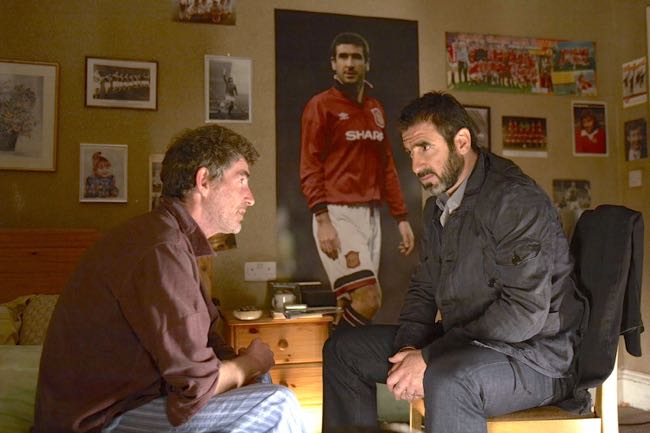
They include former soccer player Eric Cantona (pictured right with Steve Evets), the Frenchman who was unheralded at home but called King Eric at Manchester United, the world’s biggest football club.

With Man U having just won the English Premier League title once again and heading to the Champions League final in Rome on May 27, the film’s football connection could not be more advantageous. If only the club’s millions of supporters around the world go to see it, and they will all want to, the movie will be a hit.

But “Looking for Eric” should connect with moviegoers who enjoy clever comic writing with a touch of fantasy plus fans of any sport that has legendary heroes. It looks set to be Loach’s biggest mainstream hit.

The footballer materializes in the home of a sad-sack postal worker also named Eric, played with great energy and flair by Steve Evets, whose latest panic attack leads to him repeatedly driving the wrong way round a roundabout until the inevitable crash.

He escapes unhurt and no one else is harmed but Eric is chastened by his latest attempt to flee the unhappy realities of his life. His second wife split seven years earlier and his two stepsons, Ryan (Gerard Kearns) and Jess (Stefan Gumbs), ride roughshod over him at home.

His mates at work, led by portly Meatballs (John Henshaw), do their best to cheer him up, and there’s a hilarious sequence in which they go one at a time to try to make him laugh, but it doesn’t help.

Retreating to his own room, which is full of Man U memorabilia and pictures, including a life-sized poster of Cantona, to whom he confides his worries, Eric is startled to discover the genuine article has shown up to listen.

More than that, the iconic star, who was known for quoting obscure sayings, has brought a bunch of his favorite aphorisms and proverbs to help Eric clean up his life and find some happiness. This involves setting his kids straight and trying to make amends with his first love, Lily (Stephanie Bishop), whom he abandoned with their baby decades earlier.

There’s a moment in the picture when a shift from high comedy to grim reality, caused by Ryan’s involvement with a local hoodlum, is a bit abrupt and some may find the themes incompatible, but it wouldn’t be a Loach film without some of that. With Lafferty’s help, he manages to achieve a balance. In the end, with Cantona’s wisdom and the help of his pals from the post office, Eric finds the courage and wit to win the day in a hugely entertaining final sequence.

Very funny and a bit sentimental, it’s naturalistic comedy of the highest order, with Evets and Henshaw standouts among a terrific cast. Cantona too shows great comic timing and is both imposing and self-effacing, playing off his reputation for being a proud and temperamental man.

Not only Man U supporters will enjoy the splendid clips showing some of his classic passes and goals, and his dialogue is a constant delight. “Sometimes we forget you’re just a man,” Eric tells him. Comes the reply: “I am not a man. I am Cantona!”

Venue: Festival de Cannes, In Competition; Cast: Steve Evets, Eric Cantona, John Henshaw, Stephanie Bishop, Lucy-Jo Hudson, Gerard Kearns, Stefan Gumbs; Director: Ken Loach; Screenwriter: Paul Laverty; Production designer: Fergus Clegg; Music: George Fenton; Costume designer: Sarah Ryan; Editor: Jonathan Morris; Producer: Rebecca O’Brien; Executive producers: Eric Cantona, Pascal Caucheteux, Vincent Maraval; Director of photography: Barry Ackroyd; Production: Cantos Bros. Prods., Sixteen Films, Why Not Prods., Wild Bunch; Sales: Wild Bunch; Not rated; running time, 116 minutes.


Posted in Festival de Cannes, Film, Reviews | Tagged , , , , , | 1 Comment

CANNES FILM REVIEW: Olivier Cohen’s ‘Invisible Eyes’

invisible eyes x650By Ray Bennett

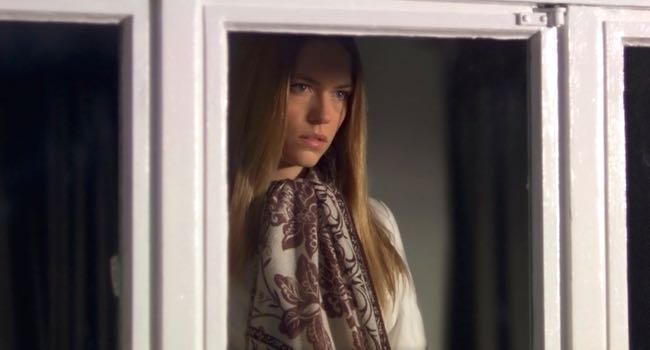
CANNES – Olivier Cohen’s intelligent mystery “Invisible Eyes” has all the conventions of a thriller about a woman alone in a house but confounds expectations by moving pleasingly into “Twilight Zone” territory.

The offbeat story, which stars German catwalk veteran Pia Mechler (pictured) as an over-the-hill supermodel who starts to believe the walls have eyes, also has echoes of the themes explored by Charlie Kaufman in “Adaptation,” with a puzzle about who’s really writing the script.

Marketed smartly, the handsomely made film could go beyond its obvious youth audience to draw in fans of classic film and television mysteries. It also features a late Peter Cushing-like appearance by the fine English stage actor Michael Mears as a key instrument in the plot.

The setup is simple. Gaby (Mechler) arrives at a large, remote English country home to spend time watching DVDs and reading scripts in order to move on from being a top model. Her manager/lover Dan (Simon Merrells) enthuses about her future but his manner suggests his words are artificial as he departs to the city.

Gaby soon claims to sense another’s presence in the empty house and begins to fantasize about her first lover, a young man who died in a motorcycle accident. Visibly unsettled, she starts to hear odd noises and receive weird notes. Answering her pleas for help, Dan suspects she’s losing her mind, not least because the notes are in her handwriting.

The French director establishes an unsettling tone that tickles the imagination in the mood of that wonderful word eldritch, but along with the requisite shocks, he delivers a smart and intriguing payoff.

Merrells, who has won plaudits in the Brando role in a stage production of “On the Waterfront” in London’s West End, makes his character ambiguously sinister and Mears nails his small but vital role.

Mechler’s German-inflected accent when speaking English at first suggests the attractive young actress will wobble when things get spooky but her ever-so-slightly stilted delivery serves the character well. It heightens the evocation of classic suspense movies, along with Damien Salancon’s music, which plays with the genre’s traditions while hitting all the right notes.

Venue: Festival de Cannes, Market; Cast: Pia Mechler, Simon Merrells, Michael Mears, Mark Tintner, Ross Armstrong; Director, screenwriter: Olivier Cohen; Director of photography: Darran Bragg; Production designer: Gaelle Lindingre; Music: Damien Salancon; Costume designer: Nadya Lubrani; Editor: David Laurence; Producer: Liz Rosilio; Production company: HiDe Films; Sales: HiDe Films; Not rated; running time, 107 minutes.

This review appeared in The Hollywood Reporter.

Posted in Festival de Cannes, Film, Reviews | Tagged , , , | Comments Off on CANNES FILM REVIEW: Olivier Cohen’s ‘Invisible Eyes’

CANNES FILM REVIEW: Kamen Kalev’s ‘Eastern Plays’

eastern plays x650By Ray Bennett

CANNES – Uneven but gripping, Kamen Kalev’s “Eastern Plays,” which screened in Directors’ Fortnight, is a portrait of a young drug addict artist caught up in the violent racial strife of present-day Bulgaria.

There’s a sudden crime not long into the picture, a savage beating that drunken artist Itso (Christo Christov) witnesses. He also takes some blows even as he sees that his younger brother Georgi (Ovanes Torosian) is among the gang running amok.

The film touches on the brothers’ relationship, but it’s more an exploration of the artist’s feelings of desperate alienation in Sofia, a seemingly tranquil city in which street thugs are paid by slick politicos to stir up unrest.

Many scenes take place in darkness and some go nowhere, but its sympathetic portrait of a young man who knows he’s gone off the rails amid the travails of an Eastern Bloc nation grappling with racism will make the picture of interest to festivals and special interest audiences.

Kalev takes his time introducing the central characters up to the point when Itso stumbles upon a gang assaulting a Turkish man and woman and their daughter, who are visiting from Istanbul. Georgi acts as a lookout for the hoodlums but it’s not until the next day when Itso shows up for a family meal that it becomes clear they are brothers.

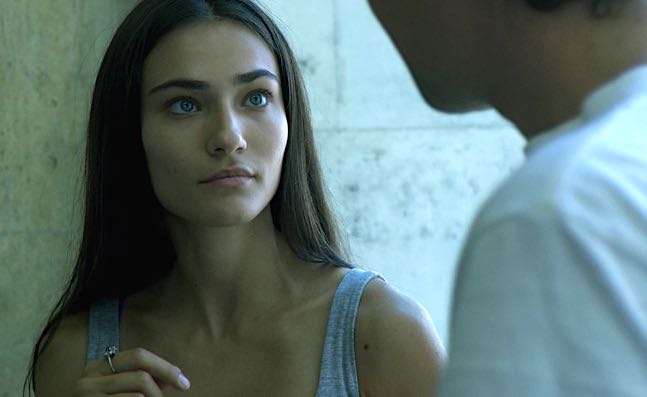
Itso, who has broken up with his tearful girlfriend Niki (Nikolina Yancheva), is attracted to the dreamy Turkish girl Isil (Saadet Isil Aksoy, pictured), but her father, in the hospital recovering from his beating, forbids her to see him.

Although Itso is on methadone and drinking too much, he forms a bond with the girl while Georgi fights his own demons and their struggles form the rest of the story.

Christov, who died after the making of the film and is given a dedication at the end of it, was a nonprofessional, but his acting shows both range and depth. A scene in which he expresses his emptiness to a witless psychiatrist is touching and he and Aksoy have much chemistry in their scenes together.

Venue: Festival de Cannes, Directors’ Fortnight; Cast: Christo Christov, Ovanes Torosian, Nikolina Yancheva, Saadet Isil Aksoy

Director, screenwriter, editor: Kamen Kalev; Director of photography: Julian Atanassov; Production designer: Martin Slavov; Production: Waterfront Film; Sales: Memento Films International; No t rated; running time, 89 minutes.

This review appeared in The Hollywood Reporter.

Posted in Festival de Cannes, Film, Reviews | Tagged , , | Comments Off on CANNES FILM REVIEW: Kamen Kalev’s ‘Eastern Plays’

CANNES FILM REVIEW: Caroline Strubbe’s ‘Lost Persons Area’

lost persons area x650By Ray Bennett

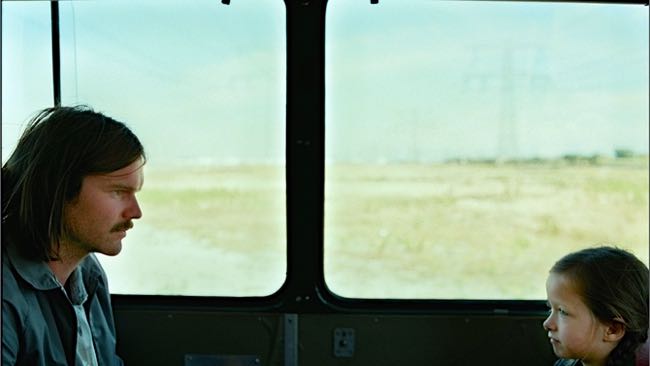
CANNES – The setting of Caroline Strubbe’s “Lost Persons Area”, which screened in Critics Week, is a wide flat plain populated by vast pylons bearing power cables that dwarf the human beings below.

The symbolism is the best part of the film, however, which tells of a family and a stranger dealing with an accident that affects all their lives.

Impressive exterior cinematography by Nicolas Karakatsanis is not matched in the interior scenes and, while the actors are plausible, Strubbe’s dialogue is not and too many scenes are fatally dull. The picture may find interest at a few festivals but hopes beyond that appear slim.

Lisbeth Gruwez and Sam Louwyck play Bettina and Marcus, a couple that operates a cafe close to the pylons, while Marcus runs the company that maintains and paints the giant structures. Their young daughter Tessa (Kimka Desart) is a strange, obsessive child who collects found objects and makes quirky objets d’art.

The dynamic changes when charming Hungarian painter Szablocs (Zoltan Miklos Hajdu) signs on and Marcus is injured, resulting in the amputation of a leg.

Strubbe strives to make the couple’s ramshackle relationship convincing and spends much time observing the eccentric child, but interest in their mutual fate soon dissolves.

This review appeared in The Hollywood Reporter.

Posted in Festival de Cannes, Film, Reviews | Tagged , , | Comments Off on CANNES FILM REVIEW: Caroline Strubbe’s ‘Lost Persons Area’

CANNES FILM REVIEW: Mathias Gokalp’s ‘Nothing Personal’

nothing personal x650By Ray Bennett

CANNES – It’s been said of some Hollywood studios that executive competition was so bad that colleagues stabbed you in the front. That’s pretty much what happens with the suits at a pharmaceutical company in Mathias Gokalp’s corporate satire, “Nothing Personal”, which screened in Critics’ Week.

All the action takes place during a cocktail party held at a fancy museum where the employees are drawn into role-playing that some take more seriously than others. As the rumor spreads that each staff member is being evaluated and the company is up for sale, behavior worsens.

Director Gokalp, who co-wrote the film with Nadine Lamari, repeats several sequences in order to reveal what actually happened in key encounters, but the repetition becomes tedious rather than amusing. The picture is unlikely to travel beyond domestic consumption.

It makes observations about the way big companies treat employees and how they treat each other that are common to all countries, and the infighting is sophisticated. But the humor is almost too dry and Gallic, and the static situation soon palls.

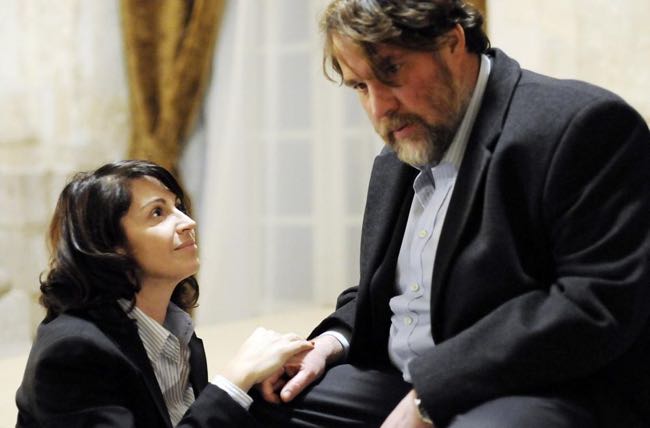
There are some familiar faces from French movies in the cast including Zabou Breitman and Bouli Lanners (pictured) along with Jean-Pierre Darroussin, Melanie Doutey, and Pascal Greggory, plus Gilles Bergerat from Comedie Francaise, but their moments to shine in the crowd are limited.

This review appeared in The Hollywood Reporter.


Posted in Festival de Cannes, Film, Reviews | Tagged , , , , | Comments Off on CANNES FILM REVIEW: Mathias Gokalp’s ‘Nothing Personal’

CANNES FILM REVIEW: Keren Yedaya’s Jaffa

Jaffa x650By Ray Bennett

CANNES – “Jaffa,” directed by Keren Yedaya, whose 2004 film “Or” won five awards at the Festival de Cannes including the Critics Week Grand Prix and Camera d’Or, is an absorbing and touching family drama set in the Israeli seaside town of the title.

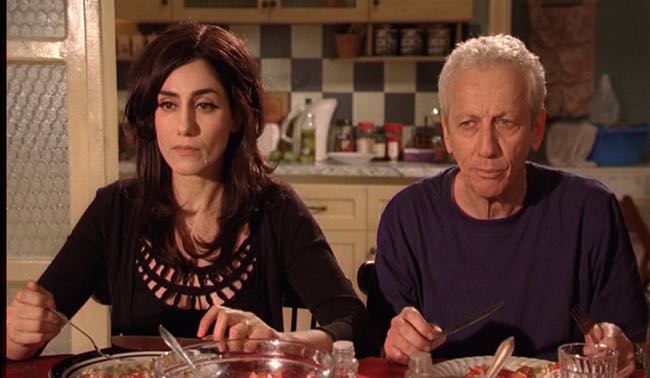
Well-acted, especially by Dana Ivgy (pictured below with Mahmoud Shalaby) in the central role of a young Jewish woman who falls for an Arab mechanic at her father’s garage, the film deals with a familiar set of circumstances in plausible fashion with an undercurrent of the ancient conflict between Arab and Jew.

jaffa2 x325Festival and specialised audiences will respond to the way Yedaya and co-writer Illa Ben Porat set up and develop the universal story and to the performances they have drawn from their players.

Mali (Ivgy) is the taken-for-granted member of the Wolf family, as her father Reuven (Moni Moshonov) and mother Osnat (Ronit Elkabetz) give all their attention to her brother Meir (Roy Assaf).

Lazy, sullen and resentful, Meir is a walking argument keen to disagree with everyone and quick to temper. While Reuven worries about keeping his garage in profit and how is son will possibly learn enough to run the family business, Meir antagonizes everyone, especially the Arabs who work for his father.

The object of most of his aggression is a young Arab named Tawfig (Mahmoud Shalaby), who works hard while Meir shirks and is respectful to both his own father and Reuven.

What nobody knows is that not only are Mali and Tawfig in love and planning to run off to get married, but Mali also is pregnant. Tawfig’s hourlong absence from work to make their travel arrangements sparks a violent reaction from Meir, who is hungover after he was kicked out of the family home and sleeping in the garage. The conflict leads to violence and that sets the course for the subsequent events.

Yedaya does well to establish Mali’s subservient place within the family as she is seen often cleaning up while others go about their business and she is ignored at the dinner table while the parents berate Meir for being irresponsible.

Ivgy gives a fine performance as a young woman who is overjoyed to be in love and expecting but whose life is turned upside down and utter despair beckons.

Shalaby is appealing, Moshonov and Elkabetz (pictured top) turn in typically insightful performances, and Assaf renders the detestable Meir with great magnetism. The cinematography is matter-of-fact until the moving final scene, when it genuinely enhances the drama, but Shushan’s score is a touch too mournful throughout.

Venue: Festival de Cannes, Out of Competition; Cast: Dana Ivgy, Moni Moshonov, Mahmoud Shalaby, Ronit Elkabetz, Roy Assaf; Director: Keren Yedaya; Screenwriter: Illa Ben Porat, Keren Yedaya; Director of photography: Pierre Aim; Production designer: Avi Fahima; Music: Shushan; Editor: Assaf Korman; Production companies: Bizibi, Transfax, Rohfilm; Sales: Rezo Films; Not rated; running time, 106 minutes.

This review appeared in The Hollywood Reporter.


Posted in Festival de Cannes, Film, Reviews | Tagged , , , , , , | Comments Off on CANNES FILM REVIEW: Keren Yedaya’s Jaffa

CANNES FILM REVIEW: Jane Campion’s ‘Bright Star’

By Ray Bennett

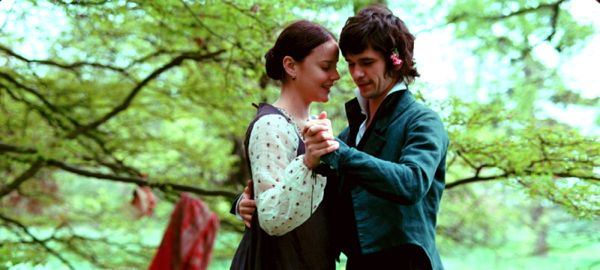
CANNES – A treat for romantics and those who take their poetry seriously, Australian director Jane Campion’s gorgeously filmed Festival de Cannes Competition entry “Bright Star” might not be a joy forever but it will do until the next joy comes along.

With much grace and at considerable leisure, 1993 Palme d’Or winner Campion (“The Piano”) tells the story of the brief love affair between the gifted but early dead poet John Keats and Fanny Brawne. Ben Whishaw plays Keats with impeccable tragedy and Abbie Cornish portrays winningly the beautiful seamstress Fanny, whose passion is constrained only by the rigorous mores of the times.

Cynics need not apply and it’s doubtful that “Bright Star” will be the shining light at many suburban mall movie houses, but festivals will eat it up, art house audiences will swoon and it will have a lucrative life on DVD and Blu-ray, not to mention the BBC and PBS.

The England depicted in the film is the one people are thinking of when they say they wish they were born during the time of the romantic poets. Only one scene in the picture shows the ugly underbelly of poverty in 1880s London, and for the rest it’s all picturesque houses and gorgeous gardens in Hampstead Village.

There, Fanny lives with her widowed mother, Mrs. Brawne (Kerry Fox), and her well-behaved younger siblings Samuel (Thomas Brodie Sangster) and Margaret, known as Toots, (Edie Martin).

Their place in society takes them to social events and balls where Fanny’s dance-card is always filled although the glamorous Keats prefers not to dance. She has made a name, and money, for herself as a skilled maker of most fashionable garments, although the best friend of the coveted Keats, a burly writer named Brown (Paul Schneider), dismisses her as “the very well-stitched Miss Brawne.”

Fastidious and proud, Fanny feuds with Brown, who is over-protective of his genius friend, but she sends Toots to buy a copy of the poet’s latest collection, as the child says, “to see if he’s an idiot or not.”

Persuaded that Keats is far from an idiot, she commences a romance that takes place within all the formal manners of the day so that intimacy relies on kissed love letters and briefly touched hands. When Keats’ brother Tom dies of consumption, things do not auger well and while the love affair between the poet and the seamstress grows, his fate has already been written.

The English Whishaw, who was a sensation as Hamlet in Trevor Nunn’s Old Vic stage production in 2004, played the similarly doomed Sebastian Flyte in “Brideshead Revisited” last year but he makes his Keats singularly memorable. Cornish has the acting skill to match her striking beauty and she makes the small loving gestures that the British might call soppy both real and touching. Among the pleasures of the film is listening to them both declaim Keats’ poetry.

The entire cast is good, with Schneider, who was among the exceptional ensemble in “The Assassination of Jesse James by the Coward Robert Ford”, and Fox especially strong. Cinematographer Greig Fraser captures beautifully Janet Patterson’s sumptuous production and costume designs, and the lovely gardens and countryside. Mark Bradshaw’s elegant score is pleasingly delicate.

Venue: Festival de Cannes, In Competition; Cast: Abbie Cornish, Ben Whishaw, Paul Schneider, Kerry Fox; Director, screenwriter: Jane Campion; Director of photography: Greig Fraser; Production and costume designer: Janet Patterson; Music: Mark Bradshaw; Editor: Alexandre de Franceschi; Producers: Jan Chapman, Caroline Hewitt; Executive producers: Francois Ivernal, Cameron McCracken, Christine Langan, David M. Thompson; Production: Pathé Productions, BBC Films, Screen Australia, New South Wales Film & TV Office, UKFC, Hopscotch International; Sales: Pathé Distribution; Not rated; running time, 120 minutes.

This review appeared in The Hollywood Reporter.

Posted in Festival de Cannes, Film, Reviews | Tagged , , , , | Comments Off on CANNES FILM REVIEW: Jane Campion’s ‘Bright Star’

CANNES FILM REVIEW: Andrea Arnold’s ‘Fish Tank’

katiejarviscliffBy Ray Bennett

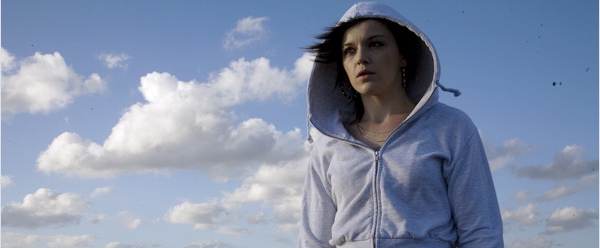
CANNES — Following her Festival de Cannes Jury Prize-winning debut feature “Red Road” in 2006, British director Andrea Arnold creates another vivid portrait of a woman in Competition entry “Fish Tank,” in which newcomer Katie Jarvis (pictured) gives a star-making performance as a disaffected teenager.

Co-starring Michael Fassbender (“Hunger”) and Kierston Wareing (“It’s a Free World”), it’s a vivid depiction of a single mom (Wareing) and her two daughters who live in a grim council flat on a decaying housing estate on the outskirts of London.

Destined for festival acclaim, the film will attract audiences drawn by Arnold’s gift for unblinking observation and some wonderfully naturalistic acting, particularly by Jarvis, who is onscreen throughout.

She plays Mia, a foul-mouthed, aggressively violent and desperately yearning 15-year-old with a slovenly mother, noisy kid sister (Rebecca Griffith) and dreams of becoming a dancer.

Arnold presents the claustrophobic urban wasteland where they live as a breeding ground for anger and despair.

The arrival of mother’s new boyfriend, Connor (Fassbender), brings some hope due to his charming confidence and caring manner.

Mother cleans up the house and Connor takes the kids on outings and encourages Mia in her dancing. The director subtly foreshadows the events that follow and while they comes as little surprise, they play out in credible fashion.

Only one episode of revenge late in the second half stretches plausibility but it does not detract from the film’s impressive power. Arnold creates searing scenes that stick in the mind. Her “Red Road” cinematographer Robbie Ryan makes skilful use of handheld cameras while production designer Helen Scott and editor Nicolas Chaudeurge contribute sterling work.

Besides the dancing element, the director weaves in a thread that involves Mia’s compassion for an aging horse and captures the tiny moments of affection that provide the glue that just about keeps deprived families sane.

Fassbender and Wareing give honest and open performances as the conflicted adults and young Griffiths, another first-timer, is memorably sharp as the kid sister. The film belongs to Jarvis, however,and she makes the most of it with expressive features that convey Mia’s mixed-up emotions from raging temper to sweet vulnerability. She will go far.

Venue: Festival de Cannes; In Competition; UK distributor: Artificial Eye;   Cast: Katie Jarvis, Michael Fassbender, Kierston Wareing, Rebecca Griffith, Harry Treadaway; Director, screenwriter: Andrea Arnold; EDirector of photography: Robbie Ryan; Production designer: Helen Scott; Costume designer: Jane Petrie; Editor: Nicolas Chaudeurge; Producers: Kees Kassander, Nick Laws; xecutive producers: Paul Trijbits, Christine Langan, David M.Thompson; Production: Kasander, BBC Films, UKFC, Limelight;Sales: Contentfilm International; Not rated; running time,124 minutes.

This review appeared in The Hollywood Reporter.

Posted in Festival de Cannes, Film, Reviews | Tagged , , , , , , , , | 1 Comment

CANNES: Pixar’s animated ‘Up’ and away in 3D

up x650By Ray Bennett

CANNES – Pixar’s 10th movie, “Up” opened the Festival de Cannes on Wednesday and it should prove as popular at the box office as all their other creations. Walt Disney releases ‘Up’ in the US on May 29 but the UK must wait until Oct. 16

The colourful tale of an old man who fulfils a promise to his beloved late wife by going to visit a geological paradise in South America is shot in 3D. It works fine but the picture would probably be just as entertaining without it.

Ed Asner voices the old man, who resembles the older Spencer Tracy, while Christopher Plummer gives voice to the villain of the piece, a mad explorer who resembles latter-day Kirk Douglas. There’s also a kid who looks a bit like the Japanese bloke on “Heroes” and some wonderful creatures including a large bird the kid names Kevin, not knowing it’s female, and a devotedly loyal dog named Dug.

Savvy and sharp, the script doesn’t miss a trick and Michael Giacchino contributes a remarkably spry and appealing musical score to match the clever animation.

It’s very funny all the way through as we see the loving life of the childless couple whose dreams of a fantasy trip are always thwarted by events before the adventure begins. Once the old man, a balloon salesmen, strikes on a plan to take his house to the skies, it’s up, up and away.

Among the clever ideas is one in which a pack of dogs punish Dug by making him “Enter the Cone of Shame”, wearing one of those devices intended to keep pooches from hurting themselves but succeed only in making them look pathetic. The phrase will enter the language on playgrounds and in workplaces everywhere.

Posted in Comment, Film | Tagged , , , , | Comments Off on CANNES: Pixar’s animated ‘Up’ and away in 3D