MUSIC REVIEW: David Arnold’s ‘Concert for Care’

concertforcarecliff

By Ray Bennett

LONDON – The richness and range of modern film scores were on display Monday at London’s Royal Albert Hall as James Bond composer David Arnold’s Concert for Care International showcased some of the best of today’s movie music.

Seldom have so many top film composers and their scores been featured in one concert, with contributions from a dozen mostly British music makers. They ranged from Rachel Portman’s bucolic Academy Award-winning end titles from “Emma” to the ferocious power of the “American History X” theme by Oscar winner Anne Dudley (“The Full Monty”).

Robert Ziegler conducted the Royal Symphony Orchestra, and the evening featured levity from comics Ed Byrne, Dom Joly and Jimmy Carr. The Kaiser Chiefs’ Ricky Wilson joined Arnold on ukuleles to perform “You Belong to Me” from The Jerk, and Matt Lucas from TV’s Little Britain was helped by opera singer Alfie Boe through an unusual but delightful rendition of Charlie Chaplin’s “Smile” from Modern Times.

Portman also introduced her lively “Passage of Time” from “Chocolat” and the lush melody of the main titles from “The Cider House Rules”. Dudley conducted the orchestra on the frolicsome “Decadence Walt” from “Bright Young Things” and played the electronic accordion as Christopher Gunning took the baton for his evocative original music from “La Vie en Rose”.

Jil Aigrot, whose voice subbed for many of the Edith Piaf recordings in that film, was on hand to deliver a heartbreaking rendition of “Non, je ne regrette rien.”

Renowned cellist Caroline Dale placed her haunting and resonant tones at the service of Craig Armstrong’s lovely “Cello Theme” from “World Trade Center” and Dario Marianelli’s sublime “Elegy for Dunkirk” from his Oscar-winning “Atonement” score. Armstrong also conducted his delicate “Glasgow Love Theme” from “Love, Actually”.
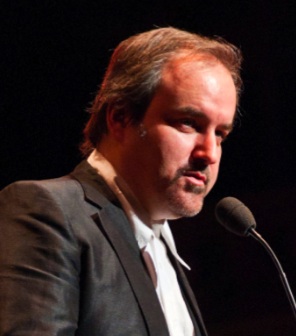
David Arnold

David Arnold

Marianelli contributed the infectious, typewriter-led “Briony” theme from “Atonement”, which the composer said had the working title of “The Girl Who Can’t Stop Telling Lies” because of the character’s duplicitous role in the drama.

The evening began with Patrick Doyle’s sprightly “Picnic” and “Overture” from “Much Ado About Nothing” and proceeded with a sumptuous suite from Harry Gregson-Williams’ score for “The Chronicles of Narnia: The Lion, the Witch and the Wardrobe”. Imogen Heap sang and played piano on “Can’t Take It In,” which she co-wrote with Gregson-Williams and sang in the picture.

Radiohead guitarist Jonny Greenwood presented his dark and threatening themes from “There Will Be Blood”, and John Powell conducted his busy and energetic music from “How to Train Your Dragon”.

John Ottman, the only American composer involved, contrasted his upbeat theme from “Astro Boy” with the sensuous “Main Title” from “The Usual Suspects”, and there was similar contrast in George Fenton’s flowing melodies from “Shadowlands” and the reach-for-the-sky heights of “The Final Mission” from “Memphis Belle”.

Arranger Guy Barker led the orchestra for a vivacious solo performance by jazzy singer Paloma Faith of “Wild Is the Wind” from the 1957 film. A version of the song by Dimitri Tiomkin and Ned Washington was heard widely on the trailer for Sam Mendes’s “Revolutionary Road”. Another highlight saw Michael Nyman alone at the piano to perform his complex and indelible “The Heart Asks Pleasure First” from “The Piano”.

Arnold, an ambassador for the international charity Care who put the cannily programmed concert together with producer Tommy Pearson, ended proceedings on a high note with his bottled-in-Bond “You Know My Name” theme from “Casino Royale” and the victorious intergalactic bombast of the “End Title” from his Grammy-winning “Independence Day score”.

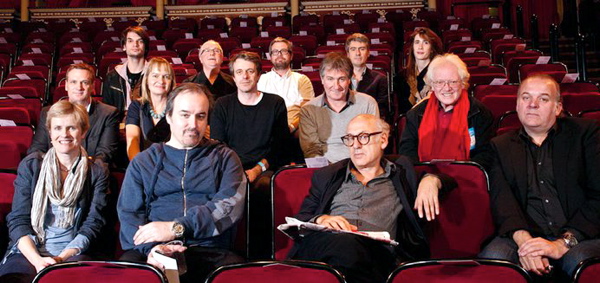
This review appeared in The Hollywood Reporter. Photo by Julie Edwards features, from left front row: Rachel Portman, David Arnold, Michael Nyman, Craig Armstrong; from left second row: John Otman, Anne Dudley, Harry Gregson-Williams, George Fenton, Christopher Gunning; back row, Jonny Greenwood, Patrick Doyle, John Powell, Dario Marianelli, Jocelyn Pook.
 

Posted in Music, Reviews | Tagged , , , , , , , , , , , , , , , , , , , , , , | Comments Off on MUSIC REVIEW: David Arnold’s ‘Concert for Care’

THEATRE REVIEW: ‘Flashdance the Musical’

flasdance 1 x650

By Ray Bennett

LONDON – There is so much exciting singing and dancing talent onstage in the West End debut of “Flashdance the Musical” that it makes you wonder how all the other musicals in town are making out.

Fans who recall the influential 1983 Paramount movie will enjoy a raucous rock ’n’ roll show that matches the film’s frenetic energy with live performers instead of the dancers and gymnasts who doubled for Jennifer Beals onscreen. The stage version has been completely re-imagined since it had a brief regional tryout in the U.K. in 2008.

The hit songs from the movie, which did more than anything to propel both the picture and its box-office success, are performed in high style. They include Academy Award-winning number “Flashdance (What a Feeling)” plus “Gloria,” “I Love Rock ’n’ Roll,” “Manhunt” and “Maniac.”

The 15 new songs by Robbie Roth and Robert Cary might not achieve the same irresistible heights but they have range and melody and give the orchestra and singers full rein.

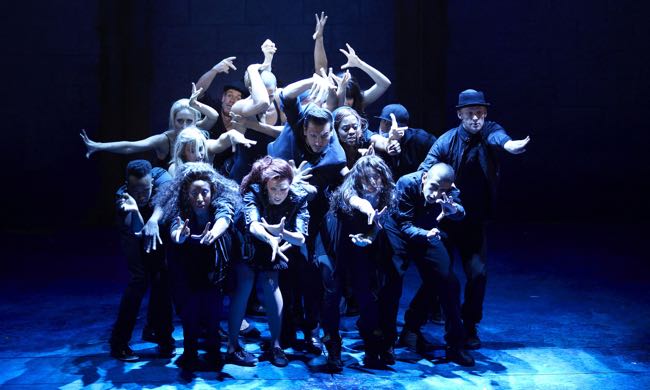
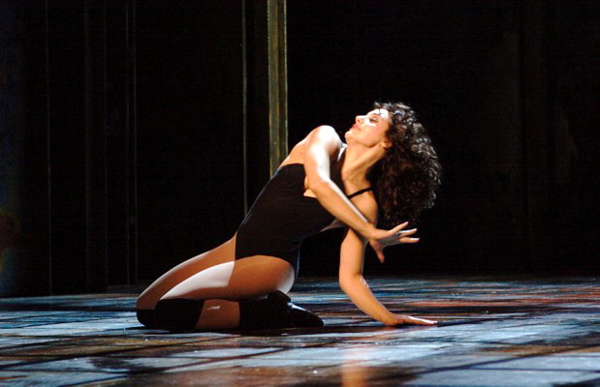
The maniacs on the floor are led by four exhilarating performers: Victoria Hamilton-Barritt (below), who plays Alex, the Pittsburgh steelworker and exotic dancer who wants to go legit, and Twinnielee Moore, Charlotte Harwood and Hannah Levane as her dancing buddies.

Vanessa Hamilton-Barritt in 'Flashdance the Musical'

Critics lambasted Adrian Lyne’s film, which was based on a story by Tom Hedley, who co-wrote the screenplay and who has co-written the stage show’s book and also is executive producer. But it was No. 3 at the 1983 box office and the most successful R-rated film of that year. It made more than $150 million around the world and influenced films from “Footloose” to “Dirty Dancing” to “Billy Elliott.”

Like the latter, “Flashdance” is set in a depressed mining area where the workers fear for their jobs and dream of better things. Alex and her pals scorn the strippers in other clubs but they are every bit as sexy in their provocative outfits and hard-driving sensuality. Choreographer Arlene Phillips puts her performers through ambitious, highly physical and entertaining routines while members of the large ensemble catch the eye with constantly startling bits of dance business.

Matt Willis plays the steel plant boss’s nephew, and love interest for Alex, with the right mix of entitlement and gradual appreciation of what the workers are going through. Sarah Ingram adds some more mature sex appeal as Alex’s knowing mother, a character that substitutes for the dance teacher in the film.

Everyone in the show relies on a head-set microphone, which will disappoint purists, but Bobby Aitken’s sound design keeps matters in hand while raising the roof. Morgan Large’s vivid sets change rapidly from inside a steel mill to the girl’s apartment to a gaudy dance club, all with dynamic impact.

Howard Harrison’s lighting heightens the atmosphere, especially in the mill and the club, and contributes much to the vitality of the performances including the film’s iconic scene in which the antic Alex ends up drenched in water.

Venue: Shaftesbury Theatre, runs through Feb. 26; Cast: Victoria Hamilton-Barritt, Matt Willis, Twinnielee Moore, Charlotte Harwood, Hannah Levane, Sarah Ingram; Music: Robbie Roth; Lyrics: Robert Cary & Robbie Roth; Book: Tom Hedley & Robert Cary, based on the Paramount Pictures film, screenplay by Hedley and Joe Eszterhas, story by Hedley; Director: Nikolai Foster; Choreographer: Arlene Phillips; Set designer: Morgan Large; Lighting designer: Howard Harrison; Sound designer: Bobby Aitken; Costume designer: Sue Blane

This review appeared in The Hollywood Reporter.

Posted in Reviews, Theatre | Tagged , , , , | Comments Off on THEATRE REVIEW: ‘Flashdance the Musical’

Extraordinary how potent film music is

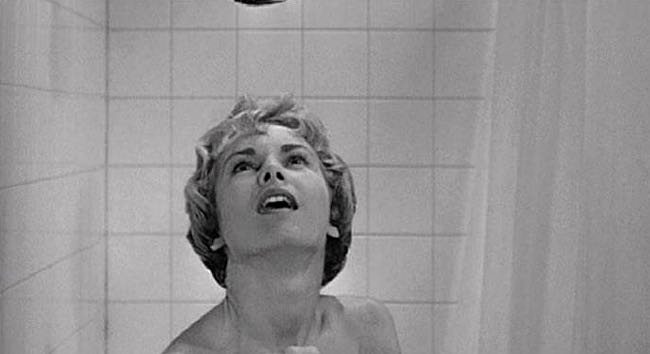
psycho 650

By Ray Bennett

LONDON – The shower sequence in “Psycho” is one of the most famous in film history with its combination of 75 camera set-ups and some of the most indelible film music ever written. It’s impossible to think of that scene without hearing the shrieking strings, but at the time director Alfred Hitchcock had no intention of using underscore, telling composer Bernard Herrmann: “That must be without music.”

Once he saw the edited scene with just the sounds of actress Janet Leigh’s screams and the running shower, however, he changed his mind. In Steven Smith’s biography of Herrmann, “A Heart at Fire’s Center”, the composer is asked to describe what the cue meant in one word. “Terror,” he said, and Smith says Hitchcock admitted that the film depended heavily on Herrmann’s music for its tension and sense of pervading doom.

Noel Coward observed ironically, “Extraordinary how potent cheap music is,” but it can be stated quite seriously that film music is extraordinarily potent. Some film directors are indecisive about the music in their films but many know exactly what they want, such as the late Sidney Pollack.

“Sometimes I can’t tell if a scene is working or is too long until I get a piece of music,” he told me. “I wouldn’t know how to edit a film without any music because I would not be able to tell about certain scenes, particularly scenes that are just visual.” He cited the sequence in his Oscar-winning picture “Out of Africa” in which Robert Redford takes Meryl Streep up in his plane to see the African countryside. “There isn’t any way to know if that scene is really working until you get music to it,” Pollack said. Fortunately, he had John Barry to come to his rescue, and the legendary composer picked up the fourth of his five Academy Awards.

out of africa x650

Barry, of course, also is famous for writing the music for James Bond films from “Dr. No” to “The Living Daylights. David Arnold, who took over 007 duties with “Tomorrow Never Dies,” says that the music is an essential part of what makes a Bond film work. “It demands of you that you write Bond music for it in order for us to be satisfied with what we’re seeing. It makes a big difference,” he told me. “You realize that without the Bond sound, it becomes just an action movie. It’s amazing how much the music gives it, the texture, the tone and character.”

Film music has changed over the decades, however, and composers face a challenge in competing with special effects and the sound mix. “The action sequences today are so immense and spectacular, and the sound is so enormous, sometimes you’re left scratching your head, thinking what exactly can I do?” Arnold said. “Really, what you’re required to do is add the energy but you always want to do more than that. You want to say something about what’s going on.”

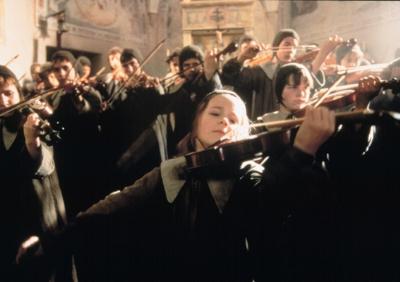
redviolin______1That leaves many nostalgic for the music of Hollywood’s golden age, but concert hall composer John Corigliano, who won an Oscar for “The Red Violin,” told me: “If you listen to music from back in the ’30s and ’40s, there was a much higher degree of melodrama. Movies today are hyper real. The question is how to be real and still serve the drama. Our feeling for movies is nostalgic. We like to eat and drink and be lost in a movie, and then we do hark back to symphonic sound.”

Composer Anne Dudley, who won an Oscar for “The Full Monty,” told me she was surprised by what the director wanted for that film. “It’s very minimalist. He didn’t want it to be too polished. It was simple, sometimes just two instruments playing,” she said. “I had to fight him to let me do more than one take of each cue because he used to like it quite rough. I had to persuade him that there was rough and ready and rough and ready but still a little bit polished.”

Film composers are familiar with the musical peccadilloes of directors but the great ones know how to convey what they want. Patrick Doyle, whose many scores include the one for Robert Altman’s “Gosford Park,” told me the late American filmmaker wanted music to play a strong part in the film. “All he said to me was, ‘I want you to make it slightly off; follow your instincts.’ I knew precisely what he meant.”

Sometimes, too, an actor benefits directly from the music. Michael Nyman wrote much of the music for “The Piano,” widely regarded as the best score not to win an Oscar, before the picture was made. Star Holly Hunter, who did win an Academy Award for the film, told him it had helped her to create the character. “That is the ultimate vindication of what the composer does,” Nyman told me. “I had helped to create the mood or psychological grounding on which she was then able to build.”

If that’s not potent, then nothing is.

This story was written for the programme for David Arnold’s film music Concert for Care at the Royal Albert Hall on Oct. 18, 2010. The morning before, Universal had provided a fresh print of “Psycho” that Chief Projectionist Dave Norris screened expertly at the Empire Leicester Square, also in aid of Care International.

Posted in Film, Music | Tagged , , , , , , , , , , | Comments Off on Extraordinary how potent film music is

THEATRE REVIEW: Sarah Kane’s ‘Blasted’

Blasted-banner4 x650

By Ray Bennett

LONDON – In the course of Sarah Kane’s pitiless apocalyptic drama “Blasted” it becomes apparent that the title is short for “blasted to hell” as the fate of a couple in a war torn city becomes increasingly nightmarish.

Written in 1995, the bleak and shocking polemic is tough to watch but it is made memorable in Sean Holmes’ vivid revival at the Lyric Hammersmith thanks to committed acting and a series of stunning set pieces designed by Paul Wills.

Set in a nameless city being torn apart by rival military factions that could be in the north of England or in the Balkans, an explosion at a hotel room sets in motion a downward spiral into barbarous emptiness.

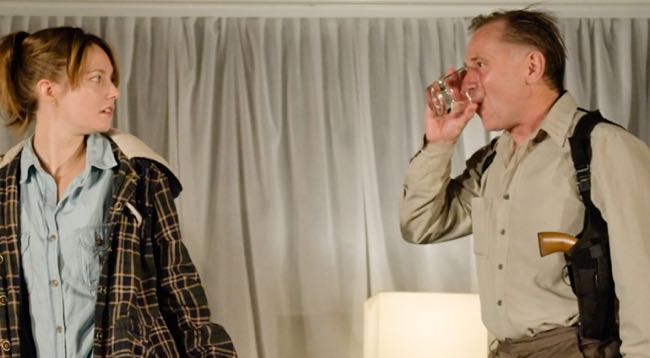
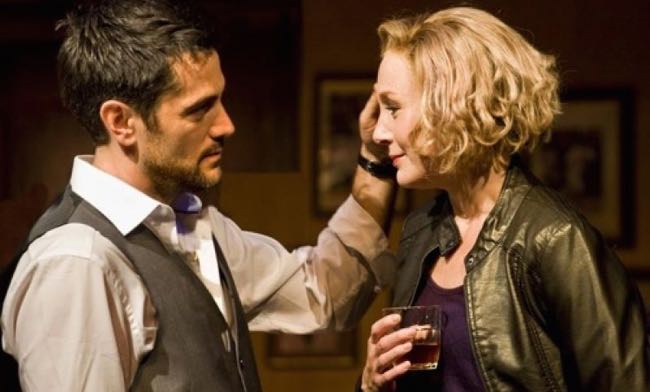
Danny Webb bares body and soul as Ian, a shabby and sweaty reporter who might also do a little spying and so wears a gun in a his paranoia about being attacked. His visitor is an ex-girlfriend named Cate, played by Lydia Wilson (pictured with Webb), who is spry and quirky with surprising tenacity. Ian is eager to get into Cate into bed and he claims that he is dying of lung cancer.

Their encounter dances between a strange kind of affection and deep loathing as Ian’s attempts to force Cate to have sex are spurned but then she indulges him in some oral stimulation only to bite down fiercely enough to draw blood.

The morning finds them waking in bed with Ian coughing his lungs out until a shot of gin settles him down while Cate discovers that she is unable to go to the toilet because she is bruised and bleeding.

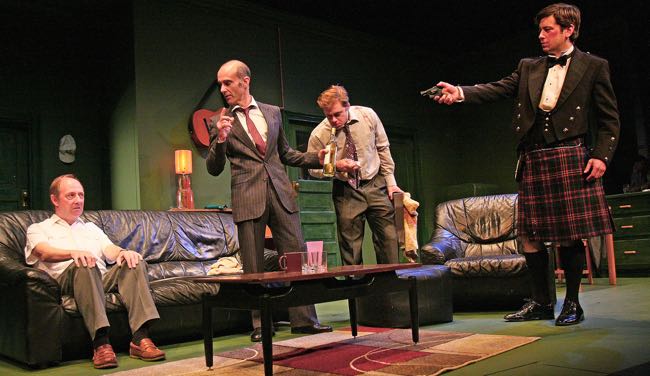
While she takes a bath, Ian’s worst fears are realized when a large man in a soldier’s uniform (Aidan Kelly, brittle and cold-eyed) breaks into his room with an automatic rifle. Starving and brutal, the mercenary senses that there’s a woman present but the bathroom is empty and Cate has fled. He turns his attentions to Ian when an explosion blasts the hotel room apart.

It’s a darker and even more unpleasant journey after that with the desolate soldier reduced by horrible experience to monotonous savagery, most of it visited upon Ian, who is raped and blinded in the most hideous manner. Playwright Kane, who committed suicide in 1999 aged 28, offers no hope for these blighted characters even when Cate shows up again attempting to care for an abandoned baby. Worse is still to come.

Many will find the play needlessly shocking and it lacks the profundity of Becket or Brecht, but if its one target is to shatter complacency about things that go on in strife-torn regions that we choose to ignore, then it’s aim is true.

Venue: Lyric Hammersmith Theatre, runs through Nov. 20; Cast: Danny Webb, Lydia Wilson, Aidan Kelly; Playwright: Sarah Kane; Director: Sean Holmes; Set designer: Paul Wills; Lighting designer: Paule Constable; Sound designer: Christopher Shutt.

This review appeared in The Hollywood Reporter.

Posted in Reviews, Theatre | Tagged , , , , , , | Comments Off on THEATRE REVIEW: Sarah Kane’s ‘Blasted’

THEATRE REVIEW: Rory Kinnear in ‘Hamlet’ at the National

hamlet2By Ray Bennett

LONDON – “Now I am alone,” Hamlet says, and a key light immediately pins him down as a reminder that he never is alone. No one is ever alone in Nicholas Hytner’s riveting production of the William Shakespeare play at London’s National Theatre, which sets the drama in an oppressive police state.

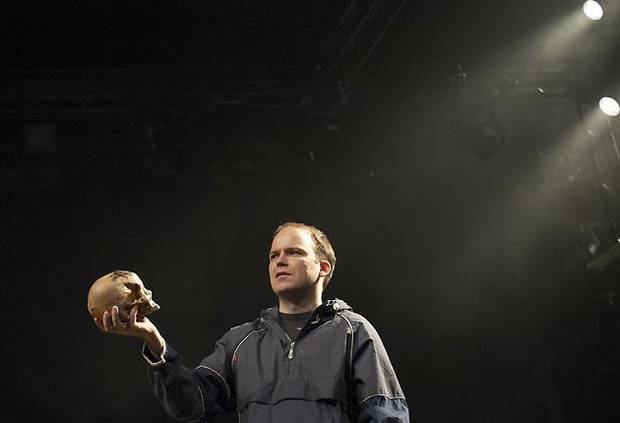
In a modern setting with jets screaming overhead and soldiers bearing submachine guns, Rory Kinnear plays the sweet prince as an unruly student rebelling against the constrictions of an almost-Soviet society as much as against his uncle, the new king who has murdered his father to steal the throne of Denmark.

Patrick Malahide plays Claudius, who not only has snatched the crown but also his brother’s queen, Gertrude (Clare Higgins), as a devious politician. His opening speech on becoming king is made sitting next to his new wife in the full glare of television lights like a modern national leader adept at faking sincerity while spewing mendacity.

Designer Vicki Mortimer gives Hytner a claustrophobic paneled set with many halls and windows, so that in every scene, men wearing suits with ear pieces and wrist microphones lurk like Secret Service men bent on no good.

Lighting designer Jon Clark takes advantage of stage mist to obscure characters, and that works especially well when the Ghost of Hamlet’s father (James Laurenson) makes his spectral appearance early on. Laurenson gives the late king the tenderness of regret even as he exhorts his son to seek vengeance.

Kinnear inhabits the role of Hamlet rather than wearing it, and his descent into real or contrived madness smacks both of guile and the tug of depression into genuine bemusement. His tight fury over the unmitigated gall of his uncle and wantonness of his mother tip him credibly into the acts that are his undoing.

Other performances are just as revelatory, including Higgins as a sensuous and malleable woman who has opted for a soft landing despite being aware of the corruption that has brought her there. David Calder plays the king’s senior minister Polonius as an unctuous chief of staff willing to manipulate not only Hamlet but also his own daughter, Ophelia (Ruth Negga).

When Polonius advises departing son Laertes (Alex Lanipekun) on how to behave in life, Calder utters the line, “To thine own self be true,” as if he’d just thought of it, but then weighs it against his own behavior and is not best pleased.

Negga is bold and original as Ophelia, playing the young woman as a trapped free spirit driven to distraction by Hamlet’s gambits and the pitiless manipulations of her elders. Hytner makes it clear that Ophelia’s death is no suicide and that searing revelation underscores the tragedy that unfolds in a fresh and memorable production.

Venue: National Theatre, runs through Jan. 9; Cast: Rory Kinnear, Patrick Malahide, Clare Higgins, Ruth Negga James Laurenson, David Calder, Alex Lanipekun, Giles Terera; Playwright: William Shakespeare; Director: Nicholas Hytner; Production designer: Vicki Mortimer; Lighting designer: Jon Clark; Sound designer: Paul Groothuis; Music: Alex Baranowski.

This review appeared in The Hollywood Reporter.

Posted in Reviews, Theatre | Tagged , , , , , , , , , | Comments Off on THEATRE REVIEW: Rory Kinnear in ‘Hamlet’ at the National

THEATRE REVIEW: Richard Bean’s ‘House of Games’

house of games x650

By Ray Bennett

LONDON – The great thing about confidence trickery is that you don’t see it coming, and when you’re not the target that’s what makes Richard Bean’s stage version of David Mamet’s “House of Games” — having its world premiere at London’s Almeida Theatre — such a pleasure.

Bean adapts Mamet’s screenplay to a 100-minute master class in the con as celebrity psychiatrist Dr. Margaret Ford (Nancy Carroll) delves into a seedy gambling emporium in Chicago to help out gambling-addicted patient Billy Hahn (Al Weaver), who is in hock for a considerable sum.

There, she encounters club owner Mike (Michael Landes, pictured with Nancy Carroll), who immediately is attracted to the idea of showing a smart and famous professional woman how games work in his house. He says he’ll forgive Billy’s debt if she’ll come to witness a shakedown he’s planning with his oddball crew. They include obscenity-spouting but genial George (Trevor Cooper), worrier Joey (Dermot Crowley) and amusing Hell’s Angel dimwit Bobby (John Marquez).

Unable to profit from Mamet’s filmmaking skill in making points with quick shots and camera angles, director Lindsay Posner uses Peter McKintosh’s clever two-story set design. The shrink’s office is on the top level, where Billy relates his troubles, with the House of Games at stage level, where most of the action takes place.

Even those who have seen the film will enjoy the tricks and sly twists. Carroll’s psychiatrist is all buttoned-down professionalism at first, and she captures the woman’s confusion as she finds herself intrigued by Mike’s confident games-playing and is attracted to the man. A poised and graceful actress, she uses subtle body movement and expression to show the loosening of her grip on the ability to analyze any situation.

Landes presents credibly different faces to the shrink and his crew, and also the victims of his con, and Cooper and Marquez deal out Mamet’s dialogue to smart and amusing effect.

The design also achieves maximum impact from the contrast between the psychiatrist’s cold office, where her encounters with boyish but complicated Billy set the scene for what develops, and the deceptive warmth of the poker club, where gullible victims stand to be fleeced without sympathy.

Bean employs Mamet’s gamesmanship with entertaining skill, and Posner’s staging keeps the action swift. The mood is helped greatly by Django Bates’ bluesy original music played on the electric guitar by Christian Bluhme.

Venue: Almeida Theatre, runs through Nov. 6; Cast: Nancy Carroll, Michael Landes, Trevor Cooper, John Marquez, Dermot Crowley, Peter De Jersey, Amanda Drew, Al Weaver; Playwright: Richard Bean; Based on the screenplay by: David Mamet; Story by: David Mamet, Jonathan Katz; Director: Lindsay Posner; Designer: Peter McKintosh; Music: Django Bates; Lighting designer: Paul Pyant.

This review appeared in The Hollywood Reporter.

Posted in Reviews, Theatre | Comments Off on THEATRE REVIEW: Richard Bean’s ‘House of Games’

THEATRE REVIEW: Richard Bean’s ‘The Big Fellah’

big fellah

By Ray Bennett

LONDON – One man’s terrorist is another man’s freedom fighter, the old saying goes, and Richard Bean attempts to come to grips with the paradox in his alternately funny and savage drama “The Big Fellah,” about Irish Republican Army supporters in New York.

Spanning the three decades at the end of the 20th century, the play centers on a top IRA fundraiser named Costello (Finbar Lynch) whom everyone calls the Big Fellah. In the first scene, he addresses the converted at a meeting in the Bronx and declares his view that though war might be hell, tyranny is even more disgusting.

It’s the justification for his involvement in running guns and explosives to Ireland as well as helping fugitives from Britain escape to Canada. For that, he uses the apartment of gullible New York fireman Mike (David Ricardo-Pierce), whose devotion to the cause is solid if not as voluble and dangerous as Costello’s tame cop Tom Billy Coyle (Youssef Kerkour).

Among those who come to stay are Ruari O’Driscoll (Rory Keenan), an IRA gunman wanted for killing a soldier, and Elisabeth (Claire Rafferty), who has fallen afoul of the IRA leadership’s sexism and is suspected of being a mole.

Into the fray comes a genuinely psychotic hard man from Ireland named Frank McArdle (Fred Ridgway), who sees violence as the answer to every problem. There also is comely stranger Karelma (Stephanie Street), who is not what she appears to be.

The players interact and age credibly as years go by, and the nature of the IRA’s activities start to involve Lybia and acts of violence like packing explosives into a shipment of teddy bears. The FBI is on the case, and Bean infuses the tight little band with suggestions of betrayal that up the suspense ante between the laughs.

Keenan gets most of them thanks to Ruari’s droll wit that enables him to skate by some of the worst elements of the group’s actions. Lynch is sinuous and sinister as the silver-tongued leader who is much tougher than he appears, and Ridgway makes his hard man very scary with lumpen directness and sure-handed application of an electric drill.

Director Max Stafford-Clark allows the pace to slacken a bit too much as the decades pass, and the play would benefit from sharper transitions. But Bean’s talent for tackling complex subjects with candor and insightful humor remains clear throughout.

Venue: Lyric Hammersmith, runs through Oct. 16; Cast: Finbar Lynch, Rory Keenan, David Richardo-Pierce, Stephanie Street, Youssef Kerkour, Claire Rafferty, Fred Ridgeway; Playwright: Richard Bean ; Director: Max Stafford-Clark; Production designer: Tim Shortall; Lighting designer: Jason Taylor; Sound designer: Nick Manning.

This review appeared in The Hollywood Reporter.

Posted in Reviews, Theatre | Tagged , , , , , | Comments Off on THEATRE REVIEW: Richard Bean’s ‘The Big Fellah’

THEATRE REVIEW: Noel Coward’s ‘Design for Living’

design for living 1 x650

By Ray Bennett

LONDON – Noel Coward’s provocative play “Design for Living” caused more than a few corks to pop when it debuted in 1933 on Broadway with a recipe for happiness defined by a hedonistic menage-a-trois.

The new Old Vic production takes a while to build up fizz, but it becomes a bubbly concoction with a pleasing aftertaste thanks to Coward’s gift for infectious dialogue delivered by a cast adept at blithe sophistication.

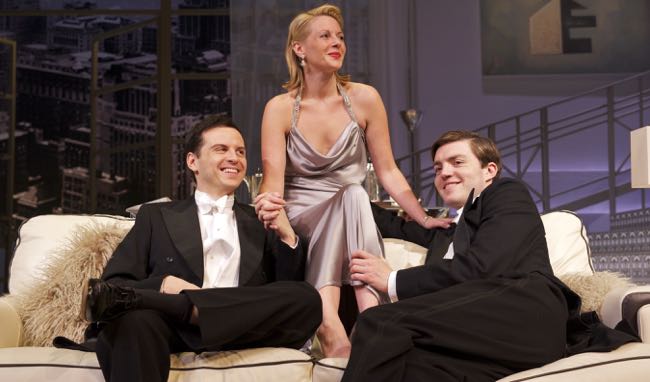
Lez Brotherston’s lavish sets make the transition from bohemian Paris to London’s Mayfair to a penthouse in Manhattan an enjoyable journey as we follow the adventures of a colorfully decadent threesome.

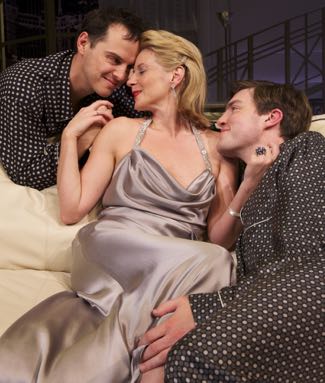
design for living 2 x325Lisa Dillon is Gilda, an interior decorator living in Paris with artist Otto (Tom Burke, right in the photos) but susceptible to the overtures of playwright Leo (Andrew Scott) when left alone. The first of three acts over nearly three hours sees art dealer Ernest (Angus Wright) drop by to see Gilda and Otto, only to discover Leo there instead.

When Otto bursts in, the merry-go-round begins: While Ernest shakes his puritanical head in disgust, the woman’s two lovers make it clear that besides Gilda, they too have a history together.

In London, the situation is reversed as Gilda shares her home with Leo, and it’s Otto who steals into her bed when the artist is away. Add housekeeper Miss Hodge (Maggie McCarthy) to those who disapprove sniffily of the shenanigans, while Ernest entreats Gilda to leave both of her partners.

The third and final act finds Gilda married to Ernest in a splashy but sterile penthouse with tiresome socialite friends when who should crop up? Otto and Leo, keen to whisk her away.

Director Anthony Page encourages Burke and Scott to deliver carefree performances as Otto and Leo, and they leap to it with abandon. Scott is in especially gleeful form, his voice rising at moments of heightened anxiety and giving way to the giggles whenever bourgeois propriety surfaces.

The two men are riotously funny in a scene when they drown their sorrows in brandy over Gilda’s departure, and Wright gives a master class in outraged frustration when Gilda makes her final decision. Dillon raises the stakes of Coward’s frivolity by grounding Gilda in a sensibility of intelligence and understanding of the insubstantial but gratifying lifestyle she embraces.

Venue: The Old Vic, runs through Nov. 27; Cast: Lisa Dillon, Andrew Scott, Tom Burke, Angus Wright; Playwright: Noel Coward; Director: Anthony Page; Set/costume designer: Lez Brotherston ; Lighting designer: David Hesey; Sound designer: Paul Groothuis.

This review appeared in The Hollywood Reporter.

Posted in Reviews, Theatre | Tagged , , , , , , , | Comments Off on THEATRE REVIEW: Noel Coward’s ‘Design for Living’

THEATRE REVIEW: Rachel Wagstaff’s ‘Birdsong’

birdsong 2 x650By Ray Bennett

LONDON – A vibrant love story and the searing experience of World War I in the trenches are combined successfully in British novelist Sebastian Faulks’ bestseller “Birdsong.” It has thwarted filmmakers so far but young playwright Rachel Wagstaff makes a decent effort in a new stage production directed by Trevor Nunn.

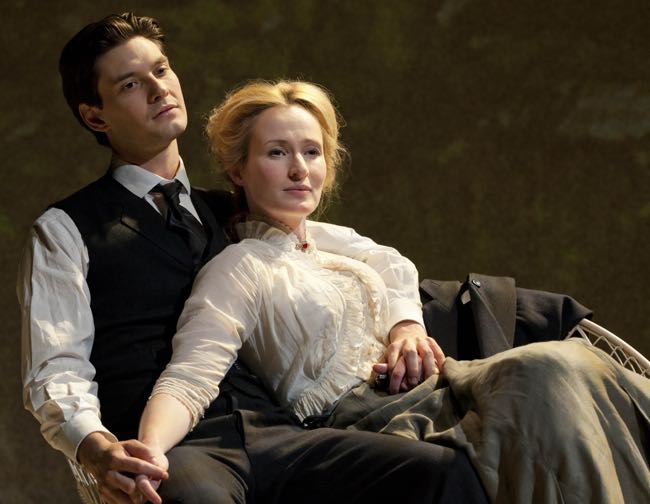
Like the book, it follows a young Englishman, Stephen Wraysford, played by Ben Barnes, best known as Prince Caspian in the “Narnia” films, as he lands in pre-war rural France to learn about the world.

He’s supposed to get an education in manufacturing from factory owner Rene Azaire (Nicholas Farrell) and he does learn from the brutish man a good deal about how not to treat people. But his real learning comes in the arms of Azaire’s beautiful and unhappy wife Isabelle (Genevieve O’Reilly, pictured above with Barnes).

Their love affair is described vividly and erotically in the novel but Wagstaff and Nunn rush the pair quickly offstage at moments of heightened excitement. The scenes between the two with neighbors and factory workers, being full of suppressed desire, serve to make the point although much of this section of the story has to be related by Wraysford speaking to the audience as he writes his diary.

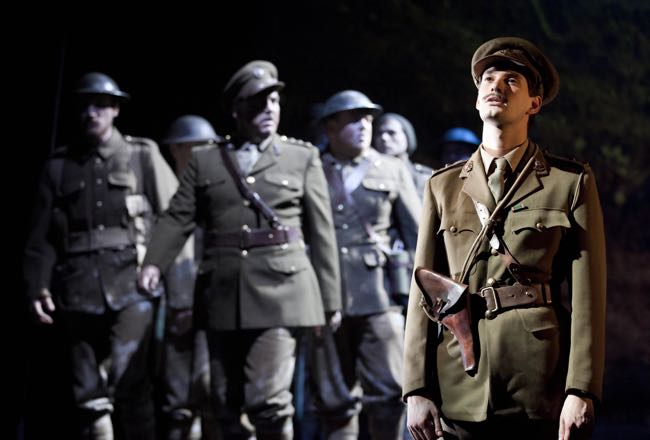
Once war begins, designer John Napier’s set of trenches, makeshift rooms and underground tunnels creates a startlingly claustrophobic backdrop to the drama. Wraysford, his senior officer (also Farrell), and the men he commands, including cheerful Jack Firebrace (Lee Ross), go through various kinds of hell in the worst battles of the Somme.

birdsong 1 x650

It’s a handsome production throughout but the scenes of terror resonate especially thanks to good acting and Nunn’s staging but also the evocative contributions of lighting designer David Howe and sound designer Fergus O’Hare.

Barnes makes the transition persuasively from callow youth to joyous lover to bitter combat officer, and the lovely and subtle O’Reilly, in the early scenes and later flashbacks, makes it clear why Wraysford falls in love so completely. Farrell, as the boorish husband and a dutiful army Captain, and Iain Mitchell, who also has two roles as a tiresome neighbor and a genial soldier, make their characters distinct and impressive. Ross resonates most strongly as a stalwart Tommy who can entertain his mates with a song and dance, brave the darkest bomb-threatened tunnels, and talk about his sick son at home with simple clarity absent of sentiment.

He’s the one who takes the play closest to the moving power of the classic “Journey’s End” by R. C. Sherriff, who, unlike Faulks, wrote about the trenches from having survived them.

Venue: Comedy Theatre, runs through Jan. 15; Cast: Ben Barnes, Lee Ross, Genevieve O’Reilly, Nicholas Farrell, Florence Hall, Iain Mitchell; Playwright: Rachel Wagstaff, based on the novel by Sebastian Faulks; Director: Trevor Nunn; Set designer: John Napier; Costume designer: Emma Williams; Lighting designer: David Howe; Sound designer: Fergus O’Hare; Projection: Jon Driscoll & Gemma Carrington; Music: Steven Edis.

This review appeared in The Hollywood Reporter. Photo by Johan Persson.

Posted in Reviews, Theatre | Tagged , , , , , , | Comments Off on THEATRE REVIEW: Rachel Wagstaff’s ‘Birdsong’

THEATRE REVIEW: Elena Roger in Sondheim’s ‘Passion’

Elena Roger and David Thaxton in Stephen Sondheim’s ‘Passion’

By Ray Bennett

LONDON – That love never fails is a simple concept made rich and complex in Stephen Sondheim’s ardent 1994 Tony Award-winning musical “Passion” in a memorable new production at the Donmar Warehouse.

From the sizzling opening bedroom scene – in which Scarlett Strallen, as blonde temptress Clara, and David Thaxton, as lovesick soldier Giorgio, get more entangled than their sheets – to the tale’s tragic end, it’s a dark and caustic masterpiece.

The simplicity is in the tale of a young man separated from his adored mistress and then becomes the single-minded object of devotion of a plain and sickly woman who will not accept “no” for an answer. The complexity is in Sondheim’s intense score with lyrics that leave aside his usual sophisticated wit to focus on the sharp end of love’s relentless purpose.

The production is made unforgettable by the casting of Argentine star Elena Roger as the dour and haunted Fosca, whose abrupt and overwhelming love for Giorgio is unconditional and brooks no resistance. Roger won acclaim in the West End in a revival of “Evita” and at the Donmar in “Piaf,” and now she has a trio of musical successes.

She is slight and tiny but her voice has a massive range that she draws on without apparent effort so that it bites fiercely when Fosca first declares her undying passion and floats delicately when love finds its way.

The setting is Italy in the 1860s with the gorgeous Clara – sung and acted with beautiful clarity by Strallen – happy to leave husband and child at home to romp with Giorgio in Milan. When he is posted to a remote outpost, they exchange love letters that each reads in superlative staging by director Jamie Lloyd.

Clara emerges on the dining table at the army outpost, dressed in bedclothes to describe her ardour and loneliness. When Fosca’s determined pursuit of the soldier leads to his touching her hand, he finds it soft and inviting but it reminds him only of Clara.

Not for long. As Clara makes it clear that she will never leave her husband and child, the plain and now very ill Fosca begins to carve a place in Giorgio’s heart. From appearing harsh and witch-like, Roger now gives the woman softness and femininity and Fosca’s willingness to bear anything if she might only hear Girogio say “I love you” captivate the man.

Thaxton makes Giorgio strong and vulnerable, and a solid male cast joins the leads in giving full measure to the songs and James Lapine’s succinct book. They are helped greatly by musical director Alan Williams’ sprightly nine-piece orchestra. Christopher Oram’s clever arched set provides a flexible backdrop while lighting designer Neil Austin gives Strallen’s blondeness even greater radiance and underscores Roger’s late blossoming with apt subtlety.

Venue: Donmar Warehouse, London (through Nov. 27); Cast: Elena Roger, David Thaxton, Scarlett Strallen; Music & lyrics: Stephen Sondheim; Book: James Lapine; Director: Jamie Lloyd; Set & costume designer: Christopher Oram; Lighting designer: Neil Austin; Sound designers: Terry Jardine, Nick Lidster for Autograph; Musical director: Alan Williams; Choreographer: Scott Ambler

This review appeared in The Hollywood Reporter.

Posted in Music, Reviews, Theatre | Tagged , , , , , , | Comments Off on THEATRE REVIEW: Elena Roger in Sondheim’s ‘Passion’