TIFF FILM REVIEW: John Gray’s ‘White Irish Drinkers’

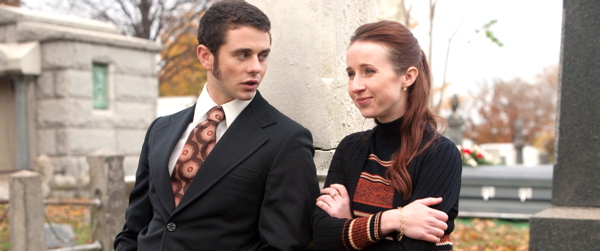
Mark Thurston and Leslie Murphy among a fine cast in John Gray’s ’70s drama ‘White Irish Drinkers’

By Ray Bennett

TORONTO – A movie with the unprepossessing title “White Irish Drinkers’ about two brothers living in the Brooklyn docklands in 1975 could easily be filled with clichés but in the hands of filmmaker John Gray it’s a sparkling piece of entertainment that deserves a wide audience.

The set-up is formulaic with Stephen Lang as a tough Irish longshoreman who likes to slap his wife and eldest son around but dotes on his younger son, even as he mocks him for being soft. It sounds like a hoary old ’40s B-movie, but Gray’s screenplay is atmospheric, inventive and full of surprises, and his direction draws vivid portrayals from his players.

Nurtured properly, the film could find a responsive audience across generations with its savvy mix of youthful restlessness, crime, romance, broken traditions, and a little bit of rock ’n ’roll. Gray, who has had an eclectic directing career on television and a couple of features, and created the series “Ghost Whisperer,” shows full maturity as a filmmaker and he deserves a major hit with this picture.

Lang, with a pleasing lack of false bravado, plays Patrick, who always takes a drink or four on the way home and then takes it out on wife Margaret – Karen Allen, warm and matronly – and son Danny (Geoff Wigdor), who is cut from the same cloth as his father.

Mark Thurston makes a star-making appearance as younger son Brian, who gets along with everyone but keeps his talent and passion for drawing and painting hidden away. Danny is a petty criminal who tries to involve his brother in his crimes but Brian is no criminal and is much happier putting in time at the local theater run by Whitey (Peter Riegert, in a shrewdly sympathetic role).

Gray introduces intriguing plotlines seamlessly as Brian falls for pretty travel agent Shauna (Leslie Murphy); Whitey, in hock to a loan shark, schemes to bring the Rolling Stones to his theater; and Danny plans to knock over the proceeds.

Scenes between the painter and his girl, and with his mates, and between the brothers and their mother have heft and depth. Wigdor gets Danny’s rough edges right and Murphy is fresh and open as Laura.

Gray keeps the surprises and twists coming as Brian grows through the story with Thurston combining tenderness with sharp determination and a willingness to seize opportunities when they arise.

Venue: Toronto International Film Festival; Sales: Submarine; Production company: Ovington Avenue Productions, Bernard/Scura Productions; Cast: Stephen Lang, Peter Riegert, Karen Allen, Nick Thurston, Geoffrey Wigdor, Leslie Murphy; Director, screenwriter, producer: John Gray; Producers: Melissa Joe Peltier, Paul Bernard, James Scura; Director of photography: Seamus Tierney; Production designer: Tomasso Ortino; Music: Mark Snow; Costume designer: Nicole Capasso; Editor: Neil Mandelberg; No rating, running time 109 minutes.

This review appears in The Hollywood Reporter.
Posted in Film, Reviews, TIFF Toronto International Film Festival | Tagged , , , , , , | 1 Comment

TIFF FILM REVIEW: Keanu Reeves in ‘Henry’s Crime’

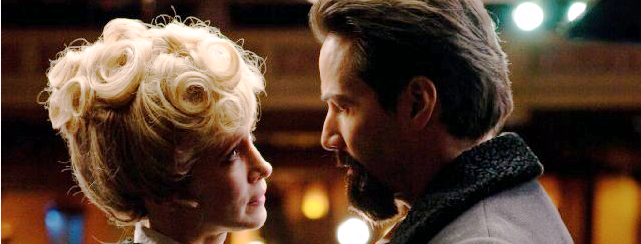
Vera Farmiga and Keanu Reeves mix greasepaint with bank robbery in Malcolm Venville’s ‘Henry’s Crime’

By Ray Bennett

TORONTO – Combining a back-stage theatrical romance and a drama about a bank robbery into one spoof might have seemed a good idea at the time but while Malcolm Venville’s “Henry’s Crime” is billed as a comedy it’s more funny odd than funny ha-ha.

Keanu Reeves, who also was active in getting the picture made, has the central role of a man convicted of a robbery he had no part in who decides to make up for the time by now committing the crime.

Reeves plays the part, however, as a blank canvas and while some of the deliberately contrived elements of the combined plotlines are amusing, it becomes increasingly silly rather than gaining the laughs it seeks.

Cross cutting between Reeves dashing back and forth from a performance of Chekhov onstage and bank robbers digging a tunnel to a vault down below is clearly intended to be hilarious but it just seems awkward.

It will take very clear marketing to keep audiences from being confused by the film’s intentions. Even that might not be enough despite entertaining performances by Vera Farmiga, as Reeves’ leading lady onstage, and James Caan, as his main buddy in the bank raid.

The set up is that hapless Henry (Reeves), who has a drab marriage to Debbie (Judy Greer) and a drearier job as a tollbooth collector, finds himself bullied off to a baseball game by sometime pals Eddie (Fisher Stevens) and Joe (Danny Hoch). But there is no baseball game.

Instead, Eddie and Joe rob a bank at gunpoint leaving Henry to wait in his car, which has now become the getaway vehicle. The robbery goes sour, bank guard Frank (Bill Duke) collars the stupefied Henry, and he is promptly sent to jail.

After serving his time, he sets out to rob the bank for real and, through a series of what are supposed to be funny coincidences, discovers not only how to break into it but also a cover for his activities.

The cover comes from joining a down-at-heel theatrical troupe in a production of Chekhov’s “The Cherry Orchard” starring a beauty named Julie Ivanova (Farmiga) he meets cute when she runs him over in her car.

The play’s director, Darek Milodragovic (Peter Stormare) casts Henry in the lead role opposite Julie and the play’s rehearsals proceed as Henry, joined by tough old cellmate Max (Caan) dig beneath the theater into the bank.

Eddie, Joe and Frank all get involved too and the cross-cutting gets frenetic as the film’s director Venville (“44-Inch Chest”) tries to emphasize the parallels between the fate of the characters in the play and in the film, but the pacing is always one beat off.

Farmiga adds likeable goofiness to the wry humor she displayed in “Up In the Air” and Caan appears to having a very good time as Max. He does his best to make the audience have one too, but it’s an uphill struggle.

Venue: Toronto International Film Festival; Sales: Parlay Films; Production companies: Company Films, Mimram Schur Pictures; Cast: Keanu Reeves, Vera Farmiga, James Caan; Director: Malcolm Venville; Screenwriters: Sacha Gervasi, David White; Producers: Stephen Hamel, David J. Mimran, Jordan Schur, Lemore Sylvan; Executive producers: Sacha Gervasi, Lisa Wilson; Director of photography: Paul Cameron; Production designer: Chris Jones; Costume designer: Melissa Toth; Editor: Curtiss Clayton; No rating, running time 108 minutes.

This review appears in The Hollywood Reporter

Posted in Film, Reviews, TIFF Toronto International Film Festival | Tagged , , , , | Comments Off on TIFF FILM REVIEW: Keanu Reeves in ‘Henry’s Crime’

TIFF FILM REVIEW: David M. Rosenthal’s ‘Janie Jones’

Abigail Breslin and Alessandro Nivola as unexpected family in David M. Rosenthal’s ‘Janie Jones’

By Ray Bennett

TORONTO – An earnest tale about a faded rock star who discovers he has a teenaged daughter and takes her on the road, “Janie Jones” follows a predictable path and despite decent performances it does not catch fire.

The film’s original songs are low key, the storytelling lacks any kind of vivid insights into life on the road that have not been seen before, and the outcome is signposted clearly. The production is more a promise of what the filmmaker and performers might have to offer in the future that anything likely to make a mark with audiences.

Written and directed by David M. Rosenthal (“Falling Up) the semi-autobiographic story shows drunken has-been Ethan Brand (Alessandro Nivola) playing ramshackle gigs in low-rent halls with a quarrelsome band. One night, a frazzled blonde, Mary-Anne (Elisabeth Shue), shows up in a red convertible and introduces him to a teenager named Janie (Abigail Breslin) she says is his daughter.

Mary-Anne promptly splits and Ethan’s early resistance to taking on the responsibility of being a father soon crumbles. Not surprisingly, Janie turns out to be a talented singer songwriter and before long the two of them are on the road together. When Ethan skids even more out of control, it’s up to Janie to find the path to salvation.

Rosenthal’s setting is credible and Nivola (“Coco Before Chanel”) has all the grizzled charm and arrogance of a rock star as he banters and battles with the boys in the band. Shue’s role is more of a cameo at beginning and end, but she makes a striking entrance all strung out and desperate, as Janie tells her: “You don’t have to dress like a hooker to introduce me.”

Rosenthal says he fathered a child when he was 18 and did not meet her until she was 11 and perhaps the closeness of the story has tempered his filmmaking instincts so the outcome is lackluster. The framework of the picture and the solid performances suggest he has a lot more to offer.

Much of the appeal of the film rests on Breslin (“Little Miss Sunshine”) and she shows spirit and singing ability in some rowdy and occasionally tender scenes. The film presents a sturdy peg for her ongoing growth as a film actor and while it’s not likely to be a highlight in her career, it’s no shame either.

Venue: Toronto International Film Festival; Sales: Creative Artists Agency; Production company: Unified Pictures; Cast: Abigail Breslin, Alessandro Nivola, Elisabeth Shue; Director, screenwriter, executive producer: David M. Rosenthal; Producers: Keith Kjarval, Eric Bassett; Executive producers: Nick Guzzone, Matt Luber, Ken Meyer, Lee Nelson, Keith Watkins, Aaron L. Gilbert, Peter Roach; Director of photography: Anastas N. Michos; Production designer: Stephen Altman; Music: Eef Barzelay; Costume designer: Vanessa King; Editor: Alan Heim; No rating, running time 107 minutes.

This review appeared in The Hollywood Reporter.

Posted in Film, Reviews, TIFF Toronto International Film Festival | Tagged , , , , | Comments Off on TIFF FILM REVIEW: David M. Rosenthal’s ‘Janie Jones’

TIFF FILM REVIEW: John Sayles’s ‘Amigo’

Great production design and cinematography add depth to John Sayles’ ‘Amigo’

By Ray Bennett

TORONTO – John Sayles’s “Amigo” is set during the U.S. incursion in the Philippines in 1900 but the parallels with Afghanistan and Iraq today are clear. It’s an impressive film, but the indie filmmaker has little to add to the debate beyond the eternal truth that the innocent always suffer most.

Good looking, atmospheric and steeped in the culture of the rural Philippines of the time, “Amigo” follows what happens when an American platoon occupies the village of San Isidro deep in the rice paddies far from Manila.

It’s a familiar tale but the setting is different and Sayles tells it with his usual cinematic vigor and attention to small detail. It will appeal to audiences interested in well-told history, and the film should be of great interest to educators as a way of imparting the everlasting tragedy of such conflicts. With much of the dialogue in Spanish, it also should travel well.

With Spain and the U.S. at war, the Philippines declared itself an independent republic in 1989. American troops moved in and the conflict in the Philippines lasted longer than the Spanish-American War.

When Lieutenant Compton (Garret Dillahunt) marches into the village of San Isidro, most of the young men have already joined the rebels. Village headman Rafael (Joel Torre) has incarcerated the remaining Spaniards including Padre Hildago (Yul Vazquez) and declares himself a friend, an amigo, to the invaders.

Rafael’s brother Simon (Ronnie Lazaro), however, is leader of the local rebels and his son has run off to join them. Strict but compassionate, Compton strives to win the hearts and minds of the villagers even as the conflict escalates elsewhere.

When the rebels across the country prove intransigent, U.S. leaders dictate a change from carrot to stick and Compton’s senior office, Colonel Hardacre (Chris Cooper) orders the lieutenant to make war.

Cattle are slain, fields ruined and curfews imposed. Anyone who helps the rebels will be shot. Meanwhile, the rebels issue their own demands that mean anyone who aids the enemy also will be executed. Just like the locals in Afghanistan and many other places, the villagers are caught between a rock and a hard place.

Sayles depicts the young American soldiers as a rough and tender mix with most having learned to demonize the enemy even as the Filipinos they meet turn out to be friendly and cooperative. Tension mounts as the rebels gear up their attacks, violence increases, and the village leader is caught between conflicting obligations.

Dillahunt (“Terminator: The Sarah Connor Chronicles”) makes a strong impression as an officer who is at heart a civilian house builder. He strives for harmony and peacekeeping while following strict orders. Vazquez makes his sanctimonious priest sardonic and merciless, and Torre has an everyman appeal as a leader trying to do the right thing.

Production design by Rodell Cruz makes the most of the sumptuous Philippines locations that make a luxuriant impression in Lee Briones-Meily’s muscular cinematography.

Venue: Toronto International Film Festival; Sales: REZO; Production company: Pinoy Pictures Inc.; Cast: Chris Cooper, Garret Dillahunt, Joel Torre, Yul Vazquez; Director, screenwriter, editor: John Sayles; Producer: Maggie Renzi; Director of photography: Lee Briones-Meily; Production designer: Rodell Cruz; Costume designer: Gino Gonzales; No rating, running time 128 minutes.

This review appears in The Hollywood Reporter

Posted in Film, Reviews, TIFF Toronto International Film Festival | Tagged , , , | Comments Off on TIFF FILM REVIEW: John Sayles’s ‘Amigo’

TIFF FILM REVIEW: Max Winkler’s ‘Ceremony’

Michael Angarano and Reece Thompson in Max Winkler’s ‘Ceremony’

By Ray Bennett

TORONTO – Max Winkler’s humorless “Ceremony” falls into the category of would-be comedies in which a hapless young man scores with a gorgeous woman completely out of his league.

As Sam Davis, the young man in question, Michael Angarano is not without boyish charm but it’s a mystery quite why he imagines that Uma Thurman, as the coveted Zoe, will abandon her wedding for him.

Sam entreats Zoe, with whom he had an unlikely one-night stand in New York when she was caught crying in the rain, in a series of awkward and under-written scenes at several beach events leading up to the wedding.

The opening scenes suggest that a comedy will break out, but as the film proceeds it becomes apparent that it will not. Thurman’s presence will not be enough to keep the production from slipping away unheralded and unseen.

Sam, who claims to be a writer of children’s books, persuades neurotic pal Marshall (Reece Thompson) to go on holiday at the beach as ruse in order to crash the wedding.

There, he discovers that groom Whit (Lee Pace) is a grandiloquent British filmmaker who has won an Oscar for his documentaries in Africa. Handsome, confident and generous, Whit also is devoted to Zoe.

That doesn’t stop the film backing Sam’s chances, however, and there’s an alarming lack of irony about the boy’s self-regard, mannered way of speaking, and general conduct. His character makes no sense, and neither does the film.

Venue: Toronto International Film Festival; Sales: Film Nation Entertainment; Production companies: NALA Films, Polymorphic Films; Cast: Uma Thurman, Michael Angarano, Reece Thompson, Lee Pace, Jake Johnson; Director, screenwriter: Max Winkler; Producers: Emilio Diez Barroso, Darlene Caamano Loquet; Executive producers: Jason Reitman, Daniel Dubiecki, Joshua Zeman, Corrie Rothbart, Billy Rovzar, Fernando Rovzar, Jeff Keswin, Alexjandro Garcia; Director of photography: William Rexer II; Production designer: Inbal Weinberg; Music: Eric D. Johnson; Costume designer: Heidi Bivens; Editor: Joe Landauer; No rating, running time 90 minutes.

This review appeared in The Hollywood Reporter.

Posted in Film, Reviews, TIFF Toronto International Film Festival | Tagged , , , , , | Comments Off on TIFF FILM REVIEW: Max Winkler’s ‘Ceremony’

TIFF FILM REVIEW: Pierre Thorreton’s ‘L’amour fou’

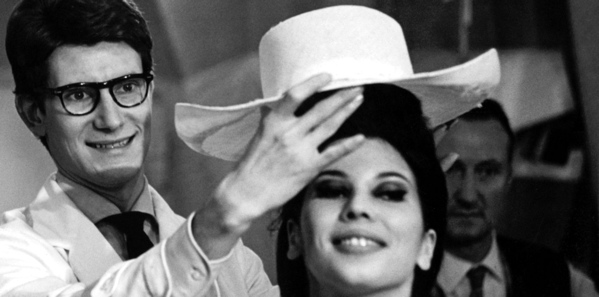
Yves Sain Laurent when he was the pre-eminent couturier of his day

By Ray Bennett

TORONTO – When the late couturier Yves Saint Laurent’s longtime companion and business partner Pierre Bergé decided to sell their vast and unique collection of artwork, it was called the auction of the century. Pierre Thorreton’s painstaking documentary, “L’amour fou” uses the event to explore the fabled life of both men.

Observant and insightful, the film will appeal to those who are interested in haute couture and the glamorous world of fashion over the last 50 years. It also will attract anyone who ever paused to watch one of those TV shows about lifestyles of the rich and famous.

Saint Laurent was beyond famous and both he and Bergé were sumptuously wealthy, as Thorreton shows with his languorous tours of their extraordinary homes filled with treasures of all kinds.

The filmmaker creates an extraordinary portrait of the great designer using rare footage, radio excerpts, photographs and interviews with a wide range of people who were a part of his life in one way or another. Come Aguiar’s soulful piano score is a terrific asset.

The very image of a suave and debonair Frenchman, Bergé tells of his life with Saint Laurent, who was clearly a most complicated man whose fame brought him suffering and misery. He suffered from intense depression and his partner says he was happy just twice a year – after each collection was presented and he took his bow.

Saint Laurent succeeded the legendary Christian Dior and his first collection in 1962 was a huge success. He and Bergé had fallen in love but it fell to the businessman to take care of everything for the artist. He says he was criticized for controlling everything too closely, but Saint Laurent was someone who wanted nothing less than to be controlled – he made no secret of it.

The film traces the couturier’s ascendance to the pinnacle of the fashion world along with cultural stumbling blocks such as the world of drugs and the assault of AIDs on many friends. His introduction of the Opium line created a major scandal but his shows were ambitious and spectacular.

All the acclaim and riches could not make up for an innate melancholy, however, and Bergé says that even after a major success, the glow would fade in the evening and he would seek refuge in sorrow and solitude.

Finally, the fashion industry changed so much that Saint Laurent declared that it had been handed over to tradesmen, and it no longer had meaning for him. He died in 2008, and Bergé says he would never have agreed to the auction. Even in room after room filed with artwork, if something were removed, Saint Laurent would spot it and see a black hole.

Thorreton says that he met his subject twice and the second time, as they passed on the street, Saint Laurent stopped him, undid one button on his shirt, nodded and walked away. The filmmaker captures that strange mix of intimacy, flare and coldness in an absorbing study.

Venue: Toronto International Film Festival; Sales: Films Distribution; Production companies: Les Films du Lendemain, Les Films de Pierre, 3 Cinema; Director, screenwriter: Pierre Thoretton; Screenwriter: Eve Guillou; Producers: Kristina Larsen, Hughes Charbonneau ; Director of photography: Leo Hinstin; Music: Come Aguiar; Costume designer: Dominique Auvray; Editor: Dominique Auvray; No rating, running time 104 minutes.

This review appeared in The Hollywood Reporter.

Posted in Film, Reviews, TIFF Toronto International Film Festival | Tagged , , , , | Comments Off on TIFF FILM REVIEW: Pierre Thorreton’s ‘L’amour fou’

TIFF FILM REVIEW: Michael Winterbottom’s ‘The Trip’

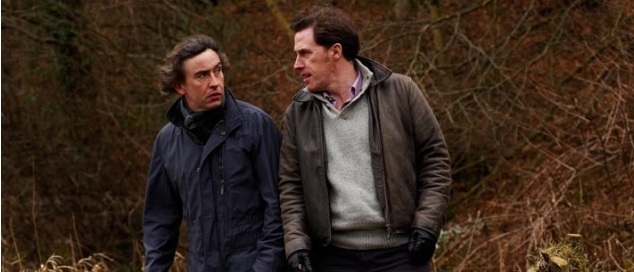
Steve Coogan and Rob Bryden lost in the countryside in Michael Winterbottom’s ‘The Trip’

By Ray Bennett

TORONTO – Michael Winterbottom’s listless foody travelogue “The Trip” is made up of highlights from a six-part BBC-TV series that has yet to air but if these are the best bits then no one will mind waiting.

The film follows British comic actors Steve Coogan and Rob Bryden, playing fictionalized versions of themselves, on a driving tour of restaurants in the north of England. Each day sees them arrive at a new village with hotel rooms to mock and restaurants in which they demonstrate an acute ignorance of all things culinary.

The project suffers badly from being largely improvised as the pair fall back on familiar impressions and old jokes. Lazy and indulgent, it smacks of being what the British call a “jolly”, that is a freebie with no obligation to turn in any work afterwards. Prospects for the film are as dim as for the TV show.

The set-up is that Coogan is supposedly writing a feature for The Observer newspaper but he knows nothing about food, asks no questions at the restaurants and takes no notes. Instead, he and Bryden launch into contests to see who can do the best impression of Michael Caine and several other actors.

Bryden, in fact, goes into impressions at the drop of a napkin, even when phoning home to his much-missed wife,as he jokingly seeks phone sex in the voice of Hugh Grant.

Being Welsh, Bryden always has the voices of Richard Burton, Anthony Hopkins and Michael Sheen on his tongue so that even Coogan at one point tells him that anyone over 40 who still does impressions should take a hard look in the mirror.

When he’s not anguishing over his career and distant girlfriend even while bonking local women, Coogan joins in the funny voice parade, and there are several minutes given to competing Woody Allen impressions using many of the comedian’s old gags, which is about it for laughs.

Michael Nyman’s sprightly score deserves better but it’s something to enjoy along with cinematographer Ben Smithard’s lovely images of the countryside in the Lake District and elsewhere even though the filmmakers elected to shoot in overcast wintertime.

Coogan’s father sums up the whole thing in a comment on the pair’s banter. “It must be exhausting keeping all this going on,” he says. Coogan replies, “Yes. Exhausting for everyone.” It’s true.

Venue: Toronto International Film Festival; Sales: Revolution Films; Production companies: Revolution Films, Baby Cow Productions, Arbie Productions; Cast: Steve Coogan, Rob Bryden; Director: Michael Winterbottom; Producers: Andrew Eaton, Melissa Parmenter; Executive producers: Henry Normal, Simon Lupton; Director of photography: Ben SmithardMusic: Michael Nyman; Editors: Mags Arnold, Paul Monaghan; No rating, running time 109 minutes.

This review appears in The Hollywood Reporter

Posted in Film, Reviews, TIFF Toronto International Film Festival | Tagged , , , , , , | Comments Off on TIFF FILM REVIEW: Michael Winterbottom’s ‘The Trip’

TIFF FILM REVIEW: Richard Ayoade’s ‘Submarine’

Craig Roberts and Justine Paige in Richard Ayoade’s film of Joe Dunthorne’s ‘Submarine’

By Ray Bennett

TORONTO – Joe Dunthorne’s delightfully idiosyncratic 2008 novel “Submarine,” in which a smart and eccentrically gifted 15-year-old muses about school, girls, movies, parents and life in general, is the kind of book that almost never is made into a film of matching quality. Richard Ayoade’s movie “Submarine” is a sublime exception.

Given a central character who describes his own take on things while evidence to the contrary is there for all to see, the film could easily get a case of the insufferable cutes, but Ayoade succeeds with a light touch and a keen sense of the absurd.

Fans of vaguely twisted humor rendered by skilled actors with straight faces will eat this up, and if it catches the right wave, “Submarine” could navigate towards wide appeal with acclaim and consequent box office success.

Jaunty and sly with a great many laughs, the film also has on its soundtrack several typically witty and melodic songs written and performed by Alex Turner from the Arctic Monkeys.

Craig Roberts as Oliver Tate and Yasmin Paige as his beloved Jordana are perfect, with each demonstrating a pleasing agility in vocal and facial expression that adds immeasurably to the drollery.

Roberts plays Oliver as a young man in Wales whose grasp of imagined possibilities is greater than his grip on reality and he manages it with great charm. Paige is a wonder as Jordana, who brings Oliver down to earth abruptly with her simple but at that age savage statements of honesty. Adept at glances that render speech unnecessary and, for a yearning boy, rid the world of hope, she also can grant the wickedest hint of a smile that soothes all ills.

Roberts’ confident voice-over derives from Dunthorne’s writing with observations about scenes that the director and cinematographer Erik Wilson play with mischievously.

Noah Taylor and Sally Hawkins play Oliver’s parents with a smart duality that reflects both the boy’s impression of them and who they might actually be. Their reading of lines that touch on serious matters regarding education, teenagers and sexual activity are so dry they become hilarious.

Paddy Considine contributes a vision of a mystic mentalist whose over-the-top brio is curiously tempered by self-doubt even as he attempts to seduce the compliant Mrs. Tate.

Schoolyard bullying, classroom pranks, and the pain in the teenaged heart caused by unrequited love are all detailed with a fine attention to nuance. It’s clever stuff, and very funny.

Venue: Toronto International Film Festival; Sales: Protagonist Pictures; Production company: Warp Films; Cast: Craig Roberts, Yasmin Page, Noah Taylor, Paddy Considine, Sally Hawkins; Director, screenwriter: Richard Ayoade, based on the novel by Joe Dunthorne; Producers: Marj Herbert, Andy Stebbing, Mary Burke; Executive producers: Ben Stiller, Stuart Cornfeld, Jeremy Kramer; Director of photography: Erik Wilson; Production designer: Gary Williamson; Music: Alex Turner, Andrew Hewitt; Costume designer: Charlotte Walter; Editors: Nick Fenton, Chris Dickens; No rating, running time 94 minutes.

This review appears in The Hollywood Reporter

Posted in Film, Reviews, TIFF Toronto International Film Festival | Tagged , , , , , , , , | 1 Comment

TIFF FILM FESTIVAL: Justin Lerner’s ‘Girlfriend’

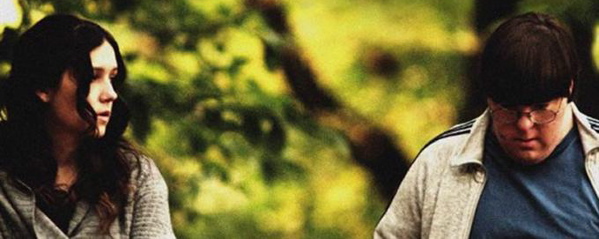
Shannon Woodward and Evan Snider in a difficult romance in Justin Lerner’s ‘Girlfriend’

By Ray Bennett

TORONTO – Justin Lerner’s “Girlfriend” claims to be the first U.S. feature film to star a person with Down syndrome, namely Evan Sneider who plays a young man with a major crush on a single mom he’s coveted since high school.

The particular difficulties that face someone in his situation are explored with sensitivity and genuine dramatic tension with a central performance that will please audiences seeking observant and heartfelt drama. It should do well in selected theatrical markets and thrive on DVD.

Evan, also the character’s name in the film, is industrious and gregarious, joining his Mom (Amanda Plummer) on staff at a local café. When she dies suddenly, his other relatives elect to trust his ability to look after himself with a very large amount of insurance cash.

Evan has long harbored romantic inclinations towards a former classmate named Candy, played by Shannon Woodward (TV’s “The Riches” and this season’s Fox comedy “Raising Hope”). He likes to drop by her house unannounced and discovers that she is about to be evicted from her home due to lack of payments by ex-husband Russ (Jackson Rathbone, Jasper in “The Twilight Saga” films).

The young man decides to give her $1000 to help her out and as her ex-husband becomes more abusive, he gives her even more. Candy swears the money is just a loan, but Evan is clear that he just wants to give it to her.

His gift, however, does come with a price, and that is for her to become his girlfriend. With Candy involved with a married man on top of her hassles with Russ, the situation will become heated.

Writer-director Lerner does not over-do the melodrama and he derives considerable suspense from the notion that Evan’s behavior could become extreme. Sneider handles scenes of tenderness, mystery and anger with much skill and the director shrewdly lets the young actor’s expressive eyes carry key scenes.

Woodward matches him playing an easily tempted woman who discovers within herself a degree of grace she might not have suspected was there. It requires considerable delicacy and Woodward nails it. Rathbone, too, gives his jealous lover a measure of subtlety that adds depth to his character.

Venue: Toronto International Film Festival; Sales: Paradigm; Production companies: Wayne/Lauren Film Company; Cast: Shannon Woodward, Jackson Rathbone, Amanda Plummer, Evan Sneider; Director, screenwriter, producer: Justin Lerner; Producers: Jerad Anderson, Kristina Lauren Anderson, Shaun O’Banion; Executive producer: Jason Oliver; Director of photography: Quyen Tran; Production designers: Seth Chatfield, Harrison Lees; Music: 100 Monkeys; Costume designer: June Suepunpuck; Editor: Jeff Castellucio; No rating, running time 94 minutes.

This review appears in The Hollywood Reporter

Posted in Film, Reviews, TIFF Toronto International Film Festival | Tagged , , , , , | Comments Off on TIFF FILM FESTIVAL: Justin Lerner’s ‘Girlfriend’

TIFF FILM REVIEW: Rowan Joffe’s ‘Brighton Rock’

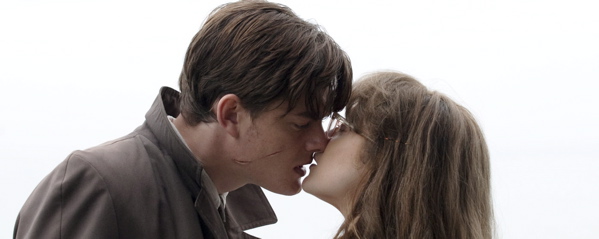
Sam Riley is Pinkie and Andrea Riseborough is Rose in the new ‘Brighton Rock’

By Ray Bennett

TORONTO – Rowan Joffe’s film of Graham Greene’s 1938 novel “Brighton Rock” takes a gothic approach to the story of a young thug obsessed with hell with little of the writer’s subtlety and too much reliance on a loud quasi-religious choral score.

In his first film as director, screenwriter Joffe (“The American,” “28 Days Later”) sets the drama entirely in Brighton on the UK’s Sussex coast but transplants the story from the book’s 1930s to 1964 during the Mods vs. Rockers gang wars. That cultural conflict and the burgeoning ’60s social revolution, however, have little to do with the central story, which is a typical Greene tale of good versus evil.

John Boulting’s 1947 film, also known as “Young Scarface,” made a major star of Richard Attenborough but while Sam Riley (“Control”) acquits himself well, the new film is not likely to do the same for him. The director’s injudicious emphasis on Martin Phipps’ score also does not help.

Reliable veterans Helen Mirren and John Hurt and the highly promising young actress Andrea Riseborough add to the film’s appeal but it will probably be restricted to literary buffs curious to see a new Greene picture.

The production is faithful to the novel, starting with a murder that triggers a gang war over the protection racket in the seaside town. Pinkie (Riley) is a nasty young hoodlum with big ambitions whose leader is knifed to death.

Vengeance leads to the death of the perpetrator Hale (Sean Harris) but not before he has involved an innocent waitress named Rose (Riseborough) as he tries to evade Pinkie’s henchman Spicer (Phil Harris) on the Brighton Pier.

With Rose now a vital witness, Pinkie courts her to keep her quiet but discovers that she also is a lost soul but one who innately on the side of the angels. “I’m bad. You’re good. We’re made for each other,” he says.

Meanwhile, Rose’s boss Ida (Mirren), who runs a pub and a posh tea shop, starts to ask questions about her late friend Hale and with a local bookie named Corkery (Hurt), she gradually puts the pieces together. Pinkie is willing to marry Rose to keep her quiet even though the girl believes he truly loves her. He’s also willing to sell out his fellow gang-members by going to work for rival hoodlum Colleoni (Andy Serkis).

Greene’s examination of the tug of war between Ida and Pinkie over Rose’s fate plays out as in the book but the other characters are given short shrift. Riley continues to grow as an actor but lacks the feral impact of the young Attenborough or Richard Widmark.

Riseborough, her beauty made dowdy and winsome, captures with delicacy Rose’s willingness to forsake heaven for the love of a wretched man. Mirren makes Ida knowing and tough but also susceptible to the shy approach of the longtime friend played by Hurt as a wounded soul.

The film looks good with splendid images of the Brighton Pier and the marvelous white cliffs in Sussex known as the Seven Sisters where key scenes take place.

Venue: Toronto International Film Festival; Sales: Optimum Releasing; Production companies: BBC Films, Kudos Film and Television, Optimum Films; Cast: Sam Riley, Andrea Riseborough, Helen Mirren, John Hurt, Andy Serkis, Phil Davis, Sean Harris, Nonso Anozie; Director, screenwriter: Rowan Joffe; Producer: Paul Webster; Director of photography: John Mathieson; Production designer: James Merifield; Music: Martin Phipps; Costume designer: Julian Day; Editor: Joe Walker; No rating, 111 minutes.

This review appears in The Hollywood Reporter

Posted in Film, Reviews, TIFF Toronto International Film Festival | Tagged , , , , , , , , , | Comments Off on TIFF FILM REVIEW: Rowan Joffe’s ‘Brighton Rock’