LOCARNO FILM REVIEW: Hongqui Li’s ‘Winter Vacation’

wintervacation x650

By Ray Bennett

LOCARNO, Switzerland – There are many slow and uneventful scenes in Hongqi Li’s labored comedy “Winter Vacation” that are intended to show how slow and uneventful a break from school can be for teenagers in a snowbound urban wasteland with nothing to do.

There are two or three moments worth a chuckle in the film but there cannot be many audiences that will share the view of the Locarno International Film Festival competition jury, which gave it their top prize Golden Leopard.

That honor means the film will likely get airings at other festivals but viewers will discover a production that uses a static camera for a series of scenes in which people gather but say little or nothing.

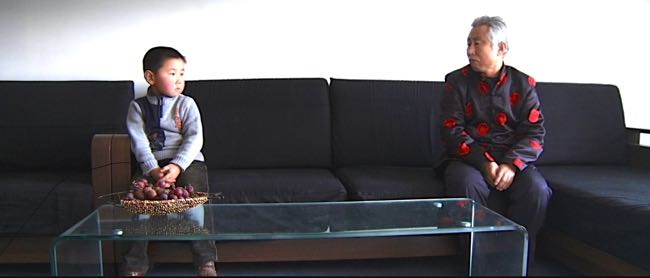
There is a running gag involving a very proper but grouchy grandfather who imposes silence and stillness on a dutiful but resentful little kid, but its humor dwindles.

That same child has the only funny line in the picture when a visiting little girl asks him what he wants to be when he grows up. Hearing his reply, she regards him scornfully and says, “You are a pitiful child.”

Otherwise, it’s one scene after another of four or five teenagers in winter clothing standing about or sitting on a sofa in the snow saying not very much.

Venue: Locarno International Film Festival. In Competion; Cast: Ba Junjie, Zhang Naqi, Bai Jinfeng, Xie Ying, Wang Hui, Bao Lei

Director, writer, editor: Hongqi Li; Director of photography: Qin Yurul; Music: Zuoxiao Zuzhou, The Top Floor Circus; Production company: Ning Cal, Alex Chung; Not rated; running time, 91 minutes.

Posted in Film, Locarno International Film Festival, Reviews | Tagged , , | Comments Off on LOCARNO FILM REVIEW: Hongqui Li’s ‘Winter Vacation’

LOCARNO FILM REVIEW: ‘The Human Resources Manager’

human resources manager x650By Ray Bennett

LOCARNO, Switzerland – Despite its ungainly title, “The Human Resources Manager” is a typically humane and observant drama from Israeli filmmaker Eran Riklis about a personnel officer who goes beyond the call of duty for a deceased employee.

When a young Romanian woman is killed in a suicide bombing in Jerusalem, the HR manager at the bakery where she worked takes on the job of making sure her body makes its way back to her faraway home.

The film has wit and character, and the central mission sees many unexpected complications before Riklis and screenwriter Noah Stollman arrive at a warm and compassionate conclusion. Following the director’s successes with “The Syrian Bride” and “Lemon Tree,” it will travel far and wide to appreciative audiences and pick up some prizes along the way.

Mark Ivanir plays the title character at an industrial sized Jerusalem bakery where the bread is fine but many employees tend to remain anonymous. When his boss calls late at night to say that an unidentified woman killed in a blown-up bus had a pay check from the bakery but did not appear to work there, he must investigate.

It turns out that the night supervisor was having an affair with the woman and had fired her when his wife found out but kept her on the payroll. With the woman’s body lying ignored at the morgue, a tabloid newspaper reporter (Guri Alfi) runs a story indicting the bakery for inhumane behavior.

The HR man’s boss decides she needs some much better press so she orders him to sort it out, which involves tracing where the dead woman lived and the discovery that she has a bitter ex-husband (Bogdan Stanoevitch) and a troubled son (Noah Silver) in Romania, neither of whom is permitted legally to identify her.

It means he must ship the body to her home village 1,000 kilometers deep into rural Romania so that her mother can make the formal identification. That’s especially awkward because he has promised to accompany his young daughter on a dance trip in a couple of days’ time. Bad weather prevents flying, so he sets off in a van with the coffin on top accompanied by the helpful Israeli Vice-Consul, the unruly son, the weasel reporter, and an ageing chauffeur.

The motley crew argue and fight, and must deal with awful weather and a surprising change of vehicle as they make their way into increasingly grim-looking parts of the former Soviet Union.

Rainer Klausmann’s cinematography takes full advantage of the mix of bleak wintry landscapes and some unusual resting places while French composer Cyril Morin contributes a jaunty and teasing score that draws smartly on gypsy influences.

Clashes between generations, creeds and cultures all surface as the mission progresses and Riklis lets his cast find riches in their characters that help illuminate a thoughtful and well-crafted tale.

Venue: Locarno International Film Festival, Piazza Grande; Cast: Mark Ivanir, Guri Alfi, Noah Silver, Rozina Cambos, Julian Negulesco, Bogdan Stanoevitch; Director: Eran Riklis; Writer: Noah Stollman; Director of photography: Rainer Klausmann; Production designers: Dan Toader, Yoel Herzberg; Music: Cyril Morin; Costume designers: Li Alembik, Adina Bucur; Editor: Tova Ascher; Producers: Tudor Giurgiu, Thanassis Karathanos, Talia Kleinhendler, Haim Mecklberg, Elie Meirovitz, Estee Yacov-Mecklberg; Production company: 2-Team Productions; Sales: Pyramide International; Not rated; running time, 103 minutes.

This review appeared in The Hollywood Reporter.

Posted in Film, Locarno International Film Festival, Reviews | Tagged , , , , , | Comments Off on LOCARNO FILM REVIEW: ‘The Human Resources Manager’

LOCARNO FILM REVIEW: Bogdan George Apetri’s ‘Outbound’

outbound 2 x650By Ray Bennett

LOCARNO, Switzerland – Romanian director Bogdan George Apetri’s first feature film “Outland” is a hard-nosed little thriller in which a no-nonsense woman takes a one-day release from jail for her mother’s funeral in order to flee the country.

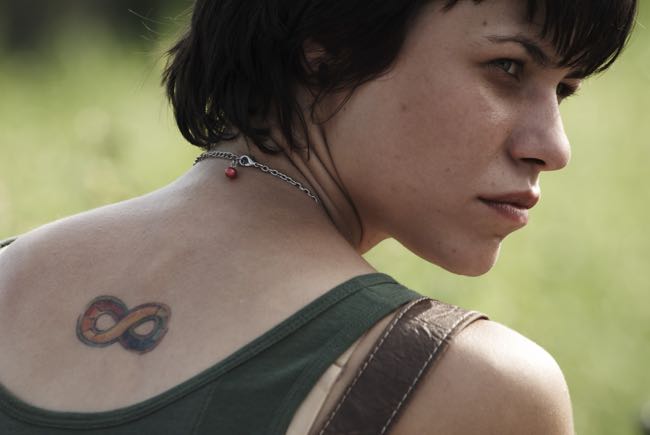
The clock is ticking as Matilda, played with grim intensity by Ana Ularu (pictured), tries one last time to get help from her family, persuade a former pimp to cough up some cash, and locate her abandoned son before heading for the coast where a boat is waiting.

Only a vague ending lets down Apetri’s otherwise gripping film, which he co-wrote with Tudo Voican, and it should find a place on the festival circuit and in certain markets. It boasts solid performances and Eugen Kelemen’s crisp editing makes the most of vivid images provided by cinematographer Marius Panduru.

In the lead role, Ularu is all tight biceps, butch haircut and determination as she bobs and weaves through the obstacles that could ruin her scheme to avoid serving another three years in prison. These include sister-in-law Lavinia (Ioana Flora), who has no intention of letting kindly husband Andrei (Andi Vasluianu) go soft on his runaway sister just because their mother died.

An atmospheric scene at the cemetery fills in a lot of the jailbird’s background as Apetri focuses on the family’s traditions and prejudices that she has abandoned. Each sequence is titled and time-stamped so that soon Matilda is knocking on the door of an indifferent thug named Paul (Mimi Branescu, perfectly swinish) who owes her money.

Matilda took the rap for a crime committed by both of them two years earlier leaving Paul with the proceeds and their son Toma, whom he carelessly placed in an orphanage. Getting him to share the funds turns out to be harder than she expected, and the tension rises as he involves her in some dirty dealings with a car full of hoodlums.

outbound x650

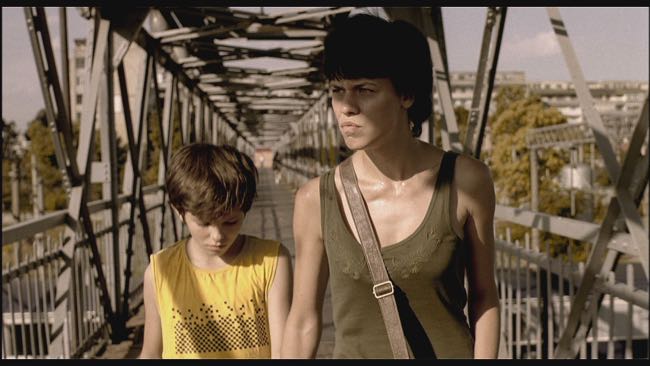
The search for her son, played with a mixture of innocence and street-smarts by Timotei Duma (pictured with Ularu), and their flight together take up the rest of the story as events break in Matilda’s favor and then steeply against it.

Ularu carries the film with assurance, letting the character’s femininity and mothering instinct show only in subtle smiles and gestures. There is considerable suspense but the film’s cryptic conclusion leaves something to be desired beyond the notion that we reap what we sow.

Venue: Locarno International Film Festival, In Competition; Cast: Ana Ularu, Mimi Branescu, Andi Vasluianu, Ioana Flora, Timotei Duma; Director, writer: Bogdan George Apetri; Writer: Tudor Voican; Director of photography: Marius Panduru; Production designer: Simona Paduretu; Costume designer: Brandusa Ioan; Editor: Eugen Kelemen; Producer: Alexandru Teodorescu; Production company: Saga Film; Sales: MK2; Not rated; running time, 87 minutes.

This review appeared in The Hollywood Reporter.

Posted in Film, Locarno International Film Festival, Reviews | Tagged , , , | Comments Off on LOCARNO FILM REVIEW: Bogdan George Apetri’s ‘Outbound’

LOCARNO FILM REVIEW: ‘The Little Bedroom’

The little bedroom x650By Ray Bennett

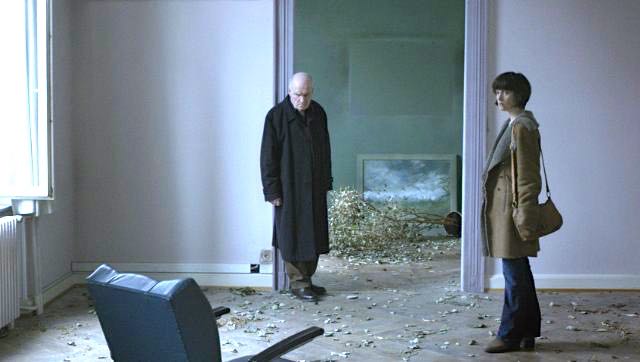
LOCARNO, Switzerland – The circle of life is given warm and redemptive treatment in “The Little Bedroom” (La Petite Chambre) written and directed by Stephanie Chuat and Veronique Reymond. An encounter between a private nurse who recently lost a child and an old man tired of living affords each of them the chance to reassess their fate.

Set in the Swiss town of Lausanne with the nearby alps to play a key role before the story is over, it’s a showcase for Florence Loiret Caille as the traumatised woman and Michel Bouquet as the grouchy and alienated old gent.

Interest should be strong in international markets and festivals although it’s probably not a powerful enough work to make it an art house hit.

Caille plays Rose, who has just returned to work after delivering a son still-borne after eight months’ pregnancy. Diligent and patient, she does more for her patients than she’s strictly supposed to. Bouquet plays one of them, the hard-nosed Edmond, whose son is about to depart for Chicago and wants to place him in a nursing home.

Meanwhile, Rose’s husband Marc (Eric Caravaca) has a lead on a major advertising campaign design contract in New York and must go there to cement the deal. He is torn by the conflict between his ambition and his concern for his wife.

Writer-directors Chuat and Reymond supply information about the characters subtly so they become gradually fully formed with Rose refusing to think of her lost child as dead and Edmond declining to show his son the slightest kindness.

As the odd couple of nurse and patient discover more about each other and Rose conspires in Edmond’s absence from the nursing home, they develop an odd but pleasing kinship. Caille’s supple features convey the warm personality that loss has curdled while Bouquet uses silence and stillness to register a very active mind.

Emre Sevindik’s sonorous score, aided by several piano selections from Bach, Beethoven and Sibelius, enhance the impressively textured images of cinematographer Pierre Milon.

Venue: Locarno International Film Festival, In Competition; Cast: Michel Bouquet, Florence Loiret Caille, Eric Caravaca; Directors, writers: Stephanie Chuat, Veronique Reymond; Director of photography: Pierre Milon; Production designer: Daniel Raduta

Music: Emre Sevindik; Costume designer: Magdalena Labuz; Editor: Thierry Faber; Production companies: Vega Film, Iris Productions; Sales: Vega Film; Not rated; running time, 87 minutes.

This review appeared in The Hollywood Reporter.

Posted in Film, Locarno International Film Festival, Reviews | Tagged , , , , , , | Comments Off on LOCARNO FILM REVIEW: ‘The Little Bedroom’

LOCARNO FILM REVIEW: Cedric Anger’s ‘The Counsel’

the counsel 2 x650By Ray Bennett

LOCARNO, Switzerland – French director Cedric Anger’s ambitious legal thriller “The Counsel” (L’Avocat) looks good and has a fine cast but his script covers familiar terrain and is so naïve that the whole thing becomes laughable.

Told in flashback, it’s the story of a brilliant young lawyer who goes to work for a mob boss but gets in too deep and discovers that his only way out is by incriminating the man, or by dying.

It’s as if the director believed the film could exist in a vacuum and ignore the fact that such predicaments have been explored and picked over in an endless number of books, films and television shows. The film will face scorn from fans of crime yarns who expect their puzzles to have a lot more intelligence.

Handsome and keen eyed Benoit Magimel cuts an effective dash as Leo, a sharp and driven attorney whose skill at courtroom oratory wins him a job at a top legal firm. He proves his mettle fast but is soon bored. There’s no suggestion that it’s a mob operation such as the one in “The Firm” but when a hoodlum big in waste disposal seeks to hire him, the head of the legal firm, played with imperial elegance by director Barbet Schroeder, tells him the client is always right.

Gilbert Melki gives the mobster, Paul, the smooth veneer of a polished psychopath as he involves Leo deeper in his criminal activities with the lawyer failing to hear any of the most clanging alarm bells.

Violence against witnesses, bribery, double books on the waste disposal and the income it generates, none of these bother the counsellor a bit. He’s not suspicious when Paul offers him tens of thousands over his usual salary, and talk about the illegal storage of toxic hospital waste troubles him not a whit.

the counsel 1 x325

His beautiful pregnant girlfriend (Aissa Maiga, right) doesn’t push him for riches and Anger’s script gives Leo no motivation for his greed and willingness to be a party to criminal corruption. He is pleased that Paul appears to like him and even befriends Paul’s enforcer Ben, who is made both sinister and engaging by Samir Guesmi.

Eric Caravaca gives an oily touch to the inevitable law officer who comes knocking on Leo’s door with the option of giving evidence or going down with the bad guys.

The howlers keep coming although delivered with a straight face and only the handsome shape of the production maintains interest. Guillaume Schiffman’s cinematography has a classic structure and there’s even an old-fashioned montage showing Leo’s quick career path.

If only Anger the screenwriter had plugged the many gaping holes, Anger the director could be proud of this film, rather than leaving viewers to shake their heads or just burst out laughing.

Venue: Locarno International Film Festival, Piazza Grande; Cast: Benoit Magimel, Gilbert Melki, Aissa Maiga, Eric Caravaca, Samir Guesmi, Barbet Schroeder; Director, writer: Cedric Anger; Director of photography: Guillaume Schiffman; Production designer: Antoine Platteau; Music: Gregoire Hetzel; Costume designer: Marielle Robaut; Editor: Simon Jacquet; Producer: Thomas Klotz; Production company: Sunrise Films;  Sales: Snd Groupe M6; Not rated; running time, 100 minutes.

This review appeared in The Hollywood Reporter.

Posted in Film, Locarno International Film Festival, Reviews, Television | Tagged , , , , , , , | Comments Off on LOCARNO FILM REVIEW: Cedric Anger’s ‘The Counsel’

LOCARNO FILM REVIEW: Nikola Lezaic’s ‘Tilva Rōs’

tilva ros x650

By Ray Bennett

LOCARNO, Switzerland – An almost documentary look at the wasted summer of a group of youngsters in a defunct mining town in Serbia, “Tilva Rōs” strives for bright spirits but ends up being simply depressing.

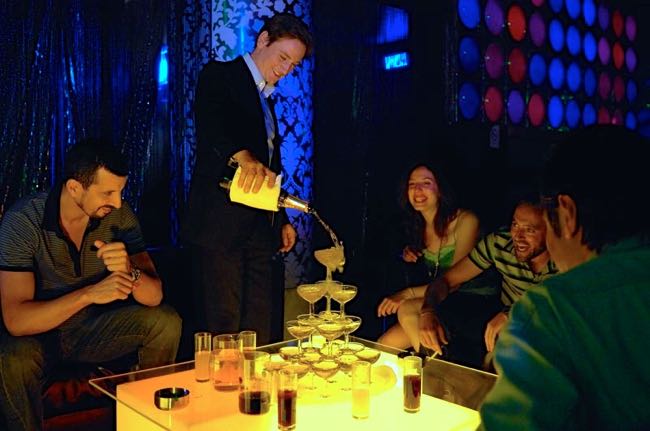
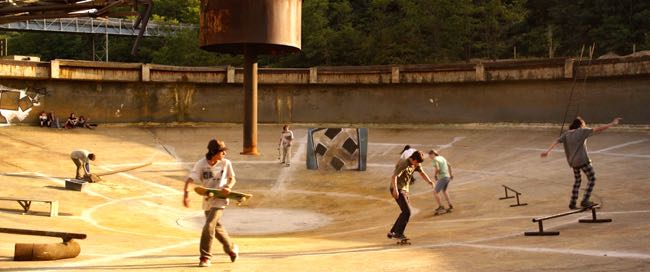
First-time feature director Nikola Lezaic takes on most of the filmmaking chores following a local gang of skateboarders who swear and gesture like rappers and videotape themselves attempting stupid pranks inspired by the likes of “Jackass.”

The region’s dark war-torn past and economic problems are a stark backdrop to the pointless shenanigans of kids who appear to have little ambition beyond getting a video on YouTube. The film’s prospects beyond local markets appear slim.

Best buddies Toda (Marko Todorovic) and Stefan (Stefan Djordjevic) lead the pack of pretty inept skateboarders and are the most keen to punish each other for a lark. They stick assorted pins in their cheeks and noses, leap off high places, punch and beat one another and generally abuse themselves, while a video recorder haphazardly captures their antics.

Dunja Kovacevic plays Stefan’s sometime girlfriend and while their parents are involved mostly in protesting the closure of the copper mines, the kids idle between school and college or work with little to do except drink, party and make each other bleed.

There’s no story, just a sequence of rather dull events including a mass attack on a junk car, a swarming attack on a supermarket and a street march supporting the industrial action.

The three non-professional leads have some presence and charm but Lezaic makes few demands upon them besides urging on their stunts. It’s all a bit sad.

Venue: Locarno International Film Festival, Sidebar: Cinema of the Present; Cast: Marko Todorovic, Stefan Djordjevic, Dunja Kovacevic; Director, writer, producer, editor: Nikola Lezaic; Director of photography: Milos Jacimovic; Production designer: Nikola Bercek; Producers: Uros Tomic, Mina Dukic; Production company: Film House Kiselo Dete; Sales: Visit Films; Not rated; running time, 103 minutes.

This review appeared in The Hollywood Reporter.

Posted in Film, Locarno International Film Festival, Reviews | Tagged , , | Comments Off on LOCARNO FILM REVIEW: Nikola Lezaic’s ‘Tilva Rōs’

LOCARNO FILM REVIEW: Daniele Gaglianone’s ‘Pietro’

locarno-2010-pietro-casella-e-nel-cast-di-pietro-di-daniele-gaglianone-171161By Ray Bennett

LOCARNO, Switzerland – Daniele Gaglianone’s “Pietro” tells of a slightly brain damaged man whose heroin addict brother involves him with bullies and criminals until one day he snaps and things get very nasty.

Pietro Casella (pictured) gives a poignant performance as a man surrounded by people who either order him about or make fun of him, but writer and director Gaglianone leaves too many holes in the story and allows most of the other players to over-act unconvincingly.

Casella’s performance might gain the film attention but its lack of a satisfying background to the unpleasant events that take place offscreen suggest it won’t gain much traction outside Italy.

Francesco Lattarula plays the stoner sibling who likes nothing more than to take Pietro to his favorite bar and have him do impressions and make funny faces. His friends egg on the unfortunate man and react uproariously even though Pietro’s behavior is thoroughly humiliating and hideously unfunny.

The brother and his cohorts all scream and laugh and yell a lot without making any sense. It’s as if the filmmaker bothered only with the central character and left the others to get along as best they could.

The troubled man makes a kind of living delivers fliers for another bully who barely pays him and mistreats his other employees. The film follows Pietro as he goes diligently about his deliveries but there’s no attempt to draw any significance from his work.

After the worm turns and the violence is over, Pietro speaks quietly to the camera and relates how he came to be this way. The film then just peters out with no resolution, offering little by way of insight or purpose.

Venue: Locarno International Film Festival, In Competition; Cast: Pietro Casella, Francesco Lattarula, Carlotta Saletti; Director, writer: Daniele Gaglianone; Director of photography: Gherardo Gossi; Production and costume designer: Lina Fuca; Music: Evandro Fornasier, Walter Magri, Mario Actis, Plus; Editor: Enrico Giovannone; Production company: Babydoc Film; Sales: Ellipsis Media International; Not rated; running time, 80 minutes.

This review appeared in The Hollywood Reporter.

Posted in Film, Locarno International Film Festival, Reviews | Tagged , , , , | Comments Off on LOCARNO FILM REVIEW: Daniele Gaglianone’s ‘Pietro’

LOCARNO FILM REVIEW: Eva Green, Matt Smith in ‘Womb’

womb x650By Ray Bennett

LOCARNO, Switzerland – There is an old joke about a woman who had a glass bellybutton. She had a womb with a view, which is more than can be said for Benedek Fliegauf’s “Womb”, a sappy drama about human cloning that has no point of view at all.

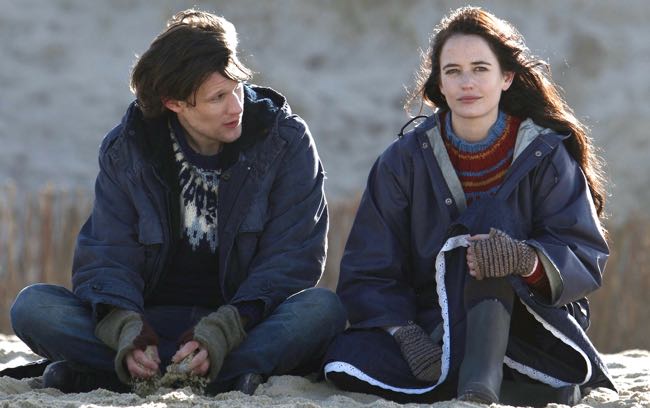
In a sense, it’s a film about a woman who goes to extraordinary lengths just to get laid. When her lover is killed in a road accident, the woman, played by Eva Green, goes to her local Department of Genetic Replication and bears a cloned child. She raises him until he’s the absolute spitting image of her deceased amour (Matt Smith) and then goes about eyeing him with lustful indications of heightened excitement.

Gorgeous seaside vistas; the ineffable beauty of Green; the growing international fame of Smith, who is the BBC’s new “Doctor Who”, and the fascinating topic itself should be enough to create some spark at the box office but it’s unlikely to go forth and multiply.

It’s clear that young Rebecca (Ruby O. Fee) and Thomas (Tristan Christopher) are a match because they live close to one other on a beautiful stretch of windswept beach and love to go exploring. They share excitement in flotsam and jetsam and delight in examining assorted sea creatures, and it’s sad when the girl’s parents take her off to live in Japan.

These scenes are quite lovely to watch and cinematographer Pete Szatmari’s images remain so throughout the picture. Not least when Rebecca returns 12 years later in the form of Green, than whom the camera loves nothing better.

Tommy (Smith) is smitten instantly and drops his latest pickup, and they swoon into their destiny. Until he steps in front of a van. Shattered, Rebecca is drawn towards the local replication clinic, which is the only indication the story is set some time in the future. Tommy’s parents, played by Lesley Manville and Peter Wight, think it’s a bad idea, however, and move away promptly.

Fliegauf’s screenplay raises the issue of cloned humans as the victim of prejudice just like any other alien, legal or otherwise, but just as soon drops it. It toys with the ethical issue of human cloning but runs away from that too.

It all seems to be about Rebecca’s hunka hunka burnin’ love, and prospects brighten for something macabre at their remote oceanside shack when teenaged Tommy brings home pretty young Monica (Hannah Murray) and mom takes on the airs of a woman scorned.

The carving knives appear suddenly attractive in the kitchen, but perhaps she will be content to explain to the creature she has borne that his daddy’s not his daddy, but his daddy don’t know. Or will it be straight to bed?

If the writer/director had been willing to strike out more boldly, the answer to these questions would have some power, and the film might have become more than an intriguing premise and pretty pictures.

Venue: Locarno International Film Festival, In Competition; Cast: Eva Green, Matt Smith, Lesley Manville, Peter Wight, Hannah Murray; Director, writer: Benedek Fliegauf; Director of photography: Peter Szatmari; Production designer: Erwin Prib; Music: Max Richter; Costume designer: Mariano Tufano; Editors: Patricia Rommel, Xavier Box; Production company: Razor Film Produktion; Sales: The Match Factory; Not rated; running time, 107 minutes.

This review appeared in The Hollywood Reporter.
Posted in Film, Locarno International Film Festival, Reviews | Tagged , , , , | Comments Off on LOCARNO FILM REVIEW: Eva Green, Matt Smith in ‘Womb’

LOCARNO FILM REVIEW: “Beyond the Steppes”

Agnieszka Grochowska gives a riveting performance as a woman torn from her home

By Ray Bennett

LOCARNO, Switzerland: Belgian filmmaker Vanja d’Alcantara’s “Beyond the Steppes” is a gripping and sometimes harrowing story of a mother’s determination to keep herself and her infant child alive despite brutal hardship.

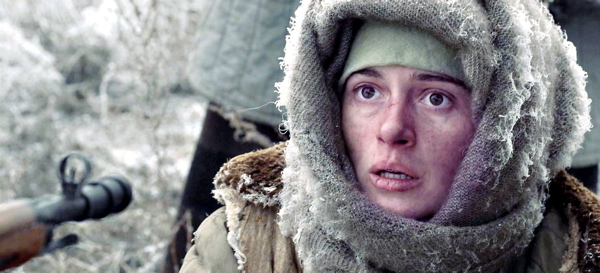
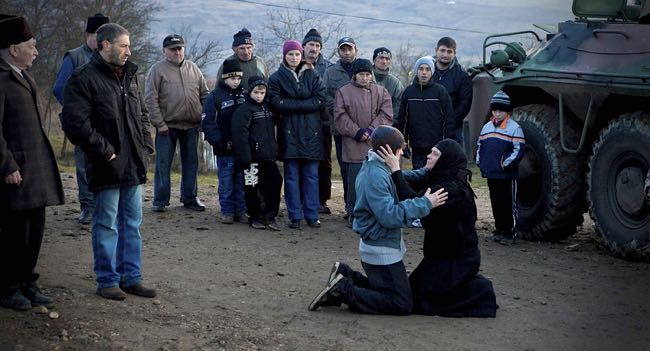
The film is set in Poland and the Soviet Union in 1940 before Hitler invaded Russia and it uses the languages of those countries. Polish actress Agnieszka Grochowska gives a riveting performance as Nina, one of many women taken from their homeland to the Asian wilds of the USSR and forced into pointless hard labor.

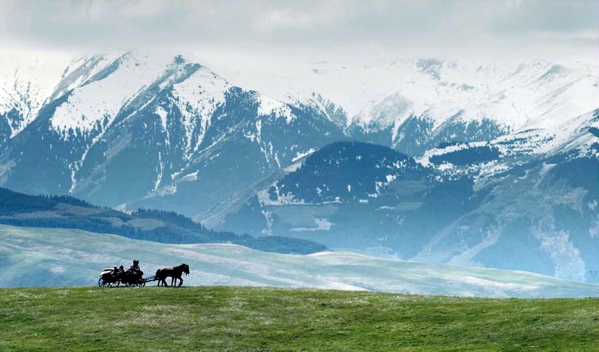
Filmed on the vast empty steppes of Kazakhstan, it’s a story of one woman’s struggle to survive, and the combination of unsentimental storytelling, the bleak but beautiful landscape, and Grochowska’s searing portrayal should see it attract attention at art houses and festivals.

Beautiful but barren and harsh landscape in Vanja d’Alcantara’s ‘Beyond the Steppes’

Slim but steely with eyes that can alternately soften and rage, the actress presents a wholly sympathetic portrait of a mother wrenched from a loving home and cast out into the hands of pigs with guns in a pitiless environment.

The writer and director based the story on the experience of her grandmother and she presents it with passion but without sentiment. The picture opens with scenes of domestic bliss in which Nina and her Polish Army officer husband Roman (Borys Szyc) share the joy of new parenthood and a loving relationship.

But Roman and his fellows are soon off to war and Russian soldiers burst into Polish homes to carry away their women and children.

A forced march leads Nina to a desolate camp where the women are made to do backbreaking work all day digging rocks and clearing trenches. When after several months Nina’s son gets dysentery she draws on every resource to obtain medicine to save him. The harsh and lazy Russian soldiers have no sympathy and only when Nina gets help from a Kazakhstan family does she find a reason for optimism.

Shot on the digital Red Cam, the images captured by cinematographer Ruben Impens are stark but impressive. It’s a grim tale with little redemption that will haunt viewers, not least because of the power of Grochowska’s performance.

Venue: Locarno International Film Festival; In Competition; Cast: Agnieszka Grochowska, Aleksandra Justa, Borys Szyc; Director, screenwriter: Vanja d’Alcantara; Director of photography: Ruben Impens; Production designer: Marek Warzewski; Costume designer: Magda Rutkiewicz; Editor: Virginie Messiaen; Producers: Denis Delcampe, Annemie Degryse; Production companies: Need Productions, Lunanime, Akson Studio; Sales: DOC & Film International; Not rated; running time, 90 minutes.

This review appeared in The Hollywood Reporter.
Posted in Film, Locarno International Film Festival, Reviews | Tagged , , , | Comments Off on LOCARNO FILM REVIEW: “Beyond the Steppes”

LOCARNO FILM REVIEW: Oleg Novkovic’s ‘White White World’

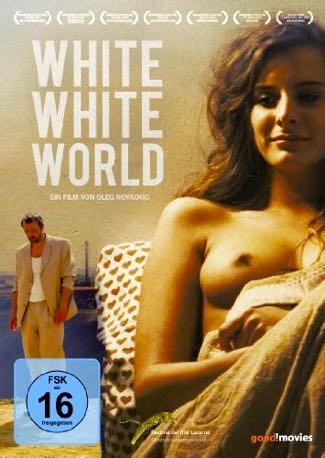
white white world x325By Ray Bennett

LOCARNO, Switzerland – There are several mournful songs in Serbian director Oleg Novkovic’s “White White World” (Beli Beli Svet) and they seem to emerge from the melancholy Balkan soul of its array of defeated characters struggling to find love and meaning in life.

With a screenplay by noted Serbian playwright and poet Milena Markovich, Novkovich’s tale is what he describes as “a miner’s opera” set among men and women whose damaged lives reflect the poisoned remnants of a decaying mining town called Bor in southeast Serbia.

Most of the characters turn to song in order to let out otherwise inexpressible emotions but it is nothing like the way people used to burst into a number in old musicals. Serbian classical composer Boris Kovac provides the songs in a slow Balkan tango beat that echoes the polluted environment and lovelorn mood.

The film’s depiction of bruised people trying to get by in a ruined industrial wasteland and it’s sense of battered pride and worldly regret should find a place in art houses and attract awards attention at festivals.

Uliks Fehmiu plays an ex-miner known as King, who runs a local bar and does pretty much as he pleases. This includes having sex with a wild young beauty named Rosa (Hana Selimovic) whose mother Ruzicka (Jasna Djruicic) is a former lover who just got out of prison.

Ruzicka had served time for killing her husband after he found out she was cheating with King, and although she has a loyal suitor in the hapless Whitie (Boris Isakovic), she still carries a torch for King, who behaves as though he can take or leave anyone.

Rosa pursues King but also dallies with a druggie named Tiger (Marko Janketic) and his heroin-addict sister Dara (Millica Mihajlovic). They all suffer, and sooner or later, they all get to sing.

The tension mounts when Rosa announces that she’s pregnant and there will be bloodshed before Novkovic wraps up his tale with a chorus of miners singing in sad harmony beside a quarry.

The faces of the accomplished cast in close-up and the jagged industrial beauty of the deteriorating city in wide shots clash vividly in Miladin Golakovic’s cinematography. They get under the skin along with the many melodic but haunting laments.

Venue: Locarno International Film Festival, In Competition; Cast: Uliks Fehmiu, Hana Selimovic, Jasna Djruicic, Boris Isakovic; Director: Oleg Novkovic; Screenwriter: Milena Markovic; Director of photography: Milidan Colakovic; Production designer: Aljosa Spajic; Music: Boris Kovac; Costume designer: Irena Marjanov; Editor: Lazar Predojev; Producers: Milena Trobozic-Garfield, Uliks Fehmiu Production company: West End Productions; Sales: Films Boutique; Not rated; running time, 121 minutes.

This review appeared in The Hollywood Reporter.
Posted in Film, Locarno International Film Festival, Reviews | Tagged , , , , , , | Comments Off on LOCARNO FILM REVIEW: Oleg Novkovic’s ‘White White World’