
THEATRE REVIEW: Simon Gray’s ‘The Late Middle Classes’

late middle classes x650

By Ray Bennett

LONDON – Simon Gray’s “The Late Middle Classes” is an exquisite delineation of 1950s English pretensions when snobbery and prejudice strived to hold their own against the post-war shattering of illusions.

It’s a brittle little tale that touches on bad parenting, infidelity, the class system, pedophilia and anti-Semitism and director David Leveaux misses not a scintilla of Gray’s keen observation and subtle wit.

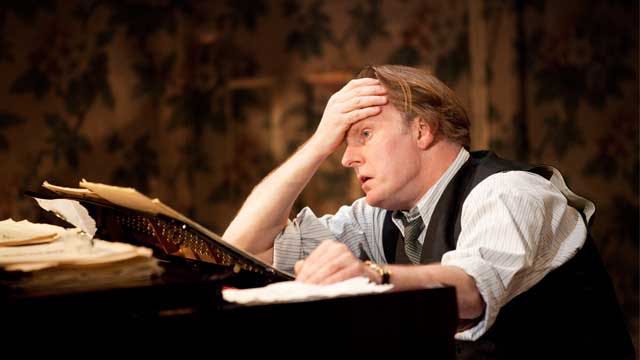
The play is framed by the visit of a man named Holly (Peter Sullivan) to the faded and musty home of his former piano teacher, an Austrian émigré named Brownlow (Robert Glenister, pictured above). Their interplay is indistinct but quickly gives way to a flashback to when Holly (Laurence Belcher) was a boy in short pants attending to his homework and concentrating intensely on his piano studies.

late middle classes 2 x325Holly’s parents are cut clean from the cloth of the English middle class of the time, all posh vowels and clipped phrases. Celia (Helen McCrory, pictured left) chafes within the forced propriety of social mores, restlessly seeking tennis partners and demanding that her son say how much he loves her. Charles (also played by Sullivan) is a pompous bore whose work as a pathologist leaves him thirsty for his afternoon gin and tonic, and a taste for something on the side.

Gray gives them lines that mean little to the characters but speak volumes to the audience, and they are the source of much laughter in the first act. Celia makes amusingly vicious asides as she wheedles on the phone for company and the rare fresh egg from a neighbor while Charles stumbles hilariously over talking to his son about the facts of life.

It all seems perfectly innocent when Brownlow suggests that Holly should get out of his parents’ hair and go to his home for his piano lessons. It becomes slowly apparent that there is something inappropriate about the teacher’s feelings toward the boy but Gray lets suspicion merely hang in the air. Only Brownlow’s mother, Ellie (Eleanor Bron) hints at anything untoward as she rambles in her heavy Austrian accent about the many times they have had to move.

Gray’s view of the time is unblinking and director Leveaux underscores that by drawing acute performances from his cast. Glenister makes the piano teacher both sinister and sympathetic while McCrory and Sullivan bite off sentences as if speaking quickly somehow solves any dilemma. Bron manifests confusion of displacement and loss, and on press night Laurence Belcher, as Holly, displayed astonishing poise and a grip on his portrayal as vivid as Christian Bale’s in “Empire of the Sun.”

Venue: Donmar Warehouse, runs through July 17; Cast: Robert Glenister, Helen McCrory, Peter Sullivan, Eleanor Bron, Harvey Allpress, Laurence Belcher, Felix Zadek-Ewing; Playwright: Simon Gray; Director: David Leveaux; Set designer: Mike Britton; Lighting designer: Hugh Vanstone; Music: Corin Buckeridge; Sound designer: Simon Baker for Autograph.

This review appeared in The Hollywood Reporter.
Posted in Reviews, Theatre | Tagged , , , , , , , | Comments Off on THEATRE REVIEW: Simon Gray’s ‘The Late Middle Classes’

THEATRE REVIEW: Arthur Miller’s ‘All My Sons’

all my sons x650By Ray Bennett

LONDON – In Howard Davies’s suspenseful and moving production, Arthur Miller’s 1947 play “All My Sons,” which tells of a man who puts his own and his family’s well being above his responsibility to others, remains as powerful today as it was coming right after World War II.

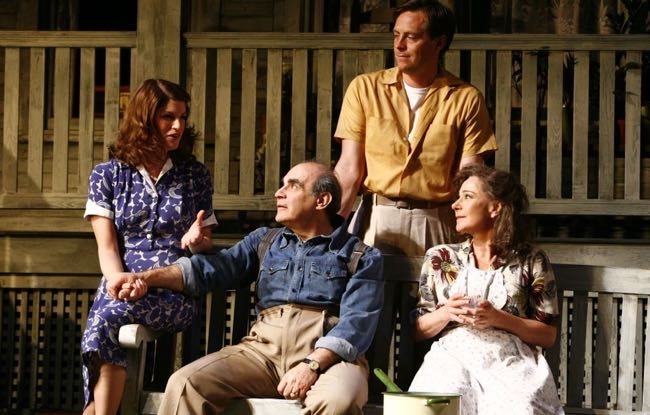
Providing the proper safe equipment to the military in combat is as important today as it was back then and when Joe Keller (David Suchet) decides to let cracked cylinder heads be shipped out he sends 21 airman to their deaths. Then he lies about it and blames his hapless partner who is prosecuted and sent to prison.

Miller lets the truth of Keller’s crime emerge gradually as the play first presents Joe as a hearty soul and successful businessman well liked by his neighbors. Designer William Dudley places the Keller family in the backyard of a comfortable suburban home with tall, embracing trees and real grass.

Joe lounges with the paper and smokes his pipe, sharing banter with the folks next door and playing games with the local kids. The only cloud in the picture is that Joe’s wife Kate (Zoe Wanamaker) clings to the belief that their oldest son Larry, whose plane went down in the war, will one day return.

That’s a particular problem for younger son Chris (Stephen Campbell Moore) who has waited patiently for three years to ask Larry’s girl, Ann (Jemima Rooper) to marry him. Ann arrives having accepted Larry’s death but then George (Daniel Lapaine), the son of Joe’s imprisoned partner, shows up demanding a showdown.

With genuine artistry, Miller unpeels the onion of Keller’s life to its decaying core and director Davies keeps the revelations coming with escalating suspense. Miller’s theme of how profit and the desire for good standing in the community can swamp personal responsibility and destroy families plays out with growing tension and sadness.

Suchet shows with great skill all sides of Keller’s character from the cheery bonhomie of a man at ease in his personal domain to a sharp-suited businessman quick to make hard decisions to a frail, crumpled creature whose fabrications have finally been undone.

Wanamaker uses sly glances to obscure the reasons for Kate clinging to the belief that her son is still alive and manifests keening grief when the truth emerges.

Rooper combines prettiness with hints of steel, Lepaine is credibly angry and Steven Elder adds a balancing note of suburban angst as a neighboring doctor too settled for his own liking.

Best of all is Campbell Moore who tackles commandingly the difficult role of the decent and idealistic son. In a memorable performance, he appears to grow physically from being a genial fellow who goes along to a man with the backbone to demand honesty and learn how to deal with it.

Venue: Apollo Theatre, runs through Sept. 11; Cast: David Suchet, Zoe Wanamaker, Stephen Campbell Moore, Jemima Rooper, Daniel Lapaine; Playwright: Arthur Miller; Director: Howard Davies; Set and costume designer: William Dudley; Lighting designer: Mark Henderson; Music: Dominic Muldowney; Sound designer Paul Groothuis.

This review appeared in The Hollywood Reporter.

Posted in Reviews, Theatre | Tagged , , , , , , , , | Comments Off on THEATRE REVIEW: Arthur Miller’s ‘All My Sons’

CANNES FILM REVIEW: Julie Bertucelli’s ‘The Tree’

Morgana Davies shines as a girl who misses her father in Julie Bertucelli’s ‘The Tree’

By Ray Bennett

French-born filmmaker  Julie Bertucelli’s “The Tree” takes tree hugging to extremes. It will appeal to those who like to believe that upon death human beings take other forms, in this case a towering woody perennial, and bore those who do not.

Screened on Closing Night at the 2010 Festival de Cannes, the French and Australian production is based on Julie Pascoe’s popular Australian novel “Our Father Who Art In the Tree”. It opens in the UK on Aug. 5 from Artificial Eye.

Those who cringe at the title should stay away from the film but given the many who enjoy touchy-feely themes, box office potential is high.

Certainly, it’s well worth seeing the performance of young Morgana Davies as Simone, a child who becomes convinced that her late father speaks and listens to her through the comforting branches of the tree next to her house.

Davies gives the kid a great deal of spunk and character. Gifted with poise and considerable acting range, the young performer makes Simone attractive, sympathetic and vulnerable while remaining fiercely independent and prickly.

Her siblings also benefit from strong performances and writer-director Bertucelli deserves great credit for making them appear so natural and credible.

Charlotte Gainsbourg plays Dawn, their mother, who also comes to believe she can visit with her late husband Peter amongst the leaves of a tree that is handsome but causes a great deal of disruption with its roots spreading out for water.

The family’s home is in danger and also that of a fussy neighbor who petitions for the tree to be torn down. A year after Peter’s death, Dawn gets a job and falls for her handy-man boss George (Marton Csokas). Things come to a head when George is enlisted to chop down the tree and the land is threatened by a ferocious cyclone.

Nigel Bluck’s cinematography has sweep and style, and Bertucelli wisely focuses on Simone as the center of the film. That’s a good thing as Gainsbourg makes the woman appear more drippy than necessary. It’s Davies who comes closest to melting the hearts of those immune to the cloying tale.

UK distributor: Artificial Eye; Sales: Memento Films International; Production companies: Les Films du Poisson, Taylor Media; Cast: Charlotte Gainsbourg, Marton Csokas, Morgana Davies, Aden Young; Director and screenwriter: Julie Bertucelli; Director of photography: Nigel Bluck; Production designer: Steven Jones-Evans; Music: Gregoire Hetzel; Costume designer: Joanna Mae Park; Editor: Francois Gedigier; UK rating 12A, 100 minutes

This review appeared in The Hollywood Reporter.
Posted in Festival de Cannes, Film, Reviews | Tagged , , , | Comments Off on CANNES FILM REVIEW: Julie Bertucelli’s ‘The Tree’

CANNES FILM REVIEW: ‘Carlos’ by Olivier Assayas

CARLOS

By Ray Bennett

CANNES – Long, but illuminating and engrossing, “Carlos” directed by Olivier Assayas, details the extraordinary career of the international terrorist known as Carlos the Jackal.

Shot in three parts for television, the five-hour and 33-minute production was screened in full at the Festival de Cannes and it will air on the Sundance Channel in the United States.

It is a tremendous achievement that shines a light on the way many countries use criminals to further their domestic and international goals. Politically informative, it also offers great drama with excitement and suspense, and no little tragedy. It will attract viewers and cinema audiences around the world.

Based on extensive research by Assayas, co-writer Dan Franck and producer Daniel Leconte, the film is presented as fiction because so much of the life of Ilich Ramirez Sanchez, who became known as Carlos, remains unknown.

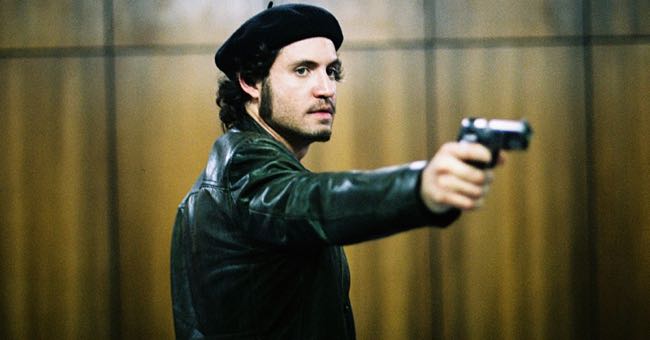
The man, who is serving a life sentence in a French prison for murder, remains an enigma despite a dynamic performance in the title role by Edgar Ramirez (pictured). His violent activities as a killer for hire at the service of assorted nations and secret service agencies made headlines throughout the 1970s and ’80s until his arrest in 1997.

With full cinematic production values, Assayas relates his story covering many locations in Europe, South America and the Middle East. There are a great number of characters involved on both sides of the law and the director introduces them and follows their machinations with remarkable clarity.

Born in Venezuela to a lawyer who espoused Marxism, the man who became Carlos was educated in England and the Soviet Union before joining the Popular Front for the Liberation of Palestine in Beirut in 1970. Over the next two decades, he organized and carried out bombings, hostage takings and murders from London to the Hague to Paris and Vienna. In Austria in 1975, he led a group of terrorists in a raid on OPEC headquarters that resulted in tension-filled flights back and forth from Algiers to Tripoli as he attempted to flee to Baghdad.

Throughout, he surrounded himself with various adventurers and killers and many women. The film portrays him as sophisticated and intelligent with the capacity to be charming but always dangerous. He imposed his will on men and women with utter belief in his right to leadership while boasting that he knew he would die violently and it could happen at any time.

Assayas is assured in showing how Carlos manipulated people and organisations, and the small details of how he planned and carried out his raids are meticulously examined and made to serve dramatic ends.

He and his cast succeed in bringing the huge number of characters to life, and in Venezuelan actor Ramirez he has found a performer who captures the man’s enormous ego, considerable charm and manifest criminality. Carlos gives voice to idealism and claims his actions are to help the oppressed, but he lives high on the hog and there’s always plenty of money, women and luxury.

Venue: Festival de Cannes, Out of Competition; Cast: Edgar Ramirez, Alexander Scheer, Nora Von Walstatten, Ahmad Kaabour, Christopher Bach; Director: Olivier Assayas; Writers: Olivier Assayas, Dan Franck; Directors of photography: Yorick Le Saux, Denis Lenoir; Production designer: Francois-Renaud Labarthe; Costume designer: Jurgen Doering; Editors: Luc Barnier, Marion Monnier; Producer: Daniel Leconte; Production: Film En Stock, Egoli Tossell Film; Sales: StudioCanal; Not rated; running time, 333 minutes.

This review appeared in The Hollywood Reporter.

Posted in Festival de Cannes, Film, Reviews | Tagged , , , , , | Comments Off on CANNES FILM REVIEW: ‘Carlos’ by Olivier Assayas

CANNES FILM REVIEW: Stephen Frears’s ‘Tamara Drewe’

tamara-drewe-2 x650By Ray Bennett

CANNES – A film that claims to be a literary comedy set in England’s West Country based loosely on Thomas Hardy’s “Far From the Madding Crowd” had better deliver the goods, and Stephen Frears’ new film, “Tamara Drewe,” pretty much does.

Jaunty and entertaining, it’s a faithful rendering of a comic by Posy Simmonds for the upscale British newspaper the Guardian and published subsequently in graphic novel form. Simmonds fans should be happy as Frears and screenwriter Moira Buffini make pleasing work of her material with plenty of laughs.

Ben Davis also makes the heaths, woodland and vale plus the cottages in the county of Dorset look ravishing enough to please Hardy himself. Alexandre Desplat’s agile score employs gifted soloists along with the London Symphony Orchestra to help embroider the pretty pictures.

Like the comic strip, the film includes a couple of unruly teenagers to balance all the adult humour, and while these characters’ antics make the film uneven, they probably widen its demographic potential. Boxoffice potential looks solid as a result.

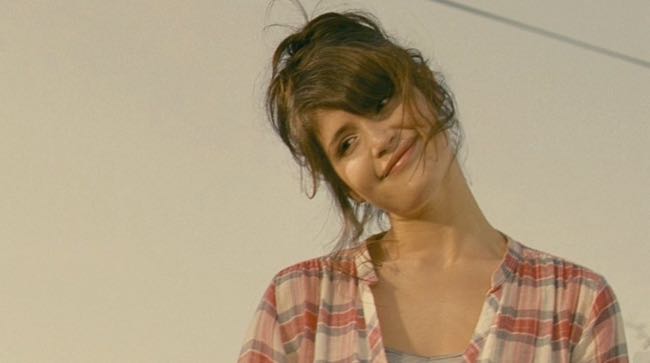
Gemma Arterton, who shone recently in the title role of Hardy’s “Tess of the D’Urbervilles” for a BBC miniseries, plays Tamara Drewe, drawn from Bathsheba Everdene in Hardy’s “Madding Crowd.”

gemma-arterton x650

Her return as a beauty (thanks to plastic surgery) to the small country village where she grew up an ugly duckling ruffles the feathers of old flames, not least because she brings along her boyfriend, a rock drummer named Ben Sergeant (Dominic Cooper), who is more or less Sergeant Troy from the Hardy book.

Roger Allam plays successful crime novelist Nicholas Hardiment, filling in for the classic novel’s farmer, William Boldwood, with Luke Evans taking the Gabriel Oak role of stalwart countryman Andy Cobb.

The setting and source of most of the laughs is a literary retreat held at Hardiment’s fancy pile and run mostly by his long-suffering wife, Beth (Tamsin Greig). Several aspiring writers are in residence including a serious American named Glen McGreavy (Bill Camp), who is attempting a sober analysis of the works of … Thomas Hardy.

Writers – their foibles, fallacies and fabrications – are the butt of some excellent jokes, and the affairs of Drewe and her men lead to amusing payoffs. There’s also a witty thread that mocks the plots of commercial crime yarns via a stampede of cows.

Arterton continues to establish herself as a leading lady to be reckoned with, combining mischievous sex appeal with generous self-mockery. Allam ranks with Bill Nighy in sheer drollery and dry but hilarious line readings while Cooper (“Mamma Mia!”) contributes a savvy portrait of a rocker whose seduction technique involves snogging while drumming with his feet.

The heart of the picture belongs to the exquisite Tamsin Greig, who finds comedy in the pain of a much-betrayed wife without demeaning the character. She has an extraordinary ability to move from bemusement to comedy to outrage in one sentence.

The weakest part of the film involves two girls (Jessica Barden and Charlotte Christie) whose antics, including burglary and sending phoney e-mails, drive the plot. It might work in the comic strip, but on film it appears like pandering in hopes of a younger audience, and takes time away from the very clever fun for grownups.

Venue: Festival de Cannes, Out of Competition; Cast: Gemma Arterton, Roger Allam, Bill Camp, Dominic Cooper, Luke Evans, Tamsin Greig; Director: Stephen Frears; Writer: Moira Buffini, based on the graphic novel by Posy Simmonds; Director of photography: Ben Davis; Production designer: Alan MacDonald; Music: Alexandre Desplat; Costume designer: Consolata Boyle; Editor: Mich Audlsey; Production: Ruby Films, Notting Hill Films, BBC Films, U.K. Film Council; Not rated; running time, 109 minutes.

This review appeared in The Hollywood Reporter.
Posted in Festival de Cannes, Film, Reviews | Tagged , , , , , , , , , | Comments Off on CANNES FILM REVIEW: Stephen Frears’s ‘Tamara Drewe’

CANNES FILM REVIEW: Janus Metz’s ‘Armadillo’

armadillo x650

By Ray Bennett

CANNES – Danish filmmaker Janus Metz’s gripping documentary feature “Armadillo”, named for a base in Afghanistan where soldiers from Denmark are fighting against the Taliban, already has created controversy in his homeland.

The film depicts six months in the posting of a handful of young soldiers and includes a frightening sequence in which a patrol faces a Taliban ambush. The hellish skirmish ends with a Danish hand grenade killing several insurgents. The soldiers move in and with the danger still grave they take no chances, firing round after round into the fallen enemy. Still high on adrenaline and relief, their debriefing involves boasting and laughter.

The documentary’s coverage of the incident has embroiled the Danish military in questions about appropriate behavior in combat situations.

That reality adds to the shocks and tension of Armadillo, along with the fact that the director and cinematographer Lars Skee were clearly risking their lives to get the story. While the men are Danish, there is a universality to their story and a vitality in the filmmaking that should see the documentary in demand around the world.

Edited skillfully by Per K. Kirkegaard, there are segments covering the departure of the new young soldiers, their induction into boring everyday life in an outpost on a far-flung desert, and a growing hardness as they confront what it means to take a life.

With no narration, just scenes of the boys talking, Metz manages to locate individual personalities in the ranks of newcomers and veterans alike.

The soldiers work out, call home, drink beer and watch porn. Then they go out to be shot at and bombed. Their conversations with the locals are all about how regular Afghans are caught between what they see as invaders and their own would-be tyrants. Either way, they stand to lose their animals, their crops, and their lives. And the soldiers cannot tell one Afghan from another.

It’s scary stuff and it gets even more so when the patrol gets ambushed. Despite drones that can show where the enemy is, planes that can place bombs on any grid point, and helicopters to retrieve the wounded, it remains a place where death lurks.

When the bombs go off and the bullets start flying, Metz and his cameraman provide a real-life vision of what a hurt locker is really all about.

Venue: Festival de Cannes, Critics Week; Director: Janus Metz; Director of photography: Lars Skree; Sound designer: Rasmus Winther Jensen; Music: Uno Helmersson; Editor: Per K. Kirkegaard; Producers: Ronnie Fridthjof, Sara Stockmann; Production: Fridthjof Film Doc; Sales: Trust Nordisk; Not rated; running time, 100 minutes.

This review appeared in The Hollywood Reporter.

Posted in Festival de Cannes, Film, Reviews | Tagged , , | Comments Off on CANNES FILM REVIEW: Janus Metz’s ‘Armadillo’

CANNES FILM REVIEW: ‘5 by Favelas: Now By Ourselves’

5 by favelas x650

By Ray Bennett

CANNES – Five short films set in the hillside slums of Rio de Janeiro and directed by young filmmakers who live there make up a film titled “5 by Favelas: Now By Ourselves” that renews faith in the kind of moviemaking that lives and breathes and reflects the human spirit in all its colours.

It’s the result of a project set up by Brazilian producers Carlos Diegues and Renata De Almeida Magalhaes that involved 200 youngsters in filmmaking workshops and master classes by such directors as Nelson Pereira dos Santos, Ruy Guerra, Fernando Meirelles and Walter Salles.

Made using the same crew, the films reflect the experiences and vision of the youngsters, whose work offers an unblinking view of life in the favelas where poverty rules. Hopes are often dashed there and lives can be short but the talent on display in the mix of grim reality and everyday kindness gives cause for optimism.

The pace of life in the favelas shown in the films combines cheerful camaraderie and fearful suspicion with gangs rampant, police corrupt and neighborhoods protective.

The first short, titled “Source of Income”, directed by Manaira Carneiro and Wagner Moraes, shows a decent young man winning a place at law school only to find that he cannot afford the bus fare, let alone textbooks. Rich classmates automatically assume that living in the favela gives him access to drugs and, to prevent his mother resorting to a loan shark, he decides to start dealing with near catastrophic results.

In “Rice and Beans”, directed by Rodrigo Felha and Cacau Amaral, a small boy decides to give his father a rare treat on his birthday by earning enough to buy a chicken for the dinner table. With a buddy, he washes a car and clears horse manure from the street but the car owner says he cannot pay until the next day and local bullies take their other earnings. They decide to steal a chicken but a story related later by the father makes the son decide to make up for his actions.

The harshest tale is “A Violin Concert”, directed by Luciano Vidigal, in which three childhood friends end up on opposite sides of the law. One man is now a police officer and the other a gangster who involves his musician girlfriend in a violent gang war. The punishment meted out when rival tribes clash is shockingly brutal and leaves the cop with only one terrible way to keep his friends from suffering.

“Let It Fly”, directed by Cadu Barcellos, is reminiscent of “The Kite Runner” as boys fly kites from rooftops. But when one kite is cut and lands in another favela, a boy must risk his life to go and retrieve it.

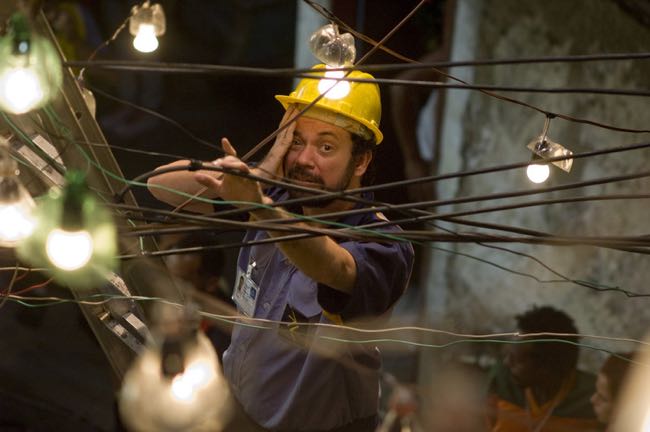
A favela community faces a blazing hot Christmas Day without electricity in “Let There Be Light”, directed by Luciana Bezerra. With food to cook, beer to chill, and decorative lights to be plugged in, family and friends are anxious for one frightened lineman to fix things. It doesn’t look good until the man decides to break the rules.

The final image of one patch of light on a dark mountain seems to sum up what the project means and suggests that the future of Brazilian filmmaking is in good hands.

Venue: Festival de Cannes, Out of Competition; Cast: Silvio Guindane, Gregorio Duvivier, Hugo Carvana; Juan Paiva, Pablo Vinicius, Flavio Bauraqui, Thiago Martins, Cintia Rosa, Samuel De Assis, Feihao,Victor Carvalho, Joyce Lohanne, Luis Fernando, Marcio Vito, Joao Carlos, Dila Guerra; Directors: Manaira Carneiro & Wagner Moraes, Rodrigo Felha & Cacau Amaral, Luciano Vidigal, Cadu Barcellos, Luciana Bezerra; Production designers: Pedro Paulo, Rafael Cabeca; Music: Guto Graca Mello; Editor: Quito Ribeiro; Production: Luz Magica; Sales: Elle Driver; Not rated; running tme, 103 minutes.

This review appeared in The Hollywood Reporter.
Posted in Festival de Cannes, Film, Reviews | Tagged , , , , , , , | Comments Off on CANNES FILM REVIEW: ‘5 by Favelas: Now By Ourselves’

CANNES FILM REVIEW: Cam Archer’s ‘Shit Year’

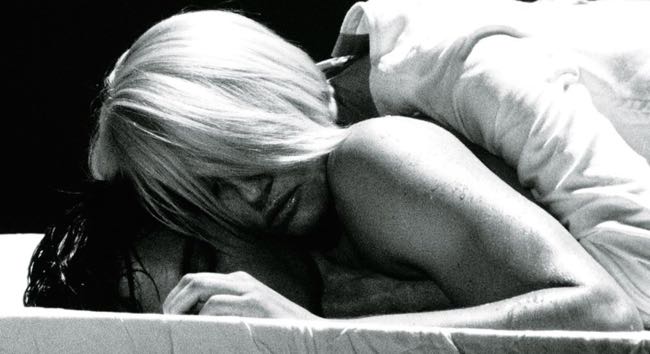
SHIT YEAR, from top: Ellen Barkin, Luke Grimes, 2010. ©Cinemad Presents

By Ray Bennett

CANNES – Ellen Barkin looks pretty good in black and white, but that’s about all that can be said for California director Cam Archer’s vacuous “Shit Year,” which practically demands the observation that the title is one word too long to be strictly accurate.

Slim, blonde and sardonically expressive, Barkin loiters about elegantly in a series of sequences having something to do with a famous actress named Colleen West getting lost in the woods and her own delusions after deciding to retire.

Interest in the picture will be mostly from the occasional festival and art house, however many fans Barkin has these days, and those who are for some reason captivated by meaningless black and white images on a big screen.

Surrealistic and impenetrable, the film shows the languid woman having flashbacks, flash forwards and merely flashes as she contemplates the long and successful career she’s walked away from. She also toys with a pretty boy (Luke Grimes) who looks a bit like the young Elvis but when invited to speak says either “I don’t know” or “I’m not sure.”

Walks in the sparse woods with a chatty neighbor (Melora Walters) who apparently doesn’t go to the movies so doesn’t recognize the star; imagined conversations with an analyst (Theresa Randle) in some kind of limbo facility; and reminiscences with the actress’s older brother (Bob Einstein) serve to make things no clearer.

Venue: Festival de Cannes, Directors’ Fortnight; Cast: Ellen Barkin, Melora Walters, Bob Einstein, Luke Grimes, Theresa Randle; Director, writer: Cam Archer; Director of photography: Aaron Platt; Production designer: Elizabeth Birkenbuel; Music: Mick Turner; Editor: Madeline Tucek; ; Producer: Lars Knudsen, Jay van Hoy Production: Parts and Labor; Sales: Match Factory; Not rated; running time, 95 minutes.

This review appeared in The Hollywood Reporter.
Posted in Festival de Cannes, Film, Reviews | Tagged , , , | Comments Off on CANNES FILM REVIEW: Cam Archer’s ‘Shit Year’

CANNES FILM REVIEW: Gilles Marchand’s ‘Black Heaven’

black heaven x650

By Ray Bennett

CANNES – The potential perils of anonymity on the Internet are employed for sinister effect in Gilles Marchand’s “Black Heaven” (L’Autre Monde), an intelligent thriller in which the suspense takes its time but pays off well at the end.

The tale of a decent French kid caught up in a dangerously seductive interactive online game, with many scenes set inside the game itself, should prosper in French-speaking territories and is well worth a look for an English-language remake.

Things start off slowly with youthful lovers Gaspard (Gregoire Leprince-Ringuet) and Marion (Pauline Etienne) enjoying the summer by the beach. Finding a lost mobile phone, their curiosity is piqued by images on it of a beautiful blonde and text messages by the man who presumably owns the phone that suggest intrigue and a secret assignation.

As a lark, the youngsters go to the appointed meeting place, spot the couple and follow them into the woods where, to their horror, the pair attempts suicide having tied a pipe to their car’s exhaust. The man dies, but Gaspard and Marion save the blonde.

Gaspard also pockets a video camera placed on the dashboard of the suicidal couple’s vehicle. Viewing it alone, he discovers that the blonde, named Sam (Louise Bourgoin, pictured), plays an avatar videogame called “Black Hole” and quickly obtains a copy and goes inside.

Through a somewhat contrived coincidence, Gaspard also meets the hot-blooded and tempting blonde in real life. Despite his affection for Marion and a warning from the woman’s brother, Vincent (Melvil Poupard), that she is not well and was only just released from hospital, he falls under her spell.

As sequences alternate between real events and the artificiality of the world of the videogame, the picture appears to lose its way in the middle section, but it turns out that director and co-writer Marchand knows what he’s doing and where he’s going. The twists, when they come, are riveting.

Leprince-Ringuet and Etienne are fresh-faced and appealing as the youngsters and they handle the early innocence and growing alarm with assurance, while Poupard is effective in making Vincent both sympathetic and potentially threatening.

It is Bourgoin that most moviegoers will remember, however, with a peachy sex appeal that she makes electric but also with the capacity to demonstrate great inner turmoil and inconsolable sadness.

Venue: Festival de Cannes, Out of Competition; Cast: Gregoire Leprince-Ringuet, Louise Bourgoin, Melvil Poupard, Pauline Etienne; Director: Gilles Marchand; Writers: Gilles Marchand, Dominik Moll; Director of photography: Celine Bozon; Production designer: Jeremie Sfez; Music: Anthony Gonzales; Costume designer: Joana George-Rossi; Editor: Nelly Quettier; Production: Haut et Court; Sales: Memento Films International; Not rated; running time, 100 minutes.

This review appeared in The Hollywood Reporter.

Posted in Festival de Cannes, Film, Reviews | Tagged , , , , , , | Comments Off on CANNES FILM REVIEW: Gilles Marchand’s ‘Black Heaven’

CANNES FILM REVIEW: Mike Leigh’s ‘Another Year’

another year x650

By Ray Bennett

CANNES – Mike Leigh’s latest slice of British life picture is titled “Another Year,” and many viewers will be grateful it’s just the one. Acutely observed but gloomy and lacking narrative, it tells of 12 months in the life of a decent but dull suburban couple and their friends, most of whom you would go out of your way to avoid at a party.

The veteran British director draws typically skilful performances from his cast of mostly regulars and there are fine contributions from cinematographer Dick Pope and composer Gary Yershon. It’s a sedate film without drama that festival juries could well fall in love with but moviegoers might decide that their own brand of misery is quite sufficient, thanks.

International box office will rely on Leigh’s admirers and it will be a tough go in his homeland with austerity measures under the new government about to make people gloomy enough already.

There’s no doubting Leigh’s sympathy for the lonely and unhappy characters depicted in the film but while he and his talented cast do their best to suggest they are worthy of attention, it’s not easy to see especially why.

Divided into the four seasons, the year depicted includes a birth, a funeral and expectations of a wedding but the title itself makes no promise of excitement. Pope’s images of the changing weather are among the films pleasures along with Yershon’s elegant score for string quintet, which complements Leigh’s use of lingering close-ups.

Jim Broadbent and Ruth Sheen play happily married Tom and Gerri, who lead industrious lives at work and at home. He’s an engineering geologist and she’s a medical counsellor, and their 30-year-old son Joe (Oliver Maltman) is a community lawyer. They tend their piece of vegetable garden at the local allotments, read and worry about the environment, and cook dinners for friends and family.

These include Mary, a secretary at Gerri’s clinic, who drinks too much, talks too much, and usually overstays her welcome. Lesley Manville (pictured centre with Broadbent and Sheen) brings this sad and rather desperate character to life in a performance that will garner considerable acclaim. She pitches Mary’s voice to match her degree of giddiness, anxiety and need, and shows a mastery of facial expression that conveys her gradual awareness that she has allowed life to pass her by.

Another friend, Ken (Peter Wight), overweight, drunken and divorced, is in a similar plight and while Gerri and Tom show concern and tolerance, they have little to offer either of them much by way of concrete help. Other Leigh veterans including Imelda Staunton and Phil Davis show up in small roles and, like the wonderful stage actor David Bradley as Tom’s bereaved brother, they are gifted in the use of silence and nuanced tones to deliver Leigh’s cryptic lines.

Broadbent and Sheen bring a sly touch of smugness to the apparently contented but quite boring central couple, and perhaps Leigh intends them to be not quite as nice as they appear. Late in the film, an angry and disaffected nephew named Carl makes a brief but striking appearance. Played with focused intensity by Martin Savage, he’s only on screen for a couple of scenes but when he departs in a temper, it’s tempting to ask the director, would he mind terribly if we went with him?

Venue: Festival de Cannes, In Competition; Cast: Jim Broadbent, Lesley Manville, Ruth Sheen, Oliver Maltman, Imelda Staunton, Phil Davis, David Bradley; Director, writer: Mike Leigh; Director of photography: Dick Pope; Production designer: Simon Beresford; Music: Gary Yershon; Costume designer: Jacqueline Durran; Editor: Jon Gregory Ace; Producer: Georgina Lowe; Production companies: Thin Man Films, Film4, Untitled 09 Ltd.; Sales: Focus Features; Not rated; running time, 130 minutes.

This review appeared in The Hollywood Reporter.

Posted in Festival de Cannes, Film, Reviews | Tagged , , , , , , , , , , , | Comments Off on CANNES FILM REVIEW: Mike Leigh’s ‘Another Year’