Recalling my great friend Mark Schwed on his birthday


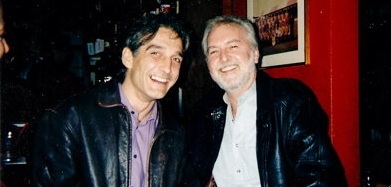
Ray Bennett & Mark Schwed at Dan Tana's 1998
From too much love of living,
From hope and fear set free,
We thank with brief thanksgiving
Whatever gods may be
That no man lives for ever;
That dead men rise up never;
That even the weariest river
Winds somewhere safe to sea.

– A.C.Swinburne 1866

More about Mark Schwed

Posted in Notes | Tagged , | Comments Off on Recalling my great friend Mark Schwed on his birthday

THEATRE REVIEW: ‘The Shawshank Redemption’

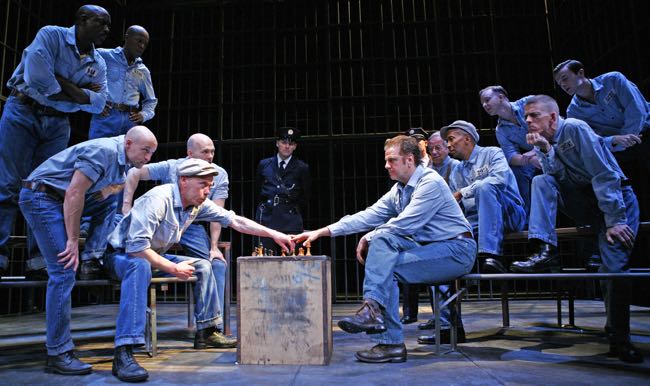
The Shawshank Redemption x650

By Ray Bennett

LONDON – Fashioned more to take advantage of the enduring popularity of the 1994 movie, the stage version of “The Shawshank Redemption”, which moved to the West End following a good run in Dublin, succeeds as entertainment but adds little by way of artistic achievement.

Based on Stephen King’s short novel rather than the film’s script, the production nonetheless features a black actor, Reg E. Cathey as Red, the lifer who befriends wrongly conflicted Andy Dufresne (Kevin Anderson) in the grim cells of Shawshank.

Confined to the prison, made claustrophobic by designer Ferdia Murphy’s set of massive steel bars, the play follows the storyline that pits Dufresne against aggressive convicts, brutal guards and a corrupt warden. With full-frontal nudity and graphic depictions of gang rape, it’s not all easygoing but a measure of its ambitions was reflected during the curtain call on opening night when the bad guys were booed like pantomime villains.

American actors Anderson and Cathey channel the film’s stars Tim Robbins and Morgan Freeman pretty well with Cathey acting plausibly as the story’s narrator and principal believer in the hope that Dufresne represents. Anderson plays the determined innocent convict with appropriate reserve and conveys his implacable resolve convincingly.

The chorus, as it were, of prisoners divides into good guys who pal around with Red and bad guys led by Joe Hanley, who does a good job of acting depraved. Mitchell Mullen is smoothly sinister as the immoral prison warden.

Best of all is veteran British actor Geoffrey Hutchings as Brooksie, the lifer who runs the prison library and who was portrayed by James Whitmore in the film. Hutchings manifests the oldtimer’s recognition, faced with parole, that he is no longer fit for everyday life beyond prison bars but also shows that the character has a mean streak that explains why he was sent there in the first place.

Venue: Wyndham’s Theatre, runs through Feb. 10; Cast: Kevin Anderson, Reg E. Cathey, Geoffrey Hutchings, Mitchell Mullen, Joe Hanley; Playwrights: Owen O’Neill, Dave Johns, based on the short novel by Stephen King; Director: Peter Sheridan; Set designer: Ferdia Murphy; Lighting designer: Kevin Tracy; Music and sound designer: Denis Clohessy; Producers: Paul Elliot, Breda Cashe, David Ian, Pat Moylan.

This review appeared in The Hollywood Reporter.


Posted in Reviews, Theatre | Tagged , , , , , , , | Comments Off on THEATRE REVIEW: ‘The Shawshank Redemption’

VENICE FILM REVIEW: Michele Placido’s ‘The Great Dream’

Il grande sogno x650By Ray Bennett

VENICE – A kind of Italian “The Way We Were” although without that film’s epic ambition, Michele Placido’s “Il Grande Sogno” (The Great Dream) tells of a love triangle set against the political turmoil and student protests in Italy in the late 1960s.

With attractive performances, especially by Jasmine Trinca, who won the Marcello Mastroianni Award for best young actor or actress at the Venice International Film Festival, the polished, atmospheric production will take the film to success at festivals and in art houses internationally.

The handsomely mounted film deals a lot in nostalgia for those who were young at the time including the director, who has said there are some autobiographical elements to the story. Trinca plays Laura, a beautiful but bookish young woman from a traditional Roman Catholic family who gets caught up in the anti-war passions of the time.

At university, she meets charismatic protest organizer Libero (Luca Argentero) and throws herself into the marches and sit-ins that result. Meanwhile, young police officer Nicola (Riccardo Scamarcio, above right with Trinca and Argentero) has discovered that he’s not best suited for the military requirements of policing and accepts a position going undercover at the protests.

Jasmine Trinca x650

In his guise as a student, Nicola meets Laura and they fall in love with Libero looking on and being surprisingly tolerant. The fabrications inevitably unravel and the film follows the threesome as the political tension escalates.

Placido does well to evoke the period mixing what appears to be documentary footage in with cinematographer Armaldo Catinari’s evocative images.

Laura’s family, with her two brothers in teenaged rebellion against middle-class traditions, is well drawn and the screenplay by Doriana Leondeff and Angelo Pasquini balances the elements cleverly while Nicola Piovani’s score enhances it all.

Scamarcio is plausible as a handsome cop who would rather be an actor and Argentero brings knowing experience to his role of the elder statesman of the protest scene. Trinca combines her fetching looks with a spirited depiction of a young woman striding boldly into the world to leave a lasting impression.

Venue: Venice International Film Festival, In Competition; Cast: Riccardo Scamarcio, Jasmine Trinca, Luca Argentero; Director: Michele Placido; Writers: Doriana Leondeff, Angelo Pasquini, Michele Placido; Director of photography: Arnaldo Catinari; Production designer: Francesco Frigeri; Music: Nicola Piovani; Costume designer: Claudio Cordaro; Editor: Consuelo Catucci;; Producers: Pietro Valsecchi, Camilla Nesbitt; Production: Taodue, Babe Film, Medusa Film; Sales: Films Distrubution; Not rated; running time, 101 mins.

This review appeared in The Hollywood Reporter.

Posted in Film, Reviews, Venice International Film Festival | Tagged , , , , , , | Comments Off on VENICE FILM REVIEW: Michele Placido’s ‘The Great Dream’

VENICE FILM REVIEW: George A. Romero’s ‘Survival of the Dead’

survival of the dead x650By Ray Bennett

VENICE – George A. Romero’s latest zombie fest, “Survival of the Dead,” is a polished, fast-moving and entertaining picture whose mainstream success will depend on the mass audience tolerance of its tendency to become an abattoir of extreme carnage.

Zombie aficionados will feast on the inventive and often funny ways that the genre king – with the help of special effects make-up artist Francois Dagenais and visual effects supervisor Colin Davies – contrives to show heads exploding and bodies being blown apart.

True to the form with savvy cultural points, clever wit and a nice twist on what might happen to the newly deceased, “Survival of the Dead” should make a tidy box office killing.

Romero keeps his script simple and direct. The world is in crisis with 53 million people dying each year but refusing to stay dead. The deadheads, as they’re now called, feed on live humans who then become deadheads and so on.

On Plum Island off the coast of Delaware, two Irish families, the O’Flynns and the Muldoons, are continuing their lifelong feud by disagreeing on how zombies should be treated. Rascally O’Flynn (Kenneth Welsh) is all for blowing them to pieces, no matter if they were once members of the family. Stern Muldoon (Richard Fitzpatrick) believes they should be chained up and held to await the development of a cure.

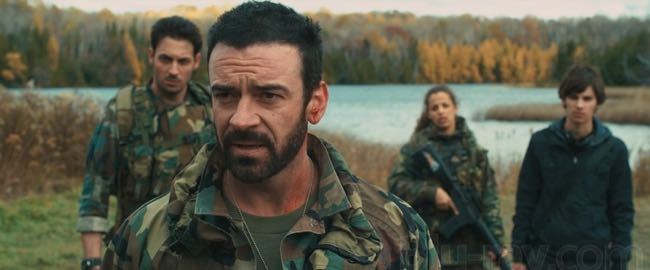
As the film opens, the feud has exploded and Muldoon puts O’Flynn onto a boat to return to the mainland. There, meanwhile, a small band of soldiers led by Sarge (Alan Van Sprang) has turned outlaw, robbing others to stay supplied with food and ammunition and reducing deadheads to dead bodies whenever they encounter them.

They are seeking a relative safe haven and through a quick series of events they end up going to Plum Island with the exiled and vengeful O’Flynn in tow, little knowing that besides having deadheads to worry about they are now heading into a violent turf war.

Made in Canada with a Canadian cast, the film is expert in all areas with Sprang a plausible leader and Welsh and Fitzpatrick old hands at the two faces of Irish charm. The mayhem includes heads responding explosively to the effects of fire extinguishers, flares and variously blades besides the usual assault weapons.

It’s surprisingly good fun.

Venue: Venice International Film Festival, In Competition; Cast: Alan Van Sprang, Kenneth Welsh, Kathleen Munroe, Devon Bostick, Richard Fitzpatrick, Athena Karkanis, Stefano Di Matteo; Director, writer, executive producer: George A. Romero; Director of photography: Adam Swica; Production designer: Arv Greywal; Music: Robert Carli; Costume designer: Alex Kavanagh; Costume designer: Michael Doherty; Producer: Paula Devonshire; Executive producers: Peter Grunwald, Dan Fireman, Art Spigel, Ara Katz, Patrice Theroux, D.J. Carson, Michael Doherty; Production: E1 Entertainmen, Artfire Films and Romero-Grunwald Productions present a Devonshire production; Not rated; running time, 90 mins.

This review appeared in The Hollywood Reporter.

Posted in Film, Reviews, Venice International Film Festival | Tagged , , | Comments Off on VENICE FILM REVIEW: George A. Romero’s ‘Survival of the Dead’

VENICE FILM REVIEW: ‘Around a Small Mountain’

around a small mountain x650By Ray Bennett

VENICE – Jacques Rivette’s “Around a Small Mountain” (36 vues du Pic Saint Loup) is a fable about chance encounters and lost love set against a small traveling circus in France but it feels more like the characters are going round a molehill.

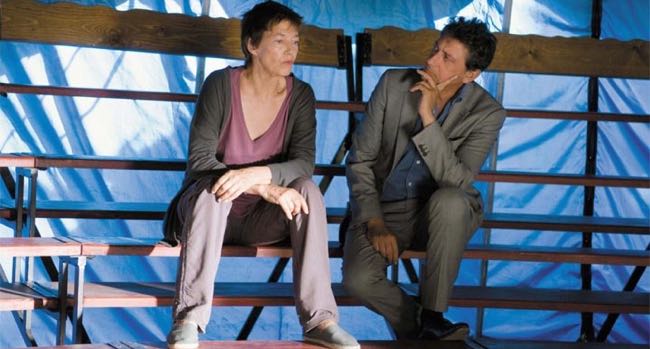
With no chemistry between leads Jane Birkin and Sergio Castellito (pictured), a distinct lack of dramatic tension and a ring with three lame acts but no lions or trapeze, this is a circus that won’t travel very far. Box office prospects appear slim even on home territory.

Castellito plays a well-appointed Italian named Vittorio about whom little is learned except that he drives a smart sports car and says he’s on the way from Milan to Barcelona. In the French countryside, he happens upon Kate (Birkin), whose four-wheeler has broken down.

Vittorio fixes the car in no time, and Kate invites him to come to see her circus, which has set up at a nearby town. There, Vittorio is the only one in a paltry audience to laugh at a trio of clowns who perform an act that involves smashing plates.

Afterwards, the top clown, Alexandre (Andre Marcon), asks him why he laughed. It’s a good question. Vittorio offers some suggestions and the next night he sees that Alexander has expanded the act although to no greater comic effect.

Still, Kate has piqued his interest and he sticks around gradually meeting the others in the show including Kate’s niece Clemence (Julie-Marie Parmentier), who tells him that her aunt has only recently rejoined the circus after leaving 15 years earlier due to the death of her lover.

Vittorio and Kate dance around each other as the Italian becomes an ad hoc member of the troupe but any sparks between them are left in the sawdust. Castellito tries hard to get into the spirit of things but when he ends up joining the clowns, their act remains stiff and unconvincing.

Birkin’s acting is a puzzle since her physical expressions often appear at odds with the words she’s speaking as if the language were foreign to her. The story is really about her character’s redemption but she’s required to deliver two tearful soliloquies, one in the empty circus tent and the other at a graveyard, and they both fall flat.

Sadly, too, the circus acts involve merely tumbling and juggling, and what is supposed to be a climactic scene involving a dangerous bullwhip has no crack at all.

Venue: Venice International Film Festival, In Competition; Cast: Jane Birkin, Sergio Castellito, Andre Marcon; Director: Jacques Rivette; Writers: Jacques Rivette, Pascal Bonitzer, Christine Laurent, Shirel Amitay; Director of photography: Irina Lubtchansky; Production designer: Manu de Chauvigny; Music: Pierre Allio; Costume Designer: Laurence Struz; Editor: Nicole Lubtchansky; Producers: Martine Marignac, Maurice Tinchant, Charlotte Henry, Margherita Chiti, Raffaela Campagnolo; Production: Pierre Grise Productions; Sales: Les Films du Losange; Not rated; running time, 84 mins.

This review appeared in The Hollywood Reporter.

Posted in Film, Reviews, Venice International Film Festival | Tagged , , , , , | Comments Off on VENICE FILM REVIEW: ‘Around a Small Mountain’

VENICE FILM REVIEW: ‘Between Two Worlds’

between-two-worlds x650By Ray Bennett

VENICE – Striking images and the suggestion that life is a series of random events that might be repeated make “Between Two World”, Vimukthi Jayasundara’s tale of life in Sri Lanka, intriguing.

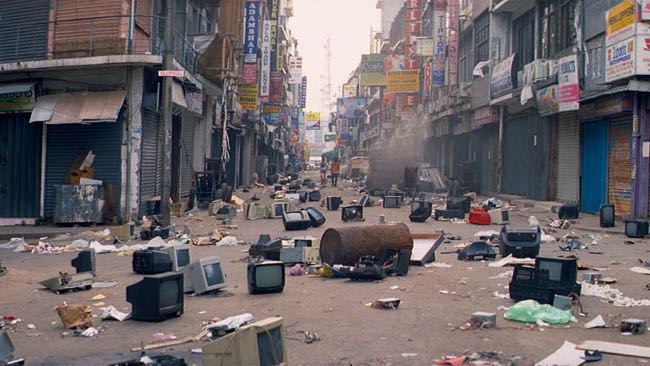
With no narrative arc, the film follows a young man, Rajith (Thusitha Laknath) who falls from the sky into the sea, clambers onto the shore and survives dangerous encounters in a city filled with rioting people and then in the countryside where unseen authorities shoot on sight.

Cinematographer Channa Deshapriya and production designer Lal Harendranath contribute to remarkably enigmatic sequences that might prove winning at festivals and could reach sympathetic international audiences as a cry for help for the young people of strife-torn Sri Lanka.

The urban scenes are realistic and terrifying with groups of men with clubs descending on anyone found alone, constant gunfire and explosions, and streets strewn with the wreckage from general mayhem.

People Rajith encounters stay with him for a while but then disappear without explanation and are not heard from again. In the jungle-like countryside, he sees incidents that he then learns happened a long time ago and commits acts of violence that prove never to have happened.

He finds a woman, Kanthi (Kaushalaya Fernando) who is apparently his sister-in-law and when she notices he has a damaged eye she treats it with milk from her breast although she hasn’t given birth. A little boy tends to a wounded bird but then climbs a tree and drops it into a large knothole in the trunk.

When a village’s well is found to be poisoned, all the young men who have been hiding from the guns of the authorities, emerge from the forest to bale the water away. The young man joins in and their movements become a dance and a chant followed by a celebration that ends when armed men on horseback swoop down on them.

What all of it adds up to is left to the viewer, but there’s no question that while some bits are simply puzzling there are many arresting episodes and the film echoes as a plaintive call for attention to the ongoing plight of the young people of Sri Lanka.

Venue: Venice International Film Festival Competition; Cast: Thusitha Laknath, Kaushalaya Fernando, Lu Hiuang; Director, writer: Vimukthi Jayasundara; Director of photography: Channa  Deshapriya; Production designer: Lal Harendranath; Music: Lackshman Joseph De Saram; Costume designer: Kanchana Thalpawila; Editor: Gisele Rapp-Meichler; Producers: Michel Klein, Philippe Avril, Michel Reilhac, Chandana Aluthge, Anura Silva; Production: Les Films Hatari, Unlimited, Arte France Cinema, Film Council Prods. Sri Lanka; Sales: Artscope; Not rated; running time, 85 mins.

This review appeared in The Hollywood Reporter.

Posted in Film, Reviews, Venice International Film Festival | Tagged , , | Comments Off on VENICE FILM REVIEW: ‘Between Two Worlds’

VENICE FILM REVIEW: Fatih Akim’s ‘Soul Kitchen’

Soul KitchenBy Ray Bennett

VENICE – Filled with boisterous good spirits, Fatih Akim’s “Soul Kitchen” tells of a young Greek-German man’s attempts to make a success of a funky restaurant despite a series of mishaps.

The film won the Special Jury Prize at the Venice International Film Festival and it can expect more rewards on the festival circuit and a welcome from art-house audiences everywhere. It’s a delightful change of pace for director and co-writer Akim, whose “Head On” and “The Edge of Heaven” dealt with very serious stuff.

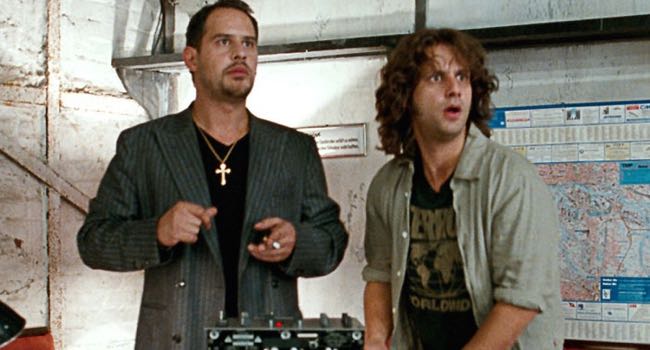
Co-writer Adam Bousdoukos (pictured, right, with Moritz Bleibtreu) plays energetic and likeable opportunist Zinos Kazantsakis, who runs a popular restaurant called Soul Kitchen in a neglected area of Hambourg. He prepares stodgy fare such as frozen pizza, fish fingers, hamburgers and macaroni and cheese; the service is abrupt and the music is loud but the customers are happy.

But then a tax collector takes away his sound system in lieu of back taxes, his girlfriend Nadine (Pheline Roggan) jets off to a new job in China, and his no-account brother Illias (Moritz Bleibtreu) is let out of prison on parole.

Intending to join Nadine in Shanghai, Zinos hires a new chef, Shayn (Birol Unel) after seeing him get fired from a classy restaurant because he refused to serve warm gazpacho.

Shayn, however, is a culinary purist and he declines to serve the dross that is the mainstay of the Soul Kitchen. He promises Zinos that he will make four dishes that his customers will love.

Almost overnight, the place is empty as the regulars flee from Shayn’s cooking, and the noise of a raggedy rock band that Zinos has allowed to play in place of his confiscated sound system.

On top of that, Zinos throws his back out while renovating his kitchen to please health inspectors and an old pal turned real estate speculator, Neumann (Wotan Wilke Mohring), starts hounding him to sell the property so he can flatten it for development.

The film follows Zinos in his attempts to save his restaurant, solve his back pain, win back his girlfriend and keep his brother out of jail. It’s all done with flair and a great deal of fun. The personable Bousdoukos actually owned a Hamburg restaurant for several years and he is right at home in the lead role.

In a fine ensemble with many well-drawn smaller characters, Bleibtreu (“Run Lola Run”, “The Baader-Meinhof Complex”) as the hapless brother, Unel (“Head On”) as the fussy chef and Bederke, as a waitress, all stand out.

The pace is brisk, it has sharp ideas, and a great soundtrack with eclectic music. Akim and cinematographer Rainer Klausmann make “Soul Kitchen” a place for audiences to savor.

Venue: Venice International Film Festival, Competition; Cast: Adam Bousdoukos, Moritz Bleibtreu, Birol Unel, Anna Bederke; Director, producer: Fatih Akim; Writers: Fatih Akim; Adam Bousdoukos; Director of photography: Rainer Klausmann; Production designer: Tamo Kunz; Music supervisor: Pia Hoffman; Costume designer: Katrin Aschendorf; Editor: Andrew Bird; Producer: Klaus Maeck; Production: Corazon International; Sales: Match Factory; Not rated; running time, 99 mins.

This review appeared in The Hollywood Reporter. Here’s more about the soundtrack
Posted in Film, Reviews, Venice International Film Festival | Tagged , , , , , | 1 Comment

VENICE FILM REVIEW: Shinya Tsukamoto ‘s ‘Tetsuo’

tetsuo x325By Ray Bennett

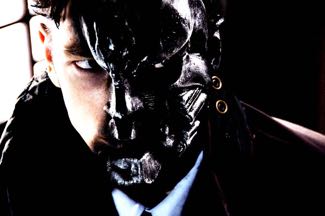
VENICE – Japanese filmmaker Shinya Tsukamoto shows what a “Transformers” movie would be like on a shoestring budget with “Tetsuo the Bullet Man”, which features a man whose mother was an android and whose half-human half-machine body comes to sprout an arsenal of fearsome weapons.

Box office is likely to be restricted to fans that were taken with Tsukamoto’s original “Tetsuo”, which came out 20 years ago with a sequel three years later.

Screened in competition at the Venice International Film Festival, it does boast some impressive editing to obscure the cheesy effects and masks, and it has an ear-splitting sound design of howling industrial noise.

Erik Bossick plays the unfortunate individual whose scientist father (Stephen Sarrazin) not only turns him into a piece of frightening hardware with a head like a giant oyster shell but also arranges to have his son murdered and threatens to do the same to him and his wife (Akiko Monou).

The dialogue is lame, the acting is stilted and the film lacks almost any color but that won’t matter to those for whom noise and mayhem are sufficient, and it’s over in less than 80 minutes.

This review appeared in The Hollywood Reporter.

Posted in Film, Reviews, Venice International Film Festival | Tagged , , | Comments Off on VENICE FILM REVIEW: Shinya Tsukamoto ‘s ‘Tetsuo’

VENICE FILM REVIEW: Oliver Stone doc ‘South of the Border’

southoftheborder x650By Ray Bennett

VENICE – Good humored, illuminating and without cant, Oscar-winning director Oliver Stone’s documentary “South of the Border” is a rebuttal of what he views as the fulminations and lies of right-wing media at home and abroad regarding the socialist democracies of South America.

Featuring interviews with seven national leaders who all express great affection for their neighbors to the north if not for historical United States foreign policy, the film suggests a clear way forward for a continent that has largely shaken off the grip of imperialism and what Stone calls predatory capitalism as opposed to benign capitalism.

Greeted with extended applause at its Venice press and industry screening, the film will fare well internationally and will attract liberal audiences in Stone’s homeland. Conservative outrage could also spark wider interest and it should thrive among educators and have a long ancillary life.

Clips from CNN and Fox News establish quickly the buffoonish tone with which news about South American politics is usually treated with democratically elected leaders invariably depicted as dictators, but Stone also indicts the network news and media institutions including The New York Times.

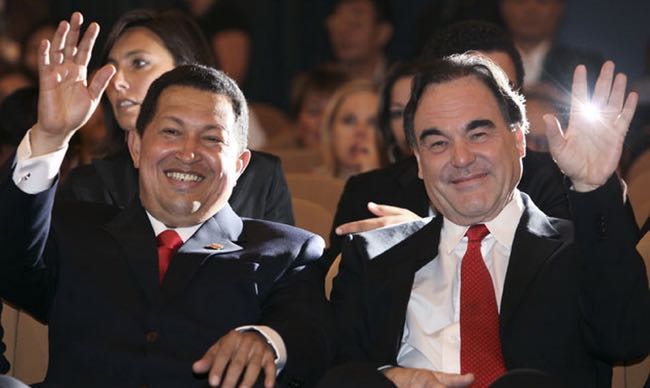
Following a brief history of the events in Venezuela that led to the presidency of Hugo Chavez (pictured with Stone, the filmmaker shows how the media in that country altered film of violent demonstrations to show his supporters firing on their opposition and how those images were fed to the rest of the world. He details similar exaggerations in other countries and quotes facts and figures from each region.

His cameras follow Chavez, who was born in poverty, to the place of his childhood and on trips to a cattle farm and a plant that produces flour with help from Iran. On the way there, Chavez tells the director, “This is where we’re building the Iranian atomic bomb.” There is similar black humor from other leaders with Rafael Correa of Ecuador saying of the U.S. media, “I’d be more worried if they spoke well of me.”

The expressed view of the fraternal leaders is that they want independence and equality, and freedom from the International Monetary Fund and U.S. economic control. They all see in President Obama the opportunity for lasting, mutually beneficial change.

Stone is clearly impressed with the leaders he meets and there are many relaxed scenes including one in which he gets a great kick out of Bolivian leader Evo Morales showing him the best coca leaves to chew, a benign cure for the nauseous effects of the altitude in La Paz.

Venice International Film Festival, Out of Competition; Director: Oliver Stone; Writers: Oliver Stone, Tariq Ali; Directors of photography: Albert Maysles, Carlos Marcovich, Lucas Fuica; Music: Adam Peters; Editors: Alexis Chavez & Elisa Bonora; Producers: Fernando Sulichin, Jose Ibanez, Rob Wilson; Executive producers: Chris Hanley, Juan Riva, Serge Lobo; Production: Pentagrama Films, New Element, in association with Good Apple; Not rated; running time, 78 mins.

This review appeared in The Hollywood Reporter.

Posted in Film, Reviews, Venice International Film Festival | Tagged , , , , , | Comments Off on VENICE FILM REVIEW: Oliver Stone doc ‘South of the Border’

VENICE FILM REVIEW: Patrice Chereau’s ‘Persecution’

persecutionBy Ray Bennett

VENICE – Everybody persecutes everybody else and they all feel persecuted in Patrice Chereau’s talkative roundelay “Persecution”, which stars Romain Duris and Charlotte Gainsbourg as a Parisian couple who spend more time talking about their relationship than getting on with it.

Charismatic stars and the film’s Gallic shrug of acceptance over the difficulties that being in love creates will take the film to festivals and art houses but it’s far from a classic.

Duris plays Daniel, an independent guy who lives from hand to mouth renovating apartments, and seems happy that way. He even takes time to be a volunteer visitor at a retirement home and his very insouciance draws men and women to him including long-time girlfriend Sonia (Gainsbourg), whose job means she travels a lot and she’s kind of glad about that too.

Daniel has a cluster of friends including accountant Michel (Gilles Cohen), who spends all his time grousing that he cannot be like Daniel, and Thomas (Alex Descas), whom Daniel calls “brother” but seldom sees.

Working on two different jobs at the same time, Daniel is disturbed to discover that a stranger (Jean Hughes Anglade) is stalking him. Soon, the man has broken into one of the places and is declaring his love for Daniel, who responds violently.

The willingness of everyone he knows to place Daniel at the centre of their lives becomes a persecution of its own although he berates himself for persecuting all of them. He increasingly encounters strange incidents on the Metro and Paris streets but they seem only to puzzle him.

A requisite nude love scene between Duris and Gainsbourg adds little insight and their constant bickering grows tiresome. Daniel’s tolerance of the stranger’s annoying intrusions seems a bit odd even though he opens up to him about why he volunteers at the retirement home.

Some viewers may end up feeling a bit persecuted themselves.

Venue: Venice International Film Festival, In Competition; Cast: Romain Duris, Charlotte Gainsbourg, Jean Hughes Anglade, Gilles Cohen, Alex Descas; Director: Patrice Chereau; Writers: Patrice Chereau, Anne-Louise Trividic; Director of photography: Yves Cape; Production designer: Sylvain Chauvelot; Music: Eric Neveux; Costume designer: Caroline de Vivais; Editor: Francoise Gedigier; Producer: Bruno Levy; Production: Movie Movie; Sales: Vendite International; Not rated; running time, 100 mins.

This review appeared in The Hollywood Reporter.

Posted in Film, Reviews, Venice International Film Festival | Tagged , , , , | Comments Off on VENICE FILM REVIEW: Patrice Chereau’s ‘Persecution’