VENICE FILM REVIEW: Yonfan’s ‘Prince of Tears’

prince of tearsBy Ray Bennett

VENICE – Very pretty people seen against beautiful landscapes provide most of the enjoyment in Chinese director Yonfan’s glossy melodrama set in Taiwan in the 1950s when the hunt for communists on the island led to the period known as the white terror.

More a tale of personal betrayal than a depiction of a nation going through turmoil, the film may travel reasonably well in Asia but success elsewhere will have to rely on audiences’ appetite for its romantic flourishes and fairy-tale wrapping.

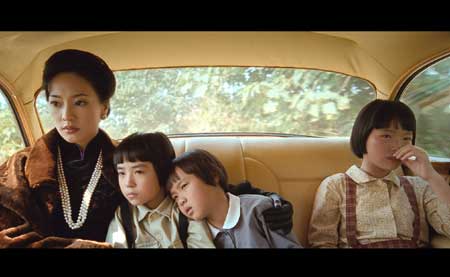
Joseph Chang and Xuan Zhu play a flawless couple named Sun-Han and Ping with two gorgeous infant daughters. Sun-Han is a pilot and so the girls attend a school for children of pilots while Ping is a perfectly appointed and doting wife and mother noted for her dumplings.

The girls’ favorite reading is a fantasy picture book titled “The Prince of Tears” with a great hero, and they view the world through romantic eyes, especially their kindly teacher who one day disappears having been accused, sentenced and executed on grounds of treason.

Meanwhile, a friend of their father, a scarred and damaged veteran whom they call Uncle Ding (Fan Chih-wei), is a regular in their household and it doesn’t seem to bother anyone that he works for the right-wing government’s security bureau.

Also in the picture is the glamorous Madame Liu (Terry Kwan), who once knew the couple but is now married to the powerful General Liu (Kenneth Tsang).

The relationships between all the adults become strained when it appears that Ping has a history not only with Ding but also with Madame Liu. There is also a secret involving the parentage of one of the daughters. When Sun-Han and Ping are also arrested on grounds of treason, the internecine affairs become somewhat heated.

It’s good that Yonfan is able to tell a story that has such an ugly period in Taiwan’s history as its background but the real horror of the time is not fully explored and the film keeps its focus on the very handsome players.

Xuan Zhu, Yonfan, Terry Kwan at the festival

Xuan Zhu, Yonfan, Terry Kwan at the festival

Venue: Venice International Film Festival, In Competition; Cast: Fan Chi-wei, Terri Kwan, Joseph Chang, Zhu Xuan; Director, writer, production designer: Yonfan; Director of photography: Chin Ting-Chang; Music: Yu Yat-jiu, George Lam; Editors: Kong Chi-Leung, Derek Hui; Producer: Fruit Chan; Production: Far-Sun Film, Peony5 Film; Sales: Fortissimo Films; Not rated; running time, 120 mins.

This review appeared in The Hollywood Reporter.
Posted in Film, Reviews, Venice International Film Festival | Tagged , , , , , | Comments Off on VENICE FILM REVIEW: Yonfan’s ‘Prince of Tears’

VENICE FILM REVIEW: ‘Bad Lieutenant: Port of Call New Orleans’

bad lieutenant x650By Ray Bennett

VENICE – Filled with unexpected turns and subversive humor, Werner Herzog’s “The Bad Lieutenant: Port of Call New Orleans” is a jazzy and very entertaining riff on the theme of a cop who spends too much time in a sewer of criminality and corruption.

It’s a far cry from Abel Ferrara’s NC17 1992 film with a similar title and it will appeal to a different audience. It has a seriously involved performance by Nicolas Cage as a good detective on a downward spiral of drugs and gambling. There is a lot of very black humor, and it develops, somewhat surprisingly, into something that suggests a kind of cheerful pessimism.

Herzog has made a piece of mainstream entertainment with quirky particulars and with Cage’s star power it could see substantial rewards from the box office both domestic and international. The film was greeted in Venice with much laughter and, at the end, with loud and sustained applause.

Veteran TV cop show writer William Finkelstein’s screenplay sets the story in New Orleans in the aftermath of Hurricane Katrina and it allows Herzog to explore the way bad things happen to good people while crooked people prosper.

Cage plays a dedicated police officer named Terence McDonaugh who in the opening sequence jumps into a flooded basement cell to save a locked up prisoner from drowning. He causes permanent injury to his back and while prescribed medicines ease the chronic pain that he’s left with, soon he’s taking illegal drugs, whatever he can find or steal.

The framework of the picture is a police procedural with McDonaugh and his colleagues, including Steve (Val Kilmer) on the trail of the killers of a family of five caught up in drug dealing.

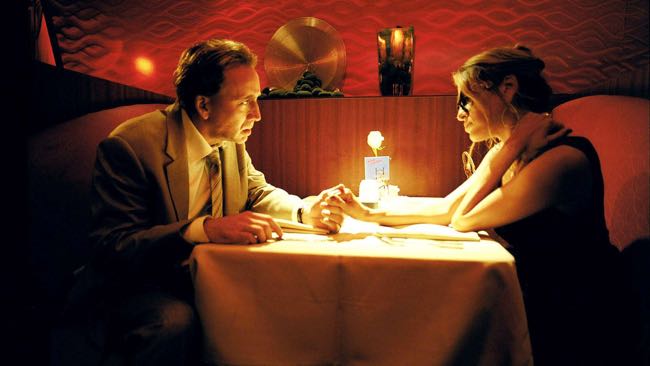
All the while, McDonaugh is trying to score whatever will make the pain go away and there are many inventive, scary and sometimes hilarious scenes to show how he goes about it. He has a hooker junky girlfriend (Eva Mendes, pictured with Cage) and a tolerant bookie (Brad Dourif), and he runs afoul of some powerful bad guys while playing ball with a significantly dangerous drug lord.

Kilmer doesn’t get to do much but Mendes and Dourif make fine contributions, as do Fairuza Balk as an amorous former flame and Alvin “Xzibit” Joiner as the drug king. But it’s Cage’s show and his body language conveys just how much pain McDonaugh is in with one shoulder permanently clenched and his gaze on alert for the next fix. It’s a sly and intelligent performance that brings to mind the tortured character he portrayed in the grievously overlooked “Vampire’s Kiss” (1988).

Ferrara’s “Bad Lieutenant” was a lurid depiction of a very damaged detective made memorable by a fully committed performance by Harvey Keitel. That cop’s drug induced delusions involved a lot of Catholic guilt and visions of Christ. Herzog mischievously has the cop in his film see lizards. Iguanas and alligators pop up when least expected and there’s a very funny scene in which the camera captures an iguana up close with Cage’s demented cop in the frame and they look weirdly related.

Venue: Venice International Film Festival, In Competition; Cast: Nicolas Cage, Val Kilmer, Eva Mendes, Fairuza Balk, Jennifer Coolidge; Director: Werner Herzog; Writer: William Finkelstein; Director of photography: Peter Zeitlinger; Production designer: Toby Corbett; Music: Mark Isham; Costume designer: Jill Newell; Editor: Joe Bini; Producers: Edward R. Pressman, Randall Emmett, Alan Polsky, Gaby Polsky, Stephen Belafonte; Executive producers: Avi Lerner, Danny Dimbort, Trevor Short, Boaz Davidson; Production: Nu Image/Millennium Films; Sales: Millennium Films; Not rated; running time, 121 minutes.

This review appeared in The Hollywood Reporter.

Posted in Film, Reviews, Venice International Film Festival | Tagged , , , , , , , , | Comments Off on VENICE FILM REVIEW: ‘Bad Lieutenant: Port of Call New Orleans’

FILM REVIEW: Penelope Cruz in Almodovar’s ‘Broken Embraces’

penelope cruz broken embraces 2 x650By Ray Bennett

LONDON – Aside from the fact that one is a genuine film artist while the other is an annoying twerp, the difference between the sublime Pedro Almodovar and the ridiculous Quentin Tarantino can be seen in their latest films.

With “Inglourious Basterds”, the American director has made a rubbish movie based on other rubbish movies whereas the Spaniard has drawn on the classic influences of Alfred Hitchcock and Douglas Sirk for his sumptuous melodrama “Broken Embraces” (Los Abrazos Rotos).

penelope cruz broken embraces x325Received warmly at the Festival de Cannes in May, “Broken Embraces” opens in the United Kingdom on Aug. 28 from Warner Bros./Pathe, It’s a treat for movie lovers. Not as tightly focussed or significant as Almodovar classics such as “All About My Mother” or “Volver”, it is a sprawling picture that mixes romance, mystery and suspense.

There’s laughter, betrayal and murder in a tale about a now blind filmmaker who recalls his days as a director and the circumstances that led to his loss of sight. The film makes the most of Penelope Cruz, who appears in several different guises in flashbacks to films within the film in which he plays Audrey Hepburn (left) and dons a blonde wig to play Marilyn Monroe (below) and she is never less than stunningly gorgeous. It helps that she also is a great actress.

Almodovar with his superb crafts team – production designer Antxon Gomez, Art Director Victor Molero, cinematographer Rodrigo Prieto, and editor Jose Salcedo – makes the most of it. Composer Alberto Iglesias tops it off with a simply lovely score.

I agree with Peter Bradshaw, who said in his review of “Broken Embraces in The Guardian, “I defy anybody to watch it without a tingle of pure moviegoing pleasure.”

broken embraces


Posted in Film, Reviews | Tagged , , , , , , , , | Comments Off on FILM REVIEW: Penelope Cruz in Almodovar’s ‘Broken Embraces’

LOCARNO FILM REVIEW: ‘Under Bauern: Saviors of the Night’

under bauern 1 x650

By Ray Bennett

LOCARNO, Switzerland – German cinema’s growing number of films willing to address topics relating to World War II has a fine addition in Ludi Boeken’s “Under Bauern: Saviors of the Night”, which tells of farmers — unter bauern — in Westphalia who sheltered Jewish friends from the Nazis.

The appearance at the end of the picture of characters whose real life stories are related to the subject adds depth to a production filled with emotional power and a constant sense of dread. The film will find an international welcome from audiences who wish to add to their knowledge of the time and appreciate a riveting human drama well told.

Working from a smart screenplay by Otto Jagersberg, Imo Moskowicz and Heidrum Schleef (based on a memoir by Marga Spiegel) director Boeken spurns melodrama in favor of understatement and a clear depiction of events while sustaining an extraordinary degree of tension throughout.

The film begins in 1943 with the Nazis deporting the last German Jews to death camps. Genial horse trader Menne Spiegel (Armin Rohde) won an Iron Cross fighting for Germany in World War I but now his country’s rulers want to kill him and his family.

Desperate, he turns to neighboring farmer Heinrich Aschoff (Martin Horn) and his wife Maria (Margarita Broich) who immediately offers to hide Menne’s wife Marga (Veronica Ferres) and their young daughter.

Menne elects to move from farmer to farmer, living in dire conditions and mostly in the dark for two years. Under constant threat of exposure from nosy SS officers, over-enthusiastic Hitler Youth and frightened citizens, the Spiegels struggle to get by in their separate hideaways.

The film boasts fine performances and is all the more persuasive because it underplays the dogged strength and loyalty of the rural Germans who reject the merciless extremism of dictatorship and put themselves at grave risk.

Even at the end of the war, with the light of freedom about to bring relief, extraordinary tension remains due to the threat of vengeful cowards, freed war prisoners who go on the rampage, and even the liberating Allies who cannot tell a good German from a bad one.

Venue: Locarno International Film Festival; Cast: Veronica Ferres, Armin Rohde, Margarita Broich, Martin Horn, Lia Hoensbroech; Director: Ludi Boeken; Writers: Otto Jagersberg, Imo Moskowicz, Heidrum Schleef; Director of photography: Dani Schneor; Production designer: Agnette Schloßer; Music: Martin Meissonnier, Max Raabe; Costume designer: Elisabeth Kraus; Editor: Suzanne Fenn; Producers: Joachim von Mengershausen, Karl Baumgartner, Werner Wirsing, Pascal Judelewicz; Executive Producers: Christoph Friedel, Claudia Steffen; Production: Filmform Koln, Pandora Films, 3L Filmproduktion, Acajou Films; Sales: Filmform Koln; Not rated; running time, 100 mins.

This review appeared in The Hollywood Reporter.

Posted in Film, Locarno International Film Festival, Reviews | Tagged , , , , | Comments Off on LOCARNO FILM REVIEW: ‘Under Bauern: Saviors of the Night’

LOCARNO FILM REVIEW: Frederic Mermoud’s ‘Partners’

partners x650By Ray Bennett

LOCARNO, Switzerland – Swiss director Frederic Mermoud’s “Partners” is a police procedural with sex that deals with two sets of couples on both sides of the law involved in the murder of a male prostitute.

The provocative behavior of the two younger characters, who experiment in having threesomes for money, and an intriguing view of the way detectives deal with a key element of the case make the film stand out from the average crime pic. With attractive players and a considerable amount of naked skin, “Partners” could attract attention in key markets.

The tale begins with the discovery of the body of a young man named Vincent (Cyril Descours), whom detectives Herve (Gilbert Melki) and Karine (Emmanuelle Devos) soon discover sold his body online to married men.

The film flashes back and forth from the detectives’ trail to the events that show Vincent flirting with Rebecca (Nina Meurisse) in a cybercafe. They become lovers, and when the impressionable girl learns what Vincent does for a living, she suggests they become a team.

That inevitably bad idea leads to the events that result in Vincent’s death, something the two officers doggedly track until they face a dilemma only they can resolve.

Director Mermoud and co-writer Pascal Arnold’s screenplay makes the behavior of the youngsters just about plausible and gives the detectives sufficient quirks and self-doubts to add depth to the story.

Cagan is especially good at reflecting an inner torment that makes this crime particularly disturbing to him and in conveying the surprise that comes when he sees a chance for redemption.

Although not explicit, the sex scenes contain full-frontal nudity, and the camera lingers on the young bodies perhaps longer than necessary for a film that appears to condemn the exploitation of naive youth.

Venue: Locarno International Film Festival; Cast: Gilbert Melki, Emmauelle Devos, Nina Meurisse, Cyril Descours; Director: Frederic Mermoud; Writer: Frederic Mermoud, Pascal Arnold; Director of photography: Thomas Hardmeier; Production designer: Francois Renaud Labarthe; Music: Gregoire Hetzel; Costume designer: Dorothee Lissac; Editor: Sarah Anderson; Producers: Tonie Marshall, Damien Couvreur; Production Tabo Tabo Films, Saga Production; Not rated; running time, 93 minutes.

This review appeared in The Hollywood Reporter.

Posted in Film, Locarno International Film Festival, Reviews | Tagged , , , | Comments Off on LOCARNO FILM REVIEW: Frederic Mermoud’s ‘Partners’

LOCARNO FILM REVIEW: Urszula Antoniak’s ‘Nothing Personal’

nothing-personal x650By Ray Bennett

LOCARNO, Switzerland – Holland-based Polish director Urszula Antoniak’s “Nothing Personal” is an intensely personal and engrossing tale of a ferociously independent young woman’s involvement with a kind widower in a remote part of Ireland.

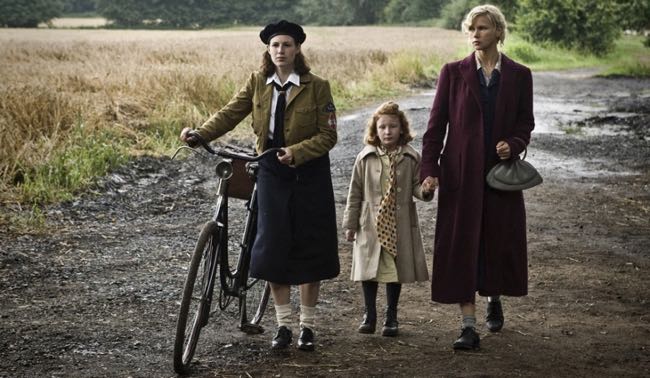
Lotte Verbeek (pictured) won the best actress prize at the Locarno International Film Festival as a resourceful woman hiking in wild country and thoroughly enjoying her solitude until she stumbles upon a beautiful house by a lake occupied by a genial man named Martin (Stephen Rea), who offers her food for work.

Oblique and enigmatic, it’s a film that will win audiences at festivals and in art houses and have a long life on DVD and Blu-ray as fans relish its performances and images, and ponder its deeper meaning.

The woman refuses to give her name or answer any questions about her life and is singularly uninterested in anyone else’s life stories. Having hiked and occasionally hitched a ride through wind and rain and camped out in fierce weather, she arrives at a destination she probably didn’t know she was seeking.

Curt and indifferent, she slowly allows Martin to offer more than just food as he agrees to her rule of no questions, and after a while she moves into a room in the house. Little is revealed about Martin, although he is clearly well off, dining well with wine at the table each night, besides being a capable gardener and outdoorsman.

Their odd relationship grows as Martin suggests that if he breaks the rule then he has to sing, and when he does, his rendition of a psychobilly country gothic number is hilarious. When the woman finally breaks her own rule, she sings quite beautifully.

The pair’s mutual satisfaction with solitude breeds respect and then a kind of love, and while curiosity about each other does crop up, events do not play out in a predictable way.

Rea is typically sympathetic, and Verbeek brings a unique character to life vividly. At 85 minutes, it’s a short film that, because of the increasingly absorbing characters, many will wish would go on much longer.

Venue: Locarno International Film Festival; Cast: Lotte Verbeek, Stephen Rea; Director, writer: Urszula Antoniak; Director of photography: Daniel Bouquet; Production designer: Jane English; Music: Ethan Rose; Editor: Nathalie Alonson Casale; Producers: Reinier Selen, Edwin van Meurs; Production: Rinkel Film & TV, Fastnet Films, Family Affair Films; Sales: Bavaria Film International, Holland Film; Not rated; running time, 85 mins.

This review appeared in The Hollywood Reporter.
Posted in Film, Locarno International Film Festival, Reviews | Tagged , , , , | Comments Off on LOCARNO FILM REVIEW: Urszula Antoniak’s ‘Nothing Personal’

LOCARNO FILM REVIEW: Sarah Leonor’s ‘A Real Life’

a real life x650By Ray Bennett

LOCARNO, Switzerland – Sarah Leonor’s “Au Voleur” (A Real Life), starring the late Guillaume Depardieu, is an odd little picture that runs along like a somewhat dull tale of petty criminals but in the last third becomes something else entirely.

The fate of lovers who find themselves on the wrong side of the law is hardly new but these two end up on a small craft rowing down an idyllic river and while it probably shouldn’t work, good acting and an understated script hold it together. The film could well prosper in art houses and travel on the festival circuit.

Depardieu plays a small-time thief named Bruno who leads a ramshackle existence in a nondescript dwelling on the edge of a city, stealing a car here, breaking into a home there. For an hour, the film plods along as an ex-convict (Jacques Nolot) comes to share his place with the intention of going straight while one of his neighbor’s kids gets involved with some boys who buy the car Bruno stole.

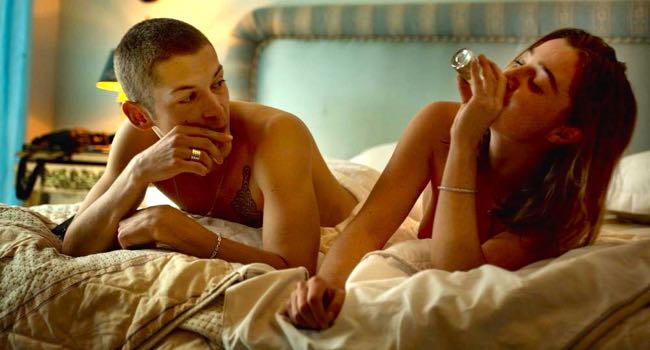
At the local bar meanwhile, Bruno encounters easygoing Isabelle (Florence Loiret Caille, pictured), a supply teacher who says she’s just passing through and is more than willing for a short-term affair that soon becomes more complicated.

The rustic and idealized last part of the film is sparked when the police nab the boys with the stolen car and it tracks back to Bruno. Learning of his affair with the teacher, they go to the school but Isabelle breaks free and together they go on the lam.

The adjustment in mood takes some getting used to and there is incongruous use of American folk songs on the soundtrack but as Bruno and Isabelle float downstream, the simple freedoms offer more than they had imagined.

It could easily end up stilted and pretentious but even though their tranquil state is soon disturbed, the film suggests that these particular outlaws who have made one or two bad choices, really have the most ordinary human aspirations.

Venue: Locarno International Film Festival; Cast: Guillaime Depardieu, Florence Loiret Caille, Jacques Nolot; Director, writer: Sarah Leonor; Director of photography: Laurent Desmet; Production designer: Brigitte Brassart; Costume designer: Marie Cesari; Editor: Francois Quiquere; Producers: Michel Klein, Laetitia Fevre; Production: Les Films Hatari; Sales: Shellac; Not rated; running time, 96 minutes.

This review appeared in The Hollywood Reporter.
Posted in Film, Locarno International Film Festival, Reviews | Tagged , , , , , | Comments Off on LOCARNO FILM REVIEW: Sarah Leonor’s ‘A Real Life’

LOCARNO FILM REVIEW: Filippos Tsitos’s ‘Plato’s Academy’

akadimia platon x650

By Ray Bennett

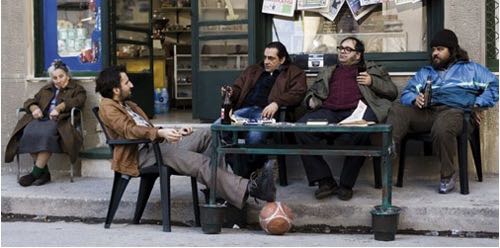
LOCARNO, Switzerland – Intelligent, warm and very funny, Filippos Tsitos’s “Akadimia Platonos” (Plato’s Academy) is a small tale of a proudly nationalistic Greek man who discovers that he might actually be Albanian, a situation that causes trouble for his family and friends.

With an ensemble cast of pleasing skill, the film addresses a worldwide problem with considerable insight, wise humor and a very delicate touch. It will do well at festivals and may make a splash on the art house circuit.

Antonis Kafetsopoulos plays Stavros, a 50-year-old man who runs a tobacco shop in a small square and spends his days idling with three friends who also run tobacco shops. His wife has left him but he cares for his widowed mother who has had a stroke and whose memory is fading.

Ignorant and lazy, Stavros and his friends boast of the heritage of Plato and Socrates but spend their time sitting, drinking and nattering with an occasional game of soccer. They look down on the industrious Chinese immigrants and taunt workers from neighboring Albania with the chant, “Albanian … you’ll never be Greek.”

One of them has acquired an English sheepdog named Patriot that his owner claims only barks at Albanians. Stavros disputes it and makes a bet that the dog will bark at one of the four Greeks and when he approaches it, the dog barks.

But it appears that’s because another man has approached, an Albanian builder named Marenglen (Anastas Kozdine) although the animal is not the only one to respond. Stavros’s mother (Titika Saringouli) appears to recognize the man and she calls out … in Albanian.

Director and-writer Tsitos gentles the story along as he draws the stranger into Stavros’s circle with small but telling moments and sly comedy. The Greek’s dilemma is illuminated by clever touches including a televised soccer game between the national teams of Greece and Albania and the local government’s decision to erect a monument to “intercultural solidarity” in the tobacconists’ square.

There’s also a smart background theme about the western rock bands that Greeks and Albanians have managed to hear over the years, which turn out to be much like most of the world.

Venue: Locarno International Film Festival; Cast: Antonis Kafetzopoulos, Anasta Kozdine, Titika Saringouli, Giorgos Souxes, Konstantin Koronaios, Panayiotis Stamatakis, Maria Zorba; Director, writer: Filippos Tsitos; Writer: Alexis Kardaras; Director of photography: Polidefkis Kirlidis; Production designer: Spyros Laskaris; Music: Enstro; Costume designer: Christina Chantzaridou; Editor: Dimitris Peponis; Producers: Constantinos Moriatis, Thanassis Karathanos; Production companies: Pan Entertainment, Twenty-Twenty Vision; Sales: Greek Film Center; Not rated; running time, 103 mins.

This review appeared in The Hollywood Reporter.

Posted in Film, Locarno International Film Festival, Reviews | Tagged , , , , | Comments Off on LOCARNO FILM REVIEW: Filippos Tsitos’s ‘Plato’s Academy’

LOCARNO FILM REVIEW: Xiaolu Guo’s ‘She, a Chinese’

she-a-chinese x650

By Ray Bennett

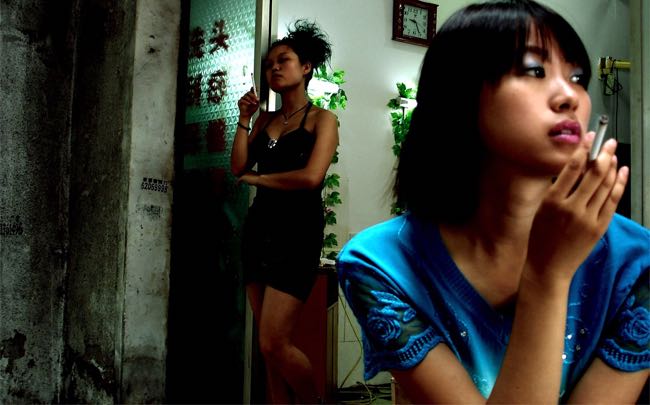
LOCARNO, Switzerland – Chinese filmmaker Xiaolu Guo’s “She, a Chinese” is an absorbing character study of a young woman from rural China who makes her way to the big city and then to England in a journey clearly intended to mirror that of her homeland in the modern world.

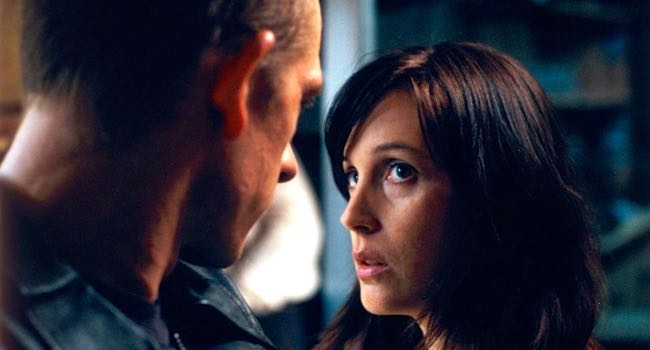
Beijing actress Huang Lu (pictured, right) is persuasive as Mi Lie, an adolescent whose innocence is robbed before she even sets out from her small village but whose dogged optimism helps her survive despite running into a string of men who offer only disappointment.

Slow in spots and lacking a fully thought through thesis, the film maintains interest because of the actress’s enigmatic but engaging skills. Backed by the U.K. Film Council and Film 4, the picture should get decent exposure in Great Britain and may make some headway on the festival circuit.

Mi Lei is a typical teenager who has never travelled more than five miles from her home until an assault by a local thug prompts her to leave for the big city where she gets a job helping out at a brothel. There, she meets a hoodlum named Spikey (Wei Yibo), who takes her in and is kind to her until he comes home one night with a knife in his back.

On a whim, Mi Lei hooks up with a guided tour to the U.K. where she jumps ship and gets a job at a massage parlor where she meets an aging widower (Geoffrey Hutchings) who marries her. But soon she meets Rachid (Chris Ryman), who runs a local Indian cafe, and moves in with him.

The woman’s experiences hold attention although it stretches credibility that she could have married without a birth certificate or other papers, and the fact that Rachid is an Indian Muslim is left largely unexplored. What the film really has to say about China’s fate in the modern world is not entirely clear.

Venue: Locarno International Film Festival; Cast: Huang Lu, Wei Yibo, Geoffrey Hutchings, Chris Ryman; Director, writer: Xiaolu Guo; Director of photography: Zillah Bowes; Music: John Parish; Editor: Andrew Bird; Producer: Natasha Dack; Executive Producers: Caroline Cooper Charles, Robin Gutch, Jo McClellan, Hugo Heppell, Suzanne Alizart, Will Clarke; Production Companies: Warp X, Tigerlily Films, U.K. Film Council, Film 4; Sales: Films Boutique; Not rated; running time, 98 mins.

This review appeared in The Hollywood Reporter.
Posted in Film, Locarno International Film Festival, Reviews | Tagged , , , , , , | Comments Off on LOCARNO FILM REVIEW: Xiaolu Guo’s ‘She, a Chinese’

LOCARNO FILM REVIEW: ‘Julia’s Disappearance’

Julia's disappearance 2 x650

By Ray Bennett

LOCARNO, Switzerland – Sophisticated and insightful, Christoph Schaub’s “Julia’s Disappearance” is a romantic comedy about getting older that should charm grownup audiences keen for some wry laughs without sentimentality.

The film won the public award after its world premiere in the Piazza Grande at the Locarno International Film Festival and should do well internationally.

Schaub draws entertaining performances from an ensemble of talented players with a clever script by Martin Suter that examines the cautionary theme that as people get older they become invisible to others.

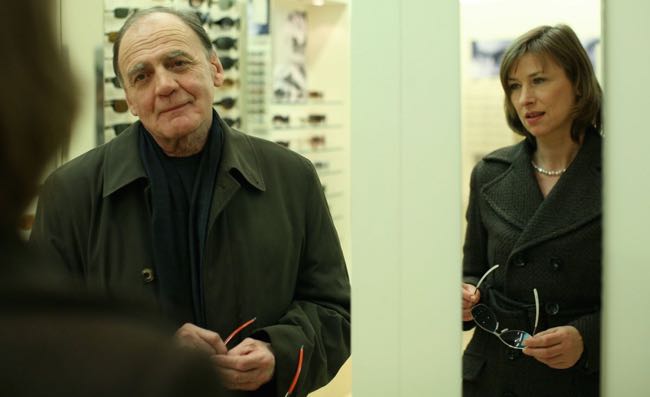
The Julia of the title — Corinna Harfouch, pictured with Bruno Ganz — has intimations of this phenomenon while on a Zurich bus heading to buy new spectacles. An older woman (Renate Becker) makes the comment when Julia fails to spot that she wants to sit down.

It turns out that Julia, while cultured and beautiful, is anxious about her 50th birthday, which she is supposed to celebrate that evening with a group of friends.

Julia's Disappearance 1 x650

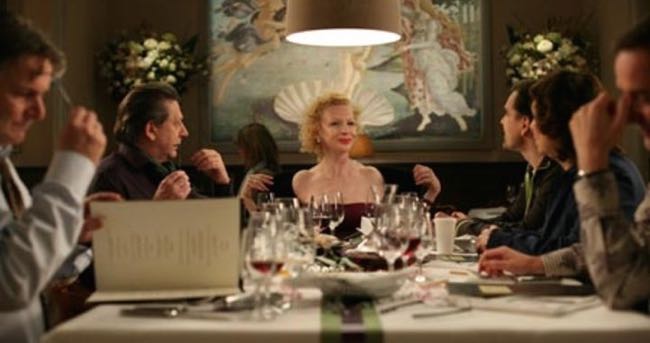
The film introduces her friends in separate scenes before they gather at the restaurant and wait for Julia to arrive. There are also episodes involving two other birthdays on the same date and these characters are drawn into the story as the film progresses.

Julia, however, has disappeared in another sense too after meeting a charming stranger who introduces himself by asking her to model some glasses he’s buying for his daughter.

Swiss star Bruno Ganz plays the man who captivates Julia with effortless poise and he gives a master-class in the art of seduction by not attempting to seduce her. Their scenes together provide pleasing reassurance that the days of pure screen romance are far from a thing of the past.

While Julia and her stranger dally over drinks, her friends discuss the various pains and pleasures of getting older with sharp dialog and great timing. Stefan Kurt and Andre Jung are standout as a gay couple whose relationship has the same stresses and strengths as their straight friends. Christine Schorn also makes an impression as an 80-year-old who finds at her age there is no reason not to speak her mind.

Polished work by cinematographer Filip Zumbrunn and composer Balz Bachmann add to the pleasure of a film that suggests that getting older is not without considerable rewards.

Venue: Locarno International Film Festival; Cast: Corinna Harfouch, Bruno Ganz, Stefan Kurt, Andre Jung; Director: Christoph Schaub; Writer: Martin Suter; Director of photography: Filip Zumbrunn; Production designer: Susanne Jauch; Music: Balz Bachmann; Costume designer: Dorothee Schmid; Editor: Marina Wernli; Producer: Marcel Hoehn; Production, sales: T&C Edition AG; Not rated; running time, 87 mins.

This review appeared in The Hollywood Reporter.
Posted in Film, Locarno International Film Festival, Reviews | Tagged , , , , , , , | Comments Off on LOCARNO FILM REVIEW: ‘Julia’s Disappearance’