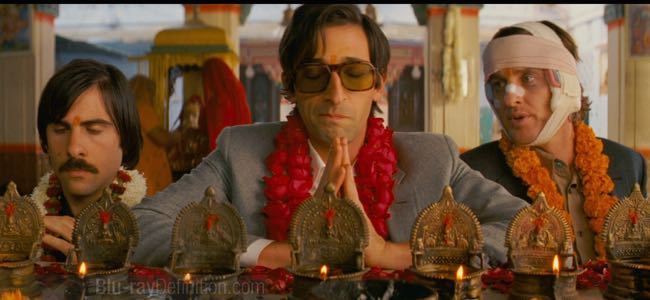
VENICE FILM REVIEW: Wes Anderson’s ‘Darjeeling Limited’

Darjeeling Express x650

By Ray Bennett

VENICE – The whimsical and insightful charm that Wes Anderson and his filmmaking pals have displayed in such films as “Rushmore” and “The Royal Tenenbaums” curdles ruinously in the Indian sun that shines so brightly in their smug and self-satisfied new film “The Darjeeling Limited.”

Owen Wilson, Adrien Brody and Jason Schwartzman star as brothers on what is supposedly a spiritual journey to the sub-continent. Their father has been dead for a year and their mother (a cameo from Anjelica Huston), who has found religion in the sub-continent, discourages a visit and warns of a man-eating tiger in the vicinity, although it is never seen.

The eldest brother, Francis (Wilson) has planned a detailed itinerary, however, that will allow them to see their mother and on the way hit all the key Indian sources of spiritual renewal on brief railway stops aboard the titular train. If it’s Rajasthan, it must be enlightenment.

What ensues is like a third-rate Hope and Crosby picture with no big laughs and nothing to say as the completely self-involved threesome ride the rails in a circle back to their dull and uninteresting lives.

“The Darjeeling Limited” will need all the help it can get to find audiences beyond the stars’ committed fans.

The pretensions surrounding this production begin with a 13-minute short film titled “Hotel Chavalier” that was screened ahead of the main feature at the Venice International Film Festival. It will be shown at other festivals and on the Internet, and be included on the eventual DVD, but it will not play in theaters when the picture is released.
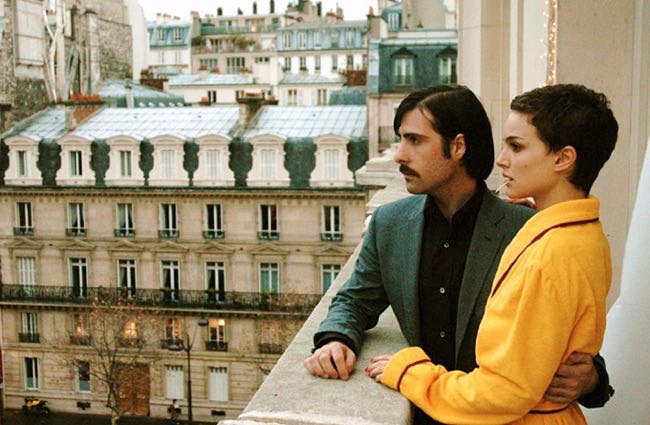
Natalie Portman Hotel Chevalier

Set in a hotel in Paris, the short film shows a brief encounter between the youngest brother, Jack (Schwartzman) and his on-and-off girlfriend (Natalie Portman). It has no significance except that Portman looks sensational and it’s a platform for the great 1960s anthem “Where Do You Go to My Lovely?” by Peter Sarstedt.

The feature begins with middle brother Peter (Brody) catching the train at the last minute and joining his siblings in their first-class carriage. Childhood rivalries and irksome personality ticks immediately surface, although they all agree on the need for cigarettes and the best of India’s over-the-counter medications.

The Darjeeling Limited is a train especially mocked up for the film, a hybrid of the old U.S. 20th Century Limited and the Orient Express with regional patterns and colors, and not remotely like the air-conditioned models of modern India. The boys jump off and on quite a bit and run up small hills trying to communicate with ancient spirits.

While Francis and Peter needle each other, Jack has sex with the train’s attractive Indian stewardess (Amara Karan), no doubt because Schwartzman had a hand in the screenplay. They visit bazaars and temples, and in one excruciating sequence are involved in an incident on a swift-moving river in which a little boy is killed.

They stay for the funeral but appear oddly unmarked by the experience, being keen to get on with their search for mom. Huston shows up late in the picture as a kind of nun to explain why she didn’t go to their father’s funeral, the circumstances of which are revealed in a stilted flashback.

There’s an interesting soundtrack with lots of excerpts from the scores to films by Satyajit Ray and Merchant Ivory along with some Kinks and Rolling Stones tracks. The colors are beautiful and well captured by cinematographer Robert Yeoman.

But when current affairs are in such a parlous state, it’s almost unforgivable to make a film about stupid American men traveling abroad with not the slightest awareness of or reference to anything that’s going on in the world. The film is overly pleased with itself and the characters are way too self-absorbed. There’s never a man-eating tiger around when you need one.

Venue: Venice International Film Festival; Cast: Owen Wilson; Adrien Brody; Jason Schwartzman; Amara Karan; Wally Wolodarsky; Waris Ahluwalia; Irrfan Khan; Barbet Schroeder; Camilla Rutherford; Bill Murray; Anjelica Huston; Director: Wes Anderson; Writers: Wes Anderson & Roman Coppola & Jason Schwartzman; Director of photography: Robert Yeoman; Production designer: Mark Friedberg; Music: From the films of Satyajit Ray and Merchant Ivory; Costume designer: Milena Canonero; Editor: Andrew Weisblum; Producers: Wes Anderson, Scott Rudin, Roman Coppola, Lydia Dean Pilcher; Executive producer: Steven Rales Production: Fox Searchlight, American Empirical Pictures; No MPAA rating; Running time, 91 minutes.

This review appeared in The Hollywood Reporter.
Posted in Film, Reviews, Venice International Film Festival | Tagged , , , , , , , | Comments Off on VENICE FILM REVIEW: Wes Anderson’s ‘Darjeeling Limited’

THEATRE REVIEW: ‘Desperately Seeking Susan’ the musical

Desperately Seeking Susan

By Ray Bennett

LONDON – Pumped up and shrill, the sound system almost overwhelms some decent performances of classic Blondie songs in the new stage musical based on the film “Desperately Seeking Susan.”

It’s not a bad idea at all to set screenwriter Leora Barish’s tale of an unhappy suburban wife searching for more interesting times amid the tawdry nightlife of Lower East Side Manhattan in the 1970s punk era. Memories of Madonna in Susan Seidelman’s 1985 movie are not far removed from the punk images in the songs of Deborah Harry and her crew.

The 18-song score includes Blondie hits such as “Heart of Glass,” “Call Me” and “The Tide is High”, however, are jammed into the story without much attention to whether or not they fit the storyline. In shows like “Mamma Mia,” by contrast, the storyline is built around the songs, but that’s not true here.

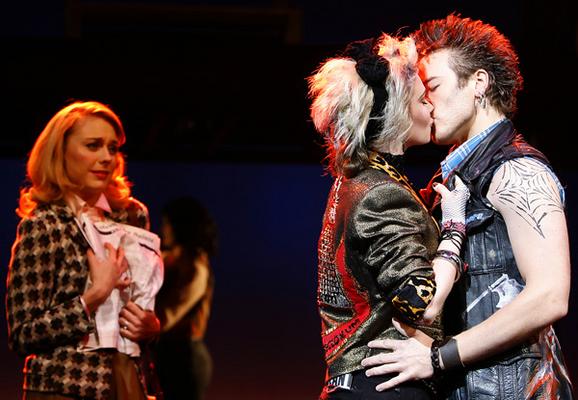
It makes for some odd transitions so that the songs and the drama seem to operate on separate planes. Emma Williams Desperately Seeking SusanStill, director Angus Jackson speeds things along and while Andy Blankenbuehler’s choreography is not inspired, it’s a help that there are two conveyor belts at different levels to enliven the chases.

Sex, drugs and rock ‘n’ roll plus a drop of murder keep everything on a more or less adult plane and Peter Michael Marino’s book manages to imply the dubious merits of life in the fast lane as well as in the suburbs.

Tim Hatley’s costumes help considerably and the lead performers are kept especially busy changing outfits. Emma Williams (left), who played Truly Scrumptious in the West End production of “Chitty Chitty Bang Bang,” is exactly that as sexy Susan, the free-living character played by Madonna in the movie. She looks great, moves well and has a terrific voice that would only benefit from a less strident sound system.

The same goes for Kelly Price as the hungry housewife (Rosanna Arquette in the film). She has the less flashy role but by the end of the show, after her character has been thrown in jail and sawn in half by a conjurer, she picks up steam.

The whole cast put in a lot of effort to deliver Blondie’s famous numbers and it’s not their fault that comparison with the originals suffers due to the producers’ evident wish to pierce every ear drum in the theatre.

Venue: Novello Theatre, runs through April 19; Cast: Kelly Price; Emma Williams; Leanne Best; Mark McGee; Alec Newman; Jonathan Wrather; Steven Houghton; Music & lyrics: Blondie; Book and concept: Peter Michael Marino, based on the MGM film written by Leora Barish; Director: Angus Jackson; Choreography: Andy Blankenbuehler; Set and costume designer: Tim Hatley; Lighting designer: Hugh Vanstone; Sound design: Bobby Aitken, Brian Beasley; Presented by Susan Q. Gallin, Ron Kastner, Mark Rubinstein, Old Vic Prods.

This review appeared in The Hollywood Reporter.

Posted in Music, Reviews, Theatre | Tagged , , , , , | Comments Off on THEATRE REVIEW: ‘Desperately Seeking Susan’ the musical

Remembering Renée

Renee Rich 1983 x650

I met Renée Rich by the pool at the Sportsmen’s Lodge in Studio City in 1982.

We got together a year later and married in England in 1984. We lived in Toronto, Los Angeles, Boise, and West Palm Beach.

We were divorced one April in Franklin, Tennessee.

Afterwards, I would phone her on our wedding anniversary and we’d laugh because it was the date Franklin Delano Roosevelt said would “live in infamy.”

Renée died last Christmas day, an angel flying too close to the ground. She is buried in Memphis near her father, Charlie.

Today was her birthday.

I loved her, and sometimes she loved me.

I can still hear her laugh.

Posted in Notes | Tagged | Comments Off on Remembering Renée

THEATRE REVIEW: ‘Statement of Regret’ at the National Theatre

Statement of Regret x650By Ray Bennett

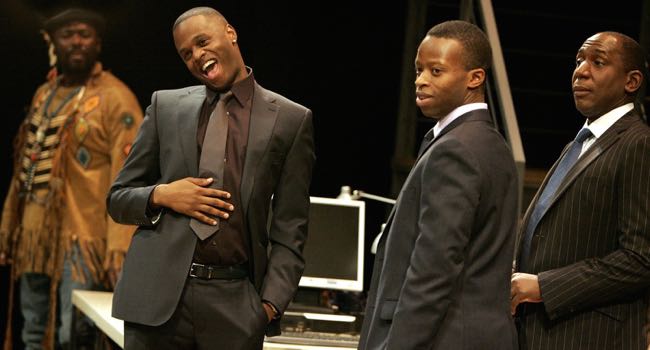
The conflict between blacks of direct African descent and their Caribbean cousins is at the heart of British playwright Kwame Kwei-Armah’s third play, “Statement of Regret.” While clearly a source of considerable anguish for those concerned, the play fails to register its significance because of stilted dialogue and a focus on the familial failings of the central character.

Don Warrington plays Kwaku Mackenzie, a West Indian leader of a political think tank in London, which he runs like a business while lobbying the government to address black issues. A minister of race has just been appointed in Britain, but Kwaku’s organization is failing to register on the political radar.

Distraught after the death of his father and plagued by guilt over an illegitimate son, Kwaku seeks to change the direction of his lobbying campaign in a dramatic and controversial fashion. He declares that reparations for slavery should go only to Africans in the Caribbean.

The members of his lobbying institute include loyal second-in-command Michael Akinbola (Colin McFarlane), brittle gay intellectual Idrissa Adebayo (Chu Omambala) and bright young assistant Issimama Banjoko (Angel Coulby), whose reaction is more tolerant than would be expected.

Kwaku’s wife, Lola (Ellen Thomas) objects fiercely but that is largely because her husband recently has hired his mistress’ son, Adrian (Clifford Samuel), as an intern. That situation also dismays his first son, Junior (Javone Prince), but the potentially volatile circumstances are not developed.

The debate comes to focus on Kwaku’s personal situation, which is not helped by an escalating intake of alcohol. When he makes his campaign public, he is almost out of hand, making dire slurs against African blacks and Jews.

The acting is fine, but the dialogue falls into the trap of being statements of rhetoric and it does not offer much illumination into the serious matters at hand.

Venue: National Theatre, runs through Jan. 10; Cast: Don Warrington; Colin McFarlane; Chu Omambala; Angel Coulby; Ellen Thomas; Javone Prince; Trevor Laird; Clifford Samuel; Oscar James; Playwright: Kwame Kwei-Armah; Director: Jeremy Herrin; Set designer: Mike Britton; Lighting designer: Natasha Chivers; Music: Soweto Kinch; Sound designer: Yvonne Gilbert; Presented by the National Theatre.

This review appeared in The Hollywood Reporter

Posted in Reviews, Theatre | Tagged , , , | Comments Off on THEATRE REVIEW: ‘Statement of Regret’ at the National Theatre

TV REVIEW: Judi Dench, Eileen Atkins in ‘Cranford’

CRANFORD

By Ray Bennett

LONDON – As pretty as an English village green in summer and as bracing as a winter’s meadow brook, the BBC-TV’s new five-part period drama “Cranford”, which starts on Sunday, is an instant classic.

Starring some of the cream of British acting talent, the show is adapted from three novels by Elizabeth Gaskell. Her tales of the village of Cranford, not far from Manchester, in the mid-1800s have been rendered with loving precision by a cast and crew in top form.

Like jewellers who find the most brilliant lights in little gems, in this case gems of dialogue and expression, the series features a wonderful cast of British actors including Judi Dench, Lisa Dillon and Eileen Atkins (pictured), Imelda Staunton, Francesca Annis, Jim Carter, Philip Glenister and Michael Gambon.

It’s as sharp as an old lady’s glance from behind curtains and as exquisitely lacerating as the lash of a Victorian spinster’s tongue. Made by Chestermead for the BBC and WGBH Boston, it’s a guaranteed audience pleaser with lovely photography that features beautiful English costumes, sets and locations.

Filmed mostly in and around Lacock and West Wycombe, where the mansion is Lady Ludlow’s house, the series also features scenes shot at Dorney Court, the Hambleden and Ashridge estates.

Produced by the BBC and WGBH Boston in association with Chestermead, the series has been given a magical touch by creators Sue Birtwistle and Susie Conklin. Heidi Thomas’ dialogue is a constant delight, and director Simon Curtis draws performances from his cast to match the best they have ever done.

Dench and Atkins set the tone immediately as two proper spinster sisters, Matty and Deborah Jenkins, who welcome into their village home young Mary Smith (Lisa Dillon), whose family in Manchester is in crisis.

The village has other newcomers in the form of Capt. Brown (Jim Carter) and his two daughters, Jessie (Julia Sawalha) and her unseen older sister who is seriously ill. Her fate will involve the Jenkyns sisters more than they would prefer but that duty obliges.

Young Dr. Harrison (Simon Woods) also is a fresh face in the village and he brings with him some new medical procedures that will help shake up old habits when carpenter Jem Hearne (Andrew Buchan) fractures his arm badly and faces amputation.

Meanwhile, at the big house, Lady Ludlow (Francesca Annis) is planning her annual garden party with the help of estate manager Mr. Carter (Philip Glenister) and she is very selective about the girls she hires to help. Staggered to discover that one applicant can read and write, Lady Ludlow declares: “She is equipped beyond her station; the proper order of the world will be undone.”

Hovering everywhere is the village gossip, Miss Pole (Staunton), who keeps all informed in timely fashion. In the second episode, Gambon’s Mr. Holbrook will arrive to upset Miss Matty’s world and there is the threat of a new railway line that will come to change the village even more. Viewers will hardly be able to wait.

Here’s more about Haskell and Lacock

Posted in Reviews, Television | Tagged , , , , , , , , , , , , , , , | Comments Off on TV REVIEW: Judi Dench, Eileen Atkins in ‘Cranford’

FILM REVIEW: Ridley Scott’s ‘American Gangster’

american-gangster x650

By Ray Bennett

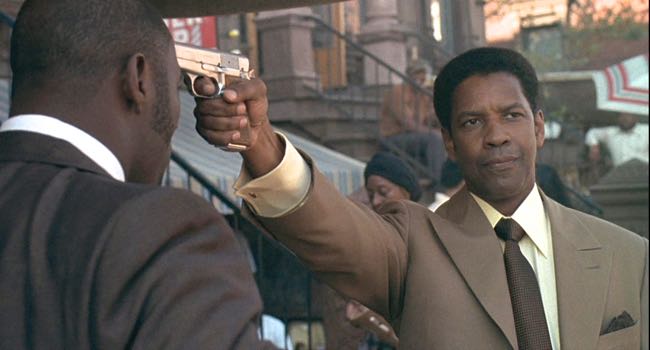
Ridley Scott has been saying in interviews lately that he likes to make his movies quickly. Maybe that’s why “American Gangster,” which opens in the U.K. Friday, lacks his customary visual flair.

It’s a workmanlike crime picture but there’s little of the Scott style that made everything from “The Duelists” to “Blade Runner” to “Black Hawk Down” so arresting.

Steven Zaillian’s script lacks memorable dialogue and the performances by Denzel Washington and especially Russell Crowe are merely professional. Marc Streitenfeld’s music is nothing to write home about either.

It’s long and disappointing so it’s a puzzle that the film is on so many tipsters’ lists for awards contention. But then, Martin Scorsese’s wretched “The Departed” won the Oscar last year. Lots of critics like “American Gangster,” but I think Stephanie Zacharek gets it right in her review on Salon:

“American Gangster” offers only the stingiest platform for its actors, and as a piece of storytelling — built on the foundation of a great story — it’s an epic that’s been sliced and diced into so many little morsels that almost nothing in it has any weight.”

Posted in Film, Reviews | Tagged , , , , , , , | Comments Off on FILM REVIEW: Ridley Scott’s ‘American Gangster’

FILM REVIEW: Werner Herzog’s ‘Rescue Dawn’

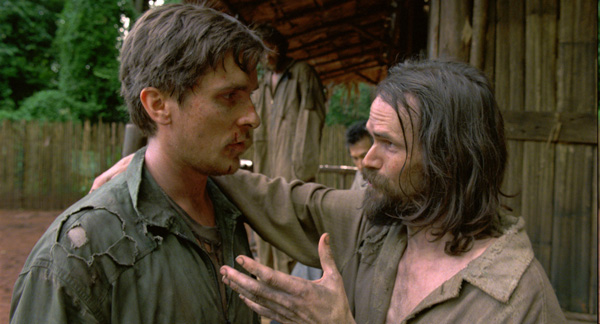
Jeremy Davies aand Christian Bale Rescue Dawn Movie Image

By Ray Bennett

Filmmaker Werner Herzog was in a playful mood Monday evening in a Q&A following a BAFTA screening of his new movie “Rescue Dawn” at the Curzon Soho in London.

An often harrowing but ultimately uplifting real life tale starring Christian Bale as an American POW in Laos in the mid-1960s, the film has a surprising number of comic moments.

Arriving after the film had ended, Herzog asked if the audience had laughed. Interviewer Mark Kermode said yes and he added, “And in all the right places.”

The director promptly corrected him: “The audience never laughs in the wrong place. Audiences have an instinctive intelligence about that. If they do laugh unexpectedly it’s because there is something wrong with the film.”

One of the funniest lines in the picture comes when Bale’s character, Dieter Dengler, who was born in Germany during World War II, describes how he fell in love with the idea of flying after he was shot at by an Allied fighter pilot. Steve Zahn, as a fellow prisoner, says, “Funny, some guy tries to kill you and you want his job.”

Bale’s vivid description echoes the scene in Steven Spielberg’s “Empire of the Sun” when the kid he plays watches planes from the roof of a bombed building. When asked about it, Herzog said that had nothing to with it, the scene derived only from Dengler’s memoirs, which were seen in Herzog’s documentary 1997 documentary “Little Dieter Needs to Fly.” Still, fans of what remains Spielberg’s finest picture will make the connection.

Bale and Zahn, and a frighteningly skinny Jeremy Davies (pictured with Bale), are terrific in a film that did not really get a shot at the U.S. box office in the summer.

It opens in the U.K. on Nov. 23. Peter Zeitlinger’s cinematography in the jungle is outstanding as is Klaus Badelt’s sturdy and spiritual score with contributions from Dutch cellist and Herzog regular Ernst Reijseger.


Posted in Film, Reviews | Tagged , , , , , , , , , , | Comments Off on FILM REVIEW: Werner Herzog’s ‘Rescue Dawn’

Norman Mailer’s writing skill on display in ‘The Fight’

Ali v Foreman x650

By Ray Bennett

The books of Norman Mailer, who died today at 84, proved of such little interest to filmmakers that he directed adaptations of some of them himself including “Maidstone” (1970) and “Tough Guys Don’t Dance” (1987).

Lawrence Schiller made an Emmy-winning NBC miniseries of “The Executioner’s Song” starring Tommy Lee Jones as death row convict Gary Gilmore in 1982. The only other feature of note was Raoul Walsh’s 1958 version of Mailer’s World War II novel “The Naked and the Dead” starring Aldo Ray and Cliff Robertson.Norman Mailer x325
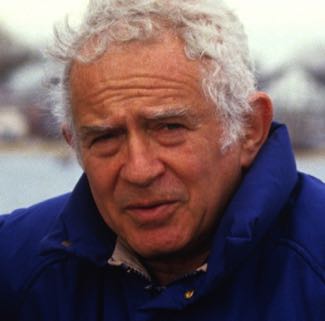
For my money, Mailer’s best writing was his journalism as in “The Executioner’s Song” but especially in his superb boxing yarn “The Fight,” which described the 1974 encounter between Muhammad Ali and George Foreman in Zaire known as the Rumble in the Jungle. Here’s an excerpt:

“Foreman’s arms flew out to the side like a man with a parachute jumping out of a plane, and in this doubled-over position he tried to wander out to the center of the ring. All the while his eyes were on Ali and he looked up with no anger as if Ali, indeed, was the man he knew best in the world and would see him on his dying day.

“Vertigo took George Foreman and revolved him. Still bowing from the waist in this uncomprehending position, eyes on Muhammad Ali all the way, he started to tumble and topple and fall even as he did not wish to go down. . . . He went over like a six-foot sixty-year-old butler who has just heard tragic news. . . .”

Here’s where to find it

Posted in Books, Comment, Film | Tagged , , , , | Comments Off on Norman Mailer’s writing skill on display in ‘The Fight’

Oscar won’t visit ‘Band’ but audiences certainly will

Autosave-File vom d-lab2/3 der AgfaPhoto GmbH

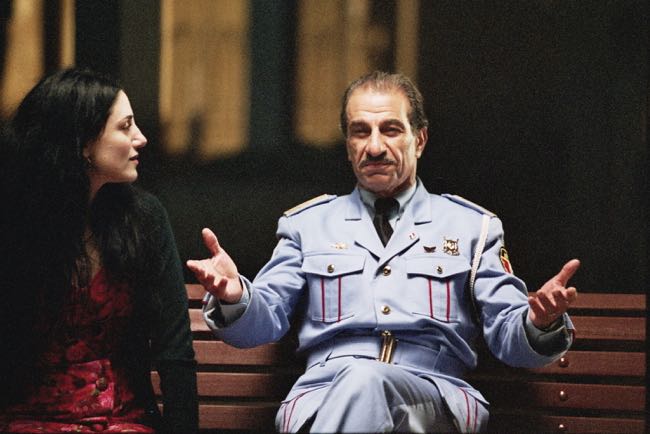
The delightful film “The Band’s Visit” (Bikur Ha-Tizmoret), starring Ronit Elkebetz and Sasson Gabai (pictured), which was a hit at the Festival de Cannes, opens at the Curzon Mayfair on Friday and in the United States on Dec. 7.

The picture was disqualified from contention as foreign language film at the Academy Awards following a ruling that more than 50% of the dialogue is in English and BAFTA’s rules for the category are the same: “All feature-length films with predominantly non-English dialogue are eligible.”

“The Band’s Visit” is about a ceremonial police band from Egypt on a trip to Israel for the opening of an Arab Cultural Centre. The troupe’s members arrive in the wrong town and their interaction with the locals means they must communicate in stumbling English.

The Oscars Foreign-Language Film Selection Committee Chairman, producer Mark Johnson told the Los Angeles Times: “You have to remember, it’s called best foreign-language film, not best foreign film. I’m heartbroken, because I loved the movie. But there wasn’t a single person on our committee that disagreed with the decision. If we accepted this film just because we liked it so much, the rules wouldn’t mean anything at all.”

It was my favorite at the Festival de Cannes this year and it’s a crying shame that it won’t be up for an Oscar and maybe a BAFTA, but great reviews and enthusiastic word of mouth will ensure it finds a wide audience.

“The Band’s Visit” is sophisticated filmmaking, wise about race with a great sense of humour so that the poignancy of its themes never get in the way of the entertaining story.

Posted in Festival de Cannes, Film, News | Tagged , , , , | Comments Off on Oscar won’t visit ‘Band’ but audiences certainly will

Of Canterbury, choristers and cowboys

By Ray Bennett

Roy Rogers cost me both a singing career and belief in the church. I am reminded of this because the BBC Young Chorister of the Year competition final airs on Radio 2 this evening at 8 o’clock and I once sang in a choir at Canterbury Cathedral.

The competition actually took place last weekend so the results have been announced. Far be it from me to ruin the suspense for those who tune in without knowing the outcome but listen for the perfect voice of a young man named Joel Whitewood. I am related to Joel, 12, through marriage, but that’s not why I mention it. The boy can sing.

He is one of 18 choristers who sing every day in Canterbury Cathedral where he is a side leader in the choir. Like the others, he is a student at Canterbury’s St. Edmund’s School. Dr. David Flood, the cathedral’s organist and master of choristers, is holding voice trials in Canterbury on Nov. 10 seeking five candidates for scholarships.

When I was a kid and thought I believed in a god, I was a soprano in the Ashford Parish Church choir in Kent. I was never in Joel’s league, but not terrible. It didn’t hurt that kids who sang in the choir were paid a handy amount of pocket money. I didn’t care for the incense burning at Sunday morning mass but I loved going out carol singing at Christmas and the mince pies and custard afterwards.

My choral life ended abruptly. Ours was among several choirs chosen to sing in a celebration of massed voices in Canterbury Cathedral under the direction, as I recall, of Sir Malcolm Sargent. It involved a full day’s rehearsal on a Saturday with the concert the next day. It was a huge honour.

The following year, we were invited again. In those days, all I wanted to do was play football and go to Hollywood to meet Roy Rogers (who was born, incidentally, on Nov. 5). The King of the Cowboys’ wretched television show never made it to England so he remained a hero. He’d long stopped making movies by then and they were rarely on TV and seldom came to Ashford.

But then came news of a matinee screening of “Pals of the Golden West” or something like that. Trouble was, it was on the day of rehearsal at Canterbury Cathedral. I went to the movie. I was promptly dismissed from the choir in ignominy. It was my first crisis of conscience. Roy Rogers versus Jesus Christ; Hollywood versus the Church. No contest. Oh, and I did go to Hollywood and I did meet Roy Rogers.

Read more about Canterbury Cathedral choristers.

Posted in Music, Notes | Tagged , , , | 1 Comment