By Ray Bennett
HMV’s Jubilee poll to find the nation’s favourite British film and album of the last 60 years threw up some interesting results, not least what failed to make the Top 60 list.
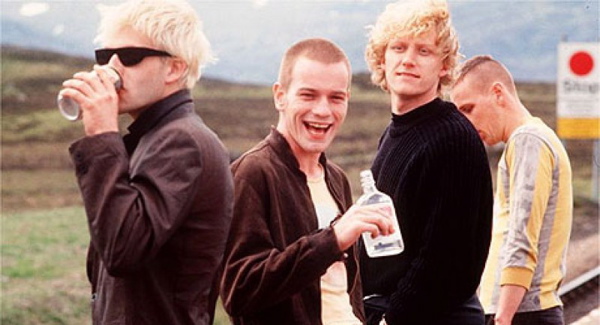
Danny Boyle’s 1996 film “Trainspotting” (pictured) was voted the best British movie of the last 60 years and Iron Maiden’s 1982 heavy metal release “The Number Of The Beast” best album in HMV’s Diamond Jubilee Best of British poll.
The Beatles claimed four spots in the Top 10 albums but their films failed to register at all in the four-week national survey to find the most popular films and records released during the reign of Queen Elizabeth II. The Top 10 movies featured two Harry Potter titles, two Monty Python films and two by Stanley Kubrick (“A Clockwork Orange” and “2001: A Space Odyssey”).
Michael Caine is the clear winner as Britain’s favourite movie star with five titles in the overall list: “The Italian Job” (8th), “Zulu” (34th), “Get Carter” (43rd), “Battle Of Britain” (47th) and “Alfie” (52nd). Colin Firth has four titles named in the poll: “The King’s Speech” (10th), “Love Actually” (11th), “Bridget Jones’s Diary” (19th), and “Tinker Tailor Soldier Spy” (37th).
Thousands vote
HMV said that 30,000 fans voted in the music section and 24,000 voted for their favourite movies. The voting was widespread — 60 titles in each section registered multiple votes — and “Trainspotting” won with almost 1,500 votes, 6% of the total, while “The Number Of the Beast” claimed 2,754 votes or 9.2%.
Warner Home Video has four of the Top 10 titles on DVD, Sony Pictures Home Entertainment has two, and the rest are spread among other distributors.
Winner Danny Boyle’s 2008 Academy Award-winner “Slumdog Millionaire” placed 15th in the HMV poll and his 2002 horror picture, “28 Days Later”, came in at 21. Iron Maiden’s winner was the band’s only release named.
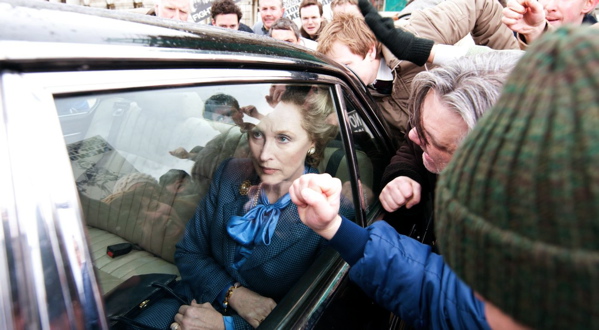
The Oscar-winning “King’s Speech” resounded with voters (10th) but several other films with royal connections were overlooked including “The Queen”, for which Helen Mirren won the Oscar in the title role and “Shakespeare In Love”, for which Judi Dench won an Oscar as Queen Elizabeth I. Other well-regarded regal pictures missing from the Top 60 included “Becket”, “The Madness Of King George”, “The Lion In Winter”, and “A Man For All Seasons”.
Comedies are well represented including “Love Actually” (11th) “Hot Fuzz” (12th), “Bridget Jones’ Diary” (19th), “Four Weddings And A Funeral” (22nd), Kubrick’s “Dr. Strangelove Or How I Learned To Stop Worrying And Love The Bomb” (25th), “The Full Monty” (26th), “Notting Hill” (27th), “Withnail And I” (27th), “A Fish Called Wanda” (33rd) and “The Ladykillers” (45th).
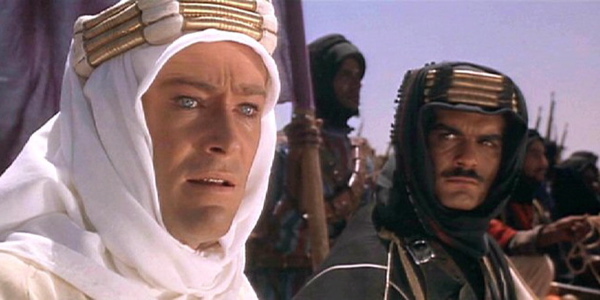
War pictures continue to have major support with several on the list including “The Great Escape” (16th), “Lawrence Of Arabia” (24th), “The Bridge On The River Kwai” (29th), “Zulu” (34th), “The Dam Busters” (46th), and “Battle Of Britain” (47th).
Crime and gangster films garnered plenty of spots including “Snatch” (17th), “Get Carter” (43rd), “Dead Man’s Shoes” (54th), “Layer Cake” (56th), and “The Long Good Friday” (57th).
Films with a big music connection are fairly sparse amongst the most popular films with dancing tale “Billy Elliot” top ranked at 14 followed by mods versus rockers film “Quadrophenia” (19th) followed by the Oscar-winning musical “Oliver!” (38th), Joy Division tale “Control” (40th) and oompah picture “Brassed Off” (50th). Richard Lester’s Beatles films was nowhere to be seen and nor were Ken Russell’s “Tommy” (1975) and Alan Parker’s influential “The Commitments” (1991).
In the albums list, absentees include heralded performers such as the Animals, the Kinks, Tom Jones and Cliff Richard. Releases from the 1990s dominated with 18 tiles named in the Top 60, 15 from the 1970s, 13 from the 2000s and just four from the 1980s including the winner.
Albums from the formative decade of the 1960s earned 13 spots but fans’ memories for films from the 1950s and 1960s have faded with no place in the Top 60 for iconic titles from the BFI’s Top 100 British films such as “Room At The Top” (1958), “I’m All Right, Jack” (1959), “Saturday Night and Sunday Morning” (1960), “The Loneliness Of The Long Distance Runner” (1962), “Tom Jones” (1963), “This Sporting Life” (1963), “Darling” (1965), “Doctor Zhivago” (1965), “Blow Up” (1966), “Far From The Madding Crowd” (1967), “Women In Love” (1969) on “Carry On Up The Khyber” (1968).
James Bond claimed two spots but only in the form of Sean Connery – “Goldfinger” (13th) and “Dr. No” – and Michael Caine, despite his popularity, did not get a look-in for his anti-hero Harry Palmer, including “The Ipcress File” (1965).
Period classics from the BFI list that were overlooked in the HMV poll include “The English Patient” (1996), “The Go-Between” (1971), “Sense And Sensibility” (1995), “Remains Of The Day” (1993), and “Hope And Glory” (1987). Cult films on the BFI list that failed to register included “The Draughtsman’s Contract” (1982), “Local Hero” (1983), “Brazil” (1985), and “Distant Voices, Still Lives” (1988).
HMV said that the Iron Maiden record had broad-based national support rather than a regional focus and “Trainspotting” also scored well across the whole country but especially in London, the North East and Scotland
Depeche Mode’s “Violator” was the top album in London and the South East ahead of “Adele 21” and “Withnail And I” placed third in the capital although it did not make the national Top 20. Iron Maiden and Oasis did well in the South West with “Hot Fuzz” the top movie. Adele was top in the Midlands with “The Life Of Brian” the favourite movie there followed closely by “Shaun Of The Dead”.
The top album in the east of England was Muse’s “Origin Of Symmetry” while “The Italian Job” and “Shaun Of The Dead” were the top films. “Adele 21” was No. 1 in Yorkshire where “Harry Potter And The Deathly Hallows, Part 2” was the winner and Sheffield-set “The Full Monty” landed in the Top 10.
Voters in the North East picked Oasis’ “(What’s the Story) Morning Glory?” as the top album while Manchester opted for Elbow’s “Seldom Seen Kid” with “Trainspotting” atop the film lists in the region and the city. The North West went for Elbow and Radiohead (“OK Computer”) and “Withnail and I” at third although Liverpool and Merseyside chose the five Beatles albums along with the two Harry Potter films in the Top 10.
Pink Floyd’s “Wish You Were Here” and “Led Zeppelin II” scored well in Wales with “Love Actually” and “Notting Hill” in the Top 5. Primal Scream’s “Screamadelica” and Teenage Fanclub’s “Bandwagonesque” did well in Scotland but Iron Maiden came first, as did “Trainspotting” despite strong support for the Monty Python.
HMV conducted its poll via a dedicated Facebook page that resulted in a total of 54,545 votes made up of 63% males with 53% of voters aged below 35 years-old and just 8% over 55 years-old.
This story appeared in Cue Entertainment; full lists follow: Continue reading →



Krakow festival puts some steel into film music
Composer Elliot Goldenthal and conductor Diego Navarro in concert at the Krakow Film Music Festival
By Ray Bennett
KRAKOW, Poland – Julie Taymor talks about meeting Paul McCartney and Yoko Ono when she made “Across The Universe”, which is filled with Beatles music. Taymor and McCartney alone sit next to each other in a screening room. “It’s quiet, and then I hear him singing along to one his songs, and I knew it would be all right,” Taymor says.
She meets John Lennon’s widow – “and her lawyer” – at her home in the Dakota Building. Taymor and partner Elliot Goldenthal have decided that Lennon’s song that goes “I want you, I want you so bad … “ will be perfect for a scene in which the lead character answers Uncle Sam’s demand that he must be drafted during the Vietnam War. Ono stares at Taymor: “You know he wrote that about me.”
Still, they got the movie made with the songs they wanted although the director says she will not listen to the soundtrack CD because of the edits and changes that were made. She says she loves what Goldenthal – and fellow music producers T-Bone Burnett and Teese Gohl – did with the arrangements for the film’s stars and assorted guest artists.
Goldenthal speaks of the “chromosomes” in a Beatles song: “If you try to duplicate their sound and you get one chromosome wrong, it’s a disaster, so you must go another way.”
They spoke at a 90-minute Q&A session on the Art of Collaboration that I moderated at the Krakow Film Music Festival in Poland. Artistic Director Robert Piaskowski invited them along with other filmmakers and composers for the annual three-day event staged first in 2008.
Tom Tykwer’s ‘Perfume: The Story Of A Murderer” accompanied by full orchestra and chorus in Krakow
Along with screenings, panel sessions and parties, there were three extraordinary concerts held in the vast Nowa Huta Steelworks, two of which I attended. Audience members had to negotiate the industrial area’s gates and then ride buses more than two miles to the vast central hall of an enormous building once called the Vladimir Lenin Steelworks, which remains a functioning factory known as the Tinning Plant of Arcelor Mittal Poland. For the festival, it was converted to a concert hall with 4,000 seats, a stage big enough for full orchestra and chorus, and a giant movie screen. What the venue lost in acoustics, it more than made up for in atmosphere.
On May 24, German filmmaker Tom Tykwer and fellow composer Reinhold Heil were on hand for a screening of Tykwer’s 2006 period drama “Perfume: The Story Of A Murderer”. The film screened in its entirety accompanied by the Sinfonia Cracovia conducted by Ludwig Wicki with two choirs and soprano Karolina Gorgol-Zaborniak.
Tykwer and Heil said it was the first time they had heard the complete score (which also featured music by Johnny Klimek) with orchestra and chorus combined. Budget restrictions meant that for the film the two parts were recorded separately.
The tale of a cruelly mistreated orphan who grows up to be a uniquely gifted but murderous creator of perfumes stars Ben Whishaw in the lead with Dustin Hoffman, Alan Rickman and Rachel Hurd-Wood. Some of the English dialogue was lost amidst the live music (although not to the local audience due to Polish sub-titles) but the picture is strange and engrossing and the live orchestral performance added to its epic moments.
The closing concert at the same venue featured excerpts from Jerry Goldsmith’s score for “Alien” (1979), James Horner’s for “Aliens (1986); Goldenthal’s for “Alien3” (1992), and John Frizzell’s for “Alien Resurrection” (1997) in a suite called the Biomechanical Symphony. With clips from the films and Sinfonia Cracovia conductor Diego Navarro’s fiery command of the baton, the music was dynamic and haunting, and made me reach for Twentieth Century Fox’s splendid Blu-ray “Alien Anthology” as soon as I got home.
Elliot Goldenthal and Julie Taymor, right, with Krakow radio personality Magdalena Miska-Jackowska and Varése Saraband’s Robert Townson, who presented the Goldenthal concert
The second part of the evening featured suites that Goldenthal had prepared of music from his films “Titus” (1999), “Frida” (2002) and “The Tempest” (2010) with Taymor, “Interview With The Vampire: The Vampire Chronicles” (1994) with frequent collaborator Neil Jordan, and “Batman Forever” (1995) with Joel Schumacher.
Composer and director winced when the mix jinxed phrases in the “Frida” score but they joined the general applause for Polish soloist Joanna Slowinska’s passionate delivery of Goldenthal’s Latin songs from the film and the contribution of Mexican players Ernesto Anaya, Pancho Navarro and Camilo Nu. Maestro Navarro threw himself into each piece and Goldenthal’s extraordinarily vivid score for “Titus” resounded around the vast walls of the steelworks.
The Krakow Film Music Festival is linked with the annual Tenerife International Film Music Festival in July in the Canary Islands where native-born Navarro is festival director. Along with Jan A.P. Kaczmarek’s Transatlantyk Poznan International Film and Music Festival in Poland in August and the World Soundtrack Awards at the Ghent Film Festival in Belgium in October, they have become major and much-valued events in the world of film music.
Krakow 2012 concert audience inside the former Lenin Steelworks [Photos courtesy of Krakow Film Music Festival