THEATRE REVIEW: John Barry and Don Black’s ‘Brighton Rock’

Brighton_Rock1h

By Ray Bennett

LONDON – Composer John Barry and lyricist Don Black have laboured long and hard to make a musical out of Graham Greene’s 1938 crime novel “Brighton Rock,” but the challenge has turned out to be beyond them.

Unusually for a musical, the show program contains no list of songs or dance numbers. It’s an indication that Barry and Black, and Giles Havergal, who wrote the book for the production, have something other in mind than a traditional musical.

The subject is dark with a central character, Pinkie Brown (Michael Jobson), who is a baby-faced killer running a protection racket in the fading seaside resort of Brighton. After Pinkie orders the death of a small-time journalist, a witness emerges who could put him away.

She’s an innocent waitress named Rose (Sophia Ragavelas) so Pinkie cynically seduces and marries her so that as his spouse she cannot testify against him. With a determined woman named Ida (Harriet Thorpe) on his trail, however, and a rival gang leader ruling the roost, Pinkie’s desperation leads him to plan the death of Rose.

Havergal has done a good job of condensing Greene’s complex novel into manageable length for the show and Lez Brotherson’s set evokes the seediness of a resort where the glory has faded and the holidaymakers have a shriek of desperation about them.

But the show is caught between all the imperatives that audiences and especially critics would expect. Clearly, Barry and Black aimed at something like Brecht and Weill in which Barry’s Oscar-winning brilliance at creating movie underscores could be brought to bear and the pair’s dab hand at melodic songs could be exploited. It works in scene setting and mood, but the songs are defeated by the context.

Black is constrained to use the simple language of the milieu. It would have been absurd if these pseudo-Cockneys had burst into songs with the language of Sondheim or Porter. But the restrictions are defeating and while Rose has two ballads that offer the show a chance of a pop hit, it’s as if the songwriters’ hearts aren’t in it and the songs fall flat.

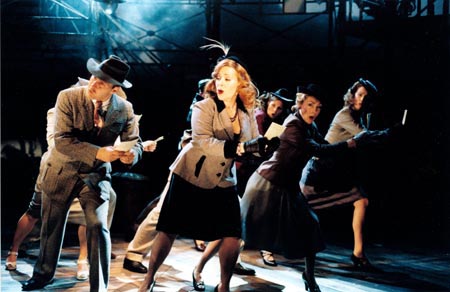
Worse, there are ensemble performances that feature clunky choreography involving deckchairs by the beach and punters at the racetrack. The bland cheeriness of these numbers is at woeful odds with the drama that infuses the rest of the show.

Part of the problem lies with the source material. Greene knew more about Saigon whorehouses, corrupt colonialists and tinpot Caribbean dictators than he did petty English criminals. The novel succeeds because of Greene’s coruscating writing but Pinkie never did convince as a real character either in the book or the film. He was merely a vassal for one of Greene’s conundrums about faith and the power of evil.

The 1947 film version was lit up by the sheer screen magnetism of the very young Richard Attenborough but like Dirk Bogarde in “The Blue Lamp” a few years later, he was just a posh actor slumming as a working class character. The films were only shocking in contrast to earlier British middle class crime stories. Hollywood had left them in the dust with Cagney, Bogart and Robinson in the ’30s. Not until the late ’50s would real working class British voices be heard onscreen.

Michael Attenborough, Richard’s son, directs the musical version and he does establish a convincing sense of place. As Pinkie, Michael Jibson does well to suggest a boy born into crime and content to accept his eternal fate as a villain, but the need to break into song every now and then doesn’t really help. Harriet Thorpe does a lusty Cockney turn as Ida and Sophia Ragavelas sings sweetly as Rose. But by the time Pinkie takes Rose down to the pier with murder on his mind, her song “You Love Who You Love” has about as much meaning as cotton candy.

Venue: Almeida Theatre, runs through Nov. 13; Music: John Barry; Lyrics: Don Black; Book: Giles Havergal, based on the novel by Graham Greene; Director: Michael Attenborough; Design: Lez Brotherson; Choreography: Karen Bruce; Lighting: Tim Mitchell; Musical director and arrangements: Steven Edis; Sound: John Leonard. Cast: Michael Jobson; Rose: Sophia Ragavelas; Ida Arnold: Harriet Thorpe; Dallow: David Burt; Cubitt: Neil McCaul; Spicer: Paul Bentall; Judy: Corinna Powlesland; Phil Corkery: Gary Milner; Fred Hale: Nicholas Lumley; Mr. Colleoni: Joshua Richards; Presented in association with Bill Kenwright.

This review appeared in The Hollywood Reporter.
Posted in Music, Reviews, Theatre | Tagged , , , , , , , , , | Comments Off on THEATRE REVIEW: John Barry and Don Black’s ‘Brighton Rock’

THEATRE REVIEW: Maria Goos’ ‘Cloaca’

The Old Vic Theatre Company presents The British Premiére CLOACA by Maria Goos Directed by Kevin Spacey The Old Vic Theatre 16 September - 11 December 2004 Press Night: Tuesday 28 September 2004 For further press information please contact: Kate Morley on (020) 7292 8353 Email: katemorley@premierpr.com

By Ray Bennett

LONDON – The first play that Kevin Spacey has chosen to direct in his first season as artistic director of the Old Vic Theatre Company is curiously flat and uninvolving.

Dutch playwright Maria Goos’ story of four 40-ish men and the strains put on their friendship by their often-wayward choices in life is both unconvincing and quite dull.

Spacey’s direction doesn’t help as it leans heavily toward the lame comedy of male bravado and fails to establish any depth of emotion that might make the dark ending persuasive.

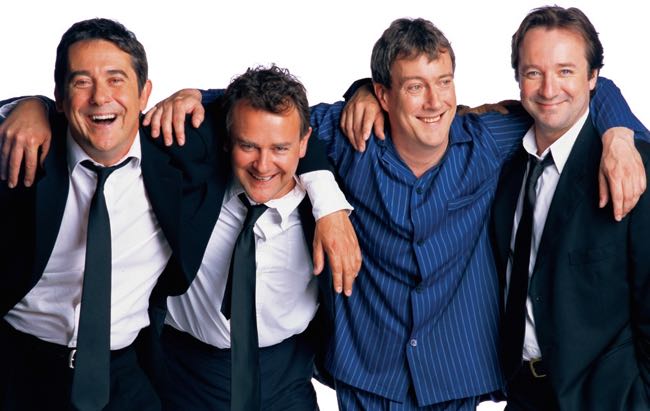
The setting is a fashionably modern apartment where Pieter (Stephen Tompkinson), a gay municipal civil servant, is arguing with his boss’s boss over a demand that he return what he refers to as the birthday gifts he has received over the previous 21 years.

These include eight paintings that he appropriated from storage at the local council office when they were regarded as worthless but since have come to be extremely valuable. His three closest friends, all heterosexuals, get involved in a problem that is made worse by the fact that he has already sold four of the paintings.

His mates also have their own problems. Jan (Hugh Bonneville) is an ambitious politician who expects to hear any day that he has been made a cabinet minister. But his wife has found out about his girlfriends and now he’s staying with Pieter. Tom (Adrian Lukis) is a lawyer whose over-indulgence in cocaine has led him to a stint in rehabilitation that doesn’t appear to have worked. And Maarten (Neil Pearson) is a smug playwright who is impotent except when it comes to Jan’s 18-year-old daughter.

The four men contrive to help Pieter out of his difficulty while Jan awaits his big news and frets over his failed marriage, Tom rushes about scoring more coke and Maarten anguishes over the first night of his new play and how he will tell Jan that his daughter appears naked in it.

All of this is revealed amidst what is supposed to be universal male camaraderie and banter, with references to a youthful mantra involving the shout of “Cloaca,” which has something to do with sewers. Nothing is made of Pieter’s homosexuality, which is probably a good thing in the circumstances, but it makes him, like the others, merely a type rather than a character.

There’s a very strained sequence in which Jan is gifted with a wan-looking hooker to celebrate his 43rd birthday and the joke is that, unable to perform, he goes into tearful breast beating about his wife and kids but the woman does not speak English.

The actors are all fully competent but there’s little they can do to enliven what is presumably meant to be a caution about the dangers of hubris and ignoring loyalty but falls lamentably short.

Venue: The Old Vic, runs through Dec. 11; Cast, Stephen Tompkinson, Hugh Bonneville, Adrian Lukis, Neil Pearson, Ingeborga Dapkunaite; Playwright: Maria Goos; Director: Kevin Spacey; Producer: David Liddiment; Executive producer: Colin Ingram; Designer: Robert Jones; Lighting: Mark Henderson; Sound: Fergus O’Hare; Presented by the Old Vic Theatre Company.

This review appeared in The Hollywood Reporter.
Posted in Reviews, Theatre | Tagged , , , , , , , , | Comments Off on THEATRE REVIEW: Maria Goos’ ‘Cloaca’

FILM REVIEW: Matthew Vaughn’s ‘Layer Cake’

layer cake x650

By Ray Bennett

LONDON – In Matthew Vaughn’s cleverly made British gangster film, the thing crooks always overlook is that the criminal world, like the English class system, is made up of layers. It’s very dangerous to forget what layer you belong to.

“Layer Cake” is put together smartly with interesting characters and caustic wit, and it ranks head and shoulders above most recent U.K. gangster films. Vaughn, who produced “Lock, Stock and Two Smoking Barrels” and “Snatched”, makes his directing debut and delivers a far more grownup piece of work than his old partner, Guy Ritchie, who directed those films.

Fans of crime pictures with a touch of intelligence will be well rewarded and box office potential is solid.

Daniel Craig stars as an unnamed and apparently smart individual who is living large on the proceeds of a carefully tended drug distribution business. Life is so good, he says, he can taste it in his spit. His drug-maker has a first in industrial chemistry from Cambridge and his minder, Morty (George Harris), hides his instinct for extreme violence beneath a dapper exterior.

layer cake sienna miller x650

The nameless smoothie is making plans to get out of the racket when, inevitably, a villain named Jimmy Price (Kenneth Cranham), from a slightly superior layer in the cake, requires of him a certain favor. It involves handling a huge batch of ecstasy pills and selling them on.

What our man doesn’t know is that the pills have been stolen in bloody circumstances by a flamboyantly uncouth person named Duke (Jamie Portman), who hails from a much lower layer. Soon the original owner, a very annoyed man in Amsterdam who uses a Serbian killer as his personal assassin, is on the trail of the stolen pills.

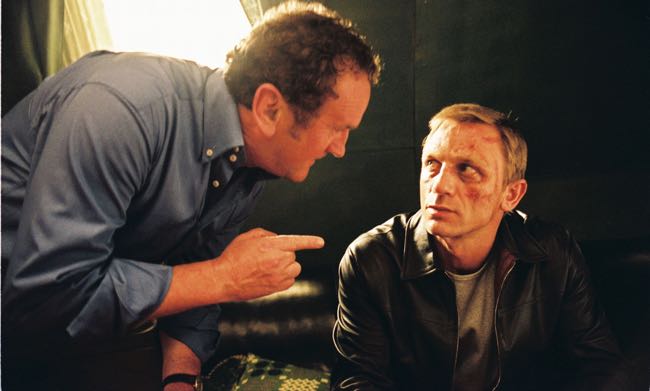
Also involved are a very well-connected middleman named Gene (Colm Meaney, pictured with Craig) and a smoothly groomed gent from the top layer named Eddie Temple (Michael Gambon). There will be much slicing of the cake and considerable bloodshed before one or another gets the icing and somebody is left with the crumbs.

Using London locations inventively, Vaughn and his first-rate crew, including cinematographer Ben Davis and editor Jon Harris, deliver a highly diverting modern morality tale filled with ingenious gags and nifty twists. Music producers Teese Gohl and Steve McLaughlin have put together a terrific selection of songs for the soundtrack.

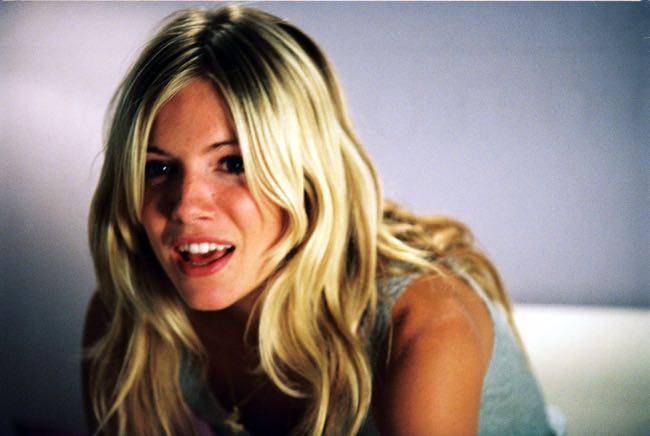
Craig holds the center of the film very well as the smooth criminal whose grip on things gets out of hand, Sienna Miller (pictured) makes a fine impression as a sexy lady named Tammy and Gambon does a measured turn as a hood who has climbed to the top and improved his clothes and manners, if not his ruthlessness, along the way. And Meaney adds another to his long list of finely shaded performances. The affection his character shows to his guns is one of many effective nuances in a very satisfying film.

Opens: UK Oct. 1 (Sony Pictures); Cast: Daniel Craig, Colm Meaney, Kenneth Cranham, George Harris, Jamie Foreman, Sienna Miller, Michael Gambon, Marcel Iures, Tom Hardy, Tamer Hassan, Ben Whishaw, Burn Gorman, Sally Hawkins; Director and producer: Matthew Vaughn; Writer: J. J. Connolly; Director of photography: Ben Davis; Production designer: Kave Quinn; Editor: Jon Harris; Producers: Adam Bohling, David Reid; Executive producer: Stephen Marks; Production: Presented by Columbia Pictures in association with Marv Films; Not rated, running time, 104 minutes.

This review appeared in The Hollywood Reporter.
Posted in Film, Reviews | Tagged , , , , , , , , , , , , , | Comments Off on FILM REVIEW: Matthew Vaughn’s ‘Layer Cake’

THEATRE REVIEW: Steve Black’s ‘Missing Marilyn’

Missing Marilyn x650

By Ray Bennett

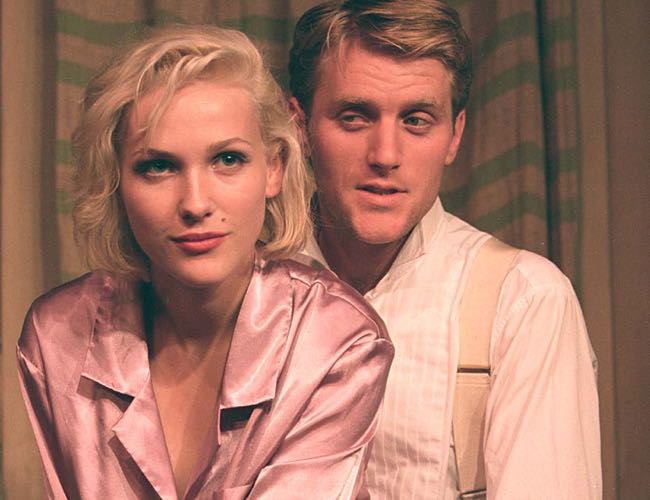
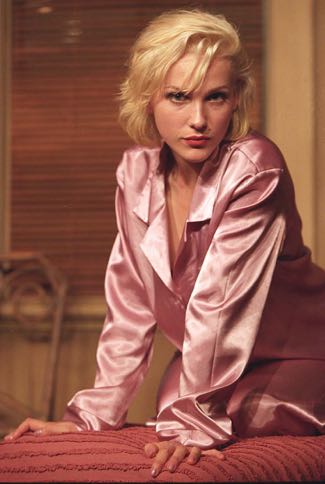
LONDON – One night in 1955, a handsome stranger in a tuxedo delivers a bottle of champagne on ice to a beautiful woman alone in a seedy motel room. It’s obvious who she is, all blonde hair, curvaceous body, and wistful voice. She’s Marilyn Monroe, but who is he, courteous and charming and unforthcoming?

Missing Marilyn 2 x325The identity of the stranger is the final kicker in Steve Black’s slight but absorbing one-act play that relates most of the known facts about Monroe’s life up to the point she was having marital problems with Joe DiMaggio. Mostly it’s a monologue, with Marilyn relating the sad details of her childhood, her mostly tawdry treatment by men and what turned out to be thwarted ambitions.

What makes the time pass engagingly is the astonishing ability of Sally Day to look and sound like Monroe. The actress isn’t by any means a dead ringer for the movie star except for crucial moments when either still or in motion the likeness is uncanny.

In Black’s scenario, Monroe has retreated from the clamor of her growing fame, her marriage to baseball hero DiMaggio withering in the glare of relentless attention. That famous shot from “The Seven Year Itch” with her skirt blowing up over the New York subway vent has blown Smokin’ Joe’s cool and the bombshell already has a hankering for someone a little older and literary, Arthur Miller, say.

Some of Black’s chronology is out of whack, especially considering who the stranger turns out to be, but Andrew Crabb does a good job of making him solicitous toward the wounded bird that Monroe had become.

Not many actresses have been able to match Monroe’s ineffable screen presence but Day, sympathetic and sexy, comes very close.

Venue: The King’s Head Theatre, runs through Oct. 17; Cast: Sally Day, Andrew Crabb, Playwright: Steve Black; Director and designer: Jonathan Hyde; Producer: Joanna Hole; Lighting: Dan Crawford; Presented by i.e. Theatre & F.I.T. in association with the King’s Head Theatre.

This review appeared in The Hollywood Reporter.
Posted in Reviews, Theatre | Tagged , , , , , , | Comments Off on THEATRE REVIEW: Steve Black’s ‘Missing Marilyn’

THEATRE REVIEW: ‘One Flew Over the Cuckoo’s Nest’

cuckoo 04 2 x650

By Ray Bennett

LONDON – Behind the glass of her all-seeing booth, Nurse Ratched’s honeyed voice whispers a single word into the public address system: “Medication.” It sends a chill down the spine as the insidious power of Ken Kesey’s loathsome creation becomes clear in Dale Wasserman’s splendid play based on “One Flew Over the Cuckoo’s Nest.”

This is a crackerjack revival of the work that is best remembered in the form of Milos Forman’s multi-Oscar-winning 1975 movie. Jack Nicholson was one of the winners, and he stamped his personality as indelibly on the role of rebellious Randle Patrick McMurphy as Kirk Douglas had a decade earlier on Broadway.

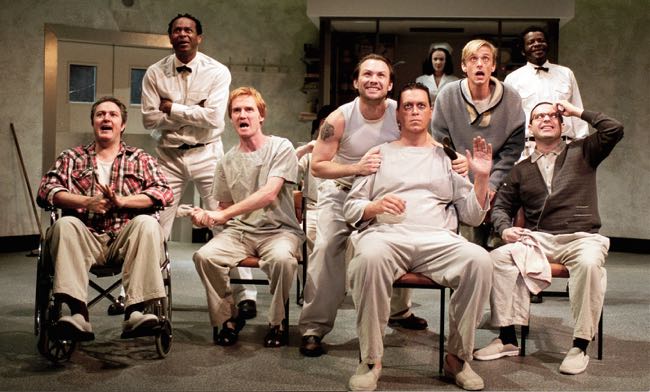
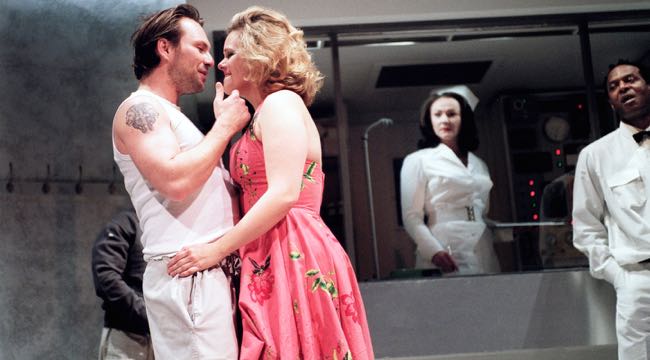
It takes a brave actor to step into those shoes but not only does Christian Slater (centre top picture) step boldly up to the plate, he also knocks it out of the park. Slater’s West End debut is a huge success as, with the equally inspired Frances Barber as Ratched (pictured in the background in both pictures with, below, Slater and Lizzie Roper), he leads a splendid cast through a tightly coiled and fiercely energetic production.

cuckoo04 1 x650

Katy Tuxford’s clinical design sets the scene from the start, aided by vivid work by lighting designer Chris Davey and composer and sound designer Matt Clifford. It’s tough to pull off a play about a psychiatric ward of clearly wounded men that strives for laughs as well as deeply felt drama, but playwright Wasserman does it.

Directors Terry Johnson and Tamara Harvey keep it moving quickly as the patients who have learned to accept the cruel ministrations of their dominatrix nurse react to the arrival of a cheerfully rowdy newcomer.

McMurphy has been committed for treatment instead of going to jail, and he fully expects to soon be back on the street, drinking and carousing and generally misbehaving. When he learns that Nurse Ratched has the major say in whether that happens, his instinct for confrontation and rebellion takes on another dimension.

Kesey and Wasserman are dealing with major issues of freedom and the corrosive influence of conformity. The play deals with its suffering inmates with compassion and makes them humorous as well as pathetic. The players are all equal to the task, with Owen O’Neill as Harding, Phil Nichol as Cheswick, Gavin Robertson as Scanlon, Dave Johns as Ruckly and Ian Coppinger as Martini all creating distinct and memorable characters.

Brendan Dempsey is imposing as Chief Bromden, McMurphy’s inspiration and his savior, and Mackenzie Crook (“The Office”) gives the faltering courage of stuttering Billy Bibbitt great depth.

Nurse Ratched is often seen in her glass booth with the lighting set so that her heavily made-up face resembles a mask from Noh theater. Barber makes her both eerily seductive and hideously frightening in a wonderfully measured performance.

Slater silences any doubters who thought he might decide just to play Jack. He brings enormous charm and physical grace to the boisterous and disorderly McMurphy and makes the character his own.

Venue: Gielgud Theatre, runs through Jan. 26; Cast: Christian Slater, Frances Barber, Mackenzie Crook, Brendan Dempsey, Stephen K. Amos, Felix Dexter, Lucy Porter, Owen O’Neill, Phil Nichol, Gavin Robertson, Ian Coppinger, Dave Johns, Tim Ahern, Lizzie Roper, Katherine Jakeways, Playwright: Dale Wasserman, based on the novel by: Ken Kesey; Directors: Terry Johnson, Tamara Harvey; Set designer: Katy Tuxford; Lighting designer: Chris Davey; Costume designer: Dagmar Morell; Music/sound designer: Matt Clifford; Presented by Nica Burns for Theatershare Plc., Max Weitzenhoffer and Ian Lenagan.

This review appeared in The Hollywood Reporter.
Posted in Reviews, Theatre | Tagged , , , , , , , , , , , , , | Comments Off on THEATRE REVIEW: ‘One Flew Over the Cuckoo’s Nest’

TV REVIEW: ‘Green Wing’

Green Wing x650

By Ray Bennett

LONDON – Victoria Pile’s outrageously silly and deliciously vulgar hospital comedy “Green Wing” picks up where it left off for its second season now running on Channel 4.

The show has the shape of a typical television medical drama but its mockery is much more than a simple spoof. Pile and her team go deep into Larry David and Ricky Gervais territory and attain a level of delirious surrealism to match the best of Steven Wright.

It employs fast and slow motion, dream sequences, slapstick and musical numbers to develop the Monty Python philosophy of “and now for something completely different” to another plane with single-gag blackouts and sketches that stay somehow within the boundaries of a plot-structured show.

The first episode of the new 8-part series found Mac (Julian Rhind-Tutt, second right) in a coma and, given the nature of the show, he was immediately dubbed Coma Boy while his assortment of weird and whacky colleagues took turns trying to awaken him.

Their methods ranged from the lovingly benign by Caroline (Tamsin Greig, left) to the seriously invasive and twisted by Sue (Michelle Gomez, rear). One attempt involved placing a harmonica in his mouth and pressing down on his chest in order to provide accompaniment for a blues song.

Dr. Statham (Mark Heap, right), perhaps the most disturbed member of staff, contrived to play a miniature game of ping-pong with the unconscious Mac while his totally self-absorbed friend Guy (Stephen Mangan, third left) brought in a kitten and threatened to kill it with a huge revolver if Mac didn’t wake up. Then the behavior got worse.

Still, Mac emerged from his coma, although his memory wasn’t what it was and Caroline seems destined to encounter more obstacles to her romance while Sue’s desperate measures toward a similar end are guaranteed to complicate things. Future episodes promise even more wildly imaginative tomfoolery.

While guaranteed to offend many due to the sexual jokes and four-letter words, the humor is savvy and inventive, and pleasingly free of the grotesques and bullying caricatures that mar shows such as “Little Britain.”

The players are all first-rate comedy performers and with its sharply focused self-awareness and a kind of lunatic innocence, “Green Wing” is on its way to becoming a classic.

Airs: UK: Fridays, Channel 4; Cast: Dr. Caroline Todd: Tamsin Greig, Julian Rhind-Tutt, Stephen Mangan, Pippa Haywood, Mark Heap, Michelle Gomez, Karl Theobald (second left), Sarah Alexander, Oli Chris; Created, produced and devised by Victoria Pile; Directors: Dominic Briggstocke, Tristam Shapeero; Writers: Victoria Pile, Robert Harley, Oriane Messina and Fay Rusling, Gary Howe and Richard Preddy, James Henry and Stuart Kenworthy; Director of photography: Rob Kitzman; Production designer: Jonathan Paul Green; Editors: Lucien Clayton, Billy Sneddon; Original music: Trellis; Executive producer: Peter Fincham.

This review appeared in The Hollywood Reporter.
Posted in Reviews, Television | Tagged , , , , , , , , , , | Comments Off on TV REVIEW: ‘Green Wing’

VENICE FILM REVIEW: Todd Solondz’s ‘Palindromes’

By Ray Bennett

VENICE – ‘Palindromes’ doesn’t seem to know if it’s coming or going. It’s a highly stylised piece of work typical of director Todd Solondz who renders wildly exaggerated sequences on a topic not generally thought of as a basis for comedy.

This one is a fable about abortion that follows a very young woman who goes on a quest for a baby she’s no longer capable of having. Solondz leaves it to the viewer to decide if it’s insightful whimsy or meaningless drivel. Box office will likely be restricted to the minority who plump for the former.

The story follows Aviva, a New Jersey 12-year-old who wants nothing more than to get pregnant. When the son of family friends obliges her, Aviva’s mother drags her screaming to an abortion clinic where things go wrong. Unknown to the girl, she is given a hysterectomy.

Unhappily childless, Aviva sets off into the world determined to have her wish. She soon encounters a family of Jesus-loving, right-to-lifers named the Sunshines. She also falls for a lummox named Bob, who prefers to have sex in a slightly irregular way that will not further her cause. Bob is also assigned by the Sunshines to go back to New Jersey and murder Aviva’s abortionist.

Clarity is blurred by having several different females play Aviva including various children, an obese grown-up black woman and a wan looking Jennifer Jason Leigh. To add to the palindromic fun, there’s also a kid named Otto.

Screened in Competition at the Venice International Film Festival; Production: Celluloid Dreams; no MPAA rating; running time 100 mins.

Posted in Film, Reviews, Venice International Film Festival | Tagged , , , | Comments Off on VENICE FILM REVIEW: Todd Solondz’s ‘Palindromes’

VENICE FILM REVIEW: Alejandro Amenabar’s ‘The Sea Inside’

sea inside 1 x650

By Ray Bennett

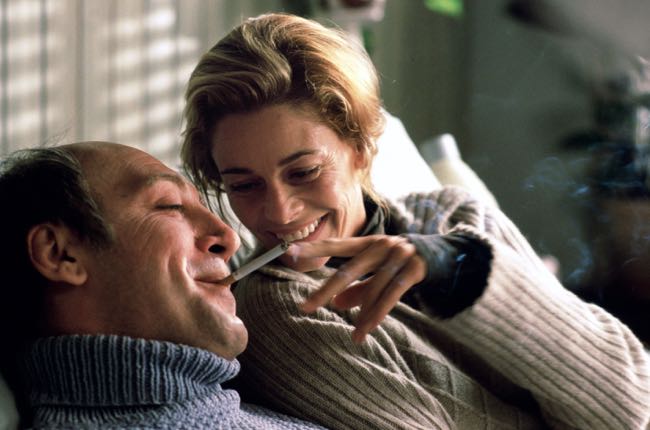
VENICE – Why does Ramon Sampedro smile so much? He says, “When you can’t escape and you depend on others so much, you learn to cry by smiling.”

Ramon has been a quadriplegic for 28 years following a diving accident and he wants to end his life. Alejandro Amenabar’s deeply moving drama “The Sea Inside” (Mar adentro) makes a powerful case for why he should be allowed to, and why he shouldn’t.

Jarvier Bardem, Oscar-nominated for 1999’s  “Before Night Falls”, delivers an unforgettable performance as a talented and caring man who wishes to die with a dignity that is lacking in his life. He will surely gain the attention of Academy Award voters when the time comes and he may not be alone as the fine cast delivers at all levels, especially Mabel Rivera as Manuela, Ramon’s devoted sister-in-law and chief caregiver.

With splendid production values and a universally touching theme, the picture should find receptive audiences in all territories. Amenabar cowrote the intelligent screenplay with Mateo Gill and also provided the atmospheric music with a little help from Carlos Nunez. The result is a film both poetic and profound.

Based on real events, Amenabar shows us how a vigorous and adventurous man is rendered virtually helpless and makes a persuasive argument for why that helplessness denies him a dignified existence, dependent as he is on his selflessly devoted family.

Bardem, a strapping actor, is made to look older and incapacitated not only by fine work by makeup specialist Jo Allen but by the actor’s extraordinary ability to inhabit the character. The constant smile masks grief and anger and while Ramon can snap at his young nephew for getting his grammar wrong and be impatient with visitors he thinks are there for their own purposes, he remains a compassionate and loving man.

We find him in the care of his sister-in-law, the quite magnificent Mabel Rivera, at the home of his brother Jose (played wonderfully by Celso Bugallo), where he has access to a computer, telephone and television that he controls with his mouth and a stick. He is petitioning the Spanish government to allow him to commit suicide and has the help of an organization devoted to supporting that right, represented by the vivacious Gene (Clara Segura).

Gene brings in a lawyer to make Ramon’s case. She is an elegantly beautiful woman named Julia, played with exquisite calm by Belen Rueda (pictured with Bardem). Julia has a degenerative disease and Ramon believes her affliction will allow her to represent him more forcefully. Also into his life comes a stranger named Rosa, played without guile by Lola Duenas, who has seen him on television and falls in love with him.

But Ramon falls in love with Julia, even though she is married, and together they plan a book of poems that he wrote when he was younger. None of this, however, causes any wavering in his determination to die.

For a film that will move audiences to tears, there are moments of great humor and wonderful sequences when Ramon’s imagination allows him to take flight. The film will be taken as a plea for euthanasia, and it is that, but also it makes the case for those left behind and demonstrates that love, not dying, can be the greatest test of all.

Venue: Venice International Film Festival, In Competition; Cast: Javier Bardem, Belen Rueda, Lola Duenas, Mabel Rivera, Celso Bugallo, Clara Segura, Joan Dalmau, Alberto Jiminez, Francesc Garrido, Tamar Novas, Jose Ma Pou, Alberto Amarilla; Director: Alejandro Amenabar; Producers: Fernando Bovaira, Alejandra Amenabar; Screenwriters: Alejandro Amenabar, Mateo Gil; Director of photography: Javier Aguirresarobe; Art director: Benjamin Fernandez; Sound: Ricardo  Steinberg; Wardrobe: Sonia Grande; Special makeup design: Jo Allen; Music: Alejandro Amenabar with the special collaboration of Carlos Nunez; Sogepaq presents a Sogecine Himinoptero Production in co-production with UGC Images and Eyescreen with the collaboration of TVE, Canal+, TVG, FilmanovaInvest and the support of Eurimages/ICAA Not rated; running time, 120 mins.

This review appeared in The Hollywood Reporter.
Posted in Film, Reviews, Venice International Film Festival | Tagged , , , , , , , , , | Comments Off on VENICE FILM REVIEW: Alejandro Amenabar’s ‘The Sea Inside’

EIFF FILM REVIEW: Pawel Pawlikowski’s ‘My Summer of Love’

By Ray Bennett

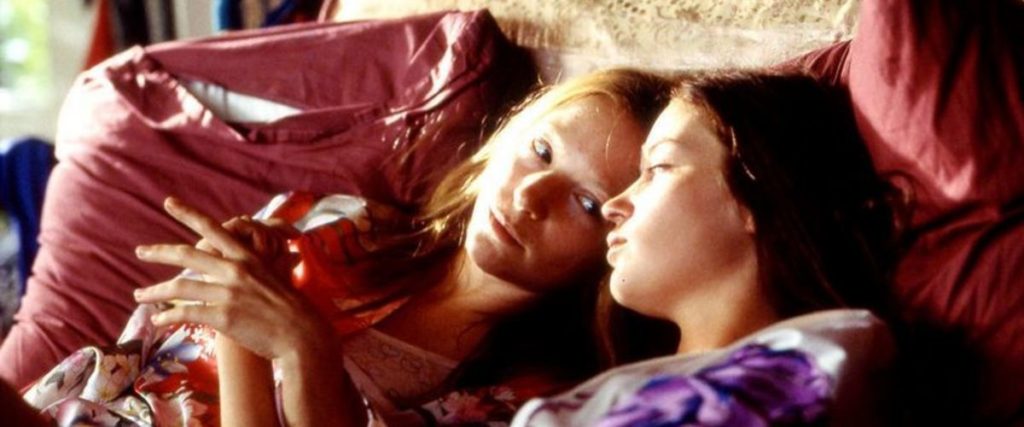
EDINBURGH – A working-class tomboy on a moped with no motor meets a young patrician beauty on horseback in the Yorkshire countryside. They begin an unlikely friendship and it is no surprise, given the film’s title, that it becomes something a little more than that. But what could so easily have been a predictable and tired rehash of youthful Sapphic exploration turns out to be engagingly fresh not least because of the captivating performances of the two leads.

Box office prospects are not huge but the picture should be well received on the festival and art house circuit and properly promoted could do well on television. What is certain is that Nathalie Press and Emily Blunt are destined for greater things.

Press plays Mona, a sparky and quizzical young woman whose fate appears to be tied inextricably to her brother Phil, a petty crook whose born-again Christianity has made him empty their pub of booze and turn it into a place for prayer meetings. Rowdy and frustrated, Mona’s mood is not improved my being dumped by a crude older boyfriend. 

When she tips off her moped in a country field and opens her eyes to find a beautiful girl peering down at her from atop a horse, she is immediately curious. Tamsin (Blunt) has the lazy hauteur of the carelessly rich and her invitation to Mona to visit her at her parents’ swanky home is more like an order.

When Mona dares to accept, she finds a world foreign to her existence. Tamsin plays the cello, listens to Edith Piaf, and drinks red wine. She speaks of Nietzsche and Freud and worships the memory of her equally glamorous older sister who she says died of anorexia. With her parents away, Tamsin urges Mona to stay. They talk and talk and swear eternal allegiance as friends. 

That leads to tentative explorations of their sexuality, although these scenes are handled delicately and without the taint of voyeurism. Tamsin appears stronger than Mona, and they embark on adventures of revenge against Tamsin’s cheating father and Mona’s faithless boyfriend.

Meanwhile, Mona’s brother is building a giant cross that he plans to erect on a hill overlooking their village. He cautions Mona about behavior he views as reckless but falls prey to the confidence of Tamsin who easily reveals the frailty of his conversion.

Pawlikowski is working on ambitious themes having to do not only with the passage of youth but also the conflicts of faith and fantasy. Mona’s world is hard but she dreams of beautiful things like love and fidelity. Tamsin is well educated and spoiled and spins a fanciful image of faux nihilism and doom. Brother Phil’s attempts to fight his own violent nature are under constant threat. As the three begin to pull in separation directions this summer of love comes apart at the seams.

Some of the metaphors are a bit too literal but the director succeeds largely with his story and the surprises are convincing. Best of all the film has a great sense of humor and the young actresses exploit it delightfully. The scenes in which Mona reprises the devil’s voice from “The Exorcist” are priceless.

Screened at the Edinburgh International Film Festival; Released: UK: Oct. 22 2004 (Content Film); Cast: Nathalie Press, Emily Blunt, Paddy Considine, Dean Andrews; Director: Pawel Pawlikowski; Writers: Pawel Pawlikowski, Michael Wynne, based on the novel by Helen Cross; Director of photography: Ryszard Lenczewski; Production designer: John Stevenson; Music: Alison Goldfrapp, Will Gregory; Editor: David Charap; Costume designer: Julian Day; Producers: Tanya Seghatchian, Christopher Collins; Executive producers: David M. Thompson, Chris Auty, Emma Hayter; Production: Apocalypse Pictures, Take Partnership, BBC Films, Film Consortium, Baker Street, UK Film Council; Rating: UK: 15 / US: R; running time 86 minutes.

Posted in Edinburgh International Film Festival, Film, Reviews | Tagged , , , , , | Comments Off on EIFF FILM REVIEW: Pawel Pawlikowski’s ‘My Summer of Love’

THEATRE REVIEW: ‘A Funny Thing Happened on the Way to the Forum’

FunnyThingNT_Desmond-Barrit2004

By Ray Bennett

LONDON – A shaggy dog story needs a captivating storyteller if it’s not to founder, and “A Funny Thing Happened On the Way to the Forum” is the shaggiest.

With music and lyrics by Stephen Sondheim and book by Burt Shevelove and Larry Gelbart, it’s a knockabout farce in the vaudeville tradition verging on British panto.

Director Edward Hall has done a terrific job of staging what amounts to a French farce in Roman dress full of randy old men and delectable young women and driven by jokes as old as the coliseum.

It’s a swiftly paced romp stuffed with leering gags, salacious posing and silly pratfalls, and the National does its usual excellent job of making everything work around the edges.

To make it a complete success, however, it needs at its center a comic wizard who can make all the shaggy old jokes zing again. It needs a Zero Mostel or a Frankie Howerd, who respectively starred in earlier productions on Broadway and the West End.

Desmond Barrit (pictured), who plays the show’s ringmaster, a slave named Pseudolus, is a thoroughly accomplished actor and he doesn’t put a foot wrong. It’s not his fault that he lacks the spark of comic genius that would set the show alight and hold the whole thing together.

It’s left to an energetic ensemble of veterans to deliver on the opening number’s promise of “Comedy Tonight!” Sam Kelly, as Senex, the henpecked husband looking for a last fling, Hamish McColl as the slave Hysterium, and David Schneider as Lycus, the buyer and seller of courtesans, all bring energy and flair to their performances and keep the laughter flowing.

Vince Leigh makes an appealing Hero, whose desire for the luscious virgin Philia (Caroline Sheen) complicates the lust of every other man who wants her, including Senex and the bombastic warrior Miles Gloriosus, played with splendid swagger by Philip Quast. The beautiful Sheen best captures the sardonic humor in Sondheim’s typically clever lyrics, singing “Lovely” with a gorgeous blankness as if the job of being simply smashing was the absolutely best job in the world.

The troupe of dancers and singers who play the Proteans and courtesans, who have provocative names like Panacea, Gymnasia and Vibrata, are all lithe and talented and enter gleefully into the playfully sexy spirit of things.

The gags are all performed with a likeable nudge-nudge wink-wink and only toward the end of its two hours does the absence of a real clown begin to slow the show down. Still, there’s enough crowd-pleasing fun to keep audiences happy between the National’s more serious offerings.

Venue: National Theatre, runs through Nov. 2; Cast: Desmond Barrit, Sam Kelly, Isla Blair, Vince Leigh, Hamis Mcoll, David Schneider, Caroline Sheen, Jane Fowler, Lorraine Stewart, Philip Quast, Harry Towb; Music and lyrics by Stephen Sondheim; Book by Burt Shevelove and Larry Gelbart; Director: Edward Hall; Choreographer: Rob Ashford; Set designer: Julian Crouch; Costume designer: Kevin Pollard; Orchestrations: Michael Starobin; Music supervisor, MD, dance arranger: Martin Lowe; Lighting designer: Paul Anderson; Sound designer: Paul Groothuis.

Posted in Reviews, Theatre | Tagged , , , , , | Comments Off on THEATRE REVIEW: ‘A Funny Thing Happened on the Way to the Forum’